

[I don't want to be like everyone else!] Recommended independent research topics for high school students


When it comes to summer break independent research projects, many high school students struggle to choose a topic.
Independent research can be especially time-consuming and challenging.
But don’t worry! Here, we introduce interesting independent research ideas recommended for high school students.
Some involve using fire or slightly more complex methods, so you’re sure to find something that interests you.
From experiments using familiar materials to hands-on crafts, there’s a wide range—from simple projects to those that take more time.
Dive in and turn your project into a fulfilling experience.
Have fun and learn a lot along the way!
- Recommended for high school students! A collection of easy one-day science project ideas
- Stand out with your junior high school independent research! A collection of fun experiment and craft ideas
- [Middle School Students] Easy One-Day Science Projects and Crafts Ideas
- For upper-grade boys! Simple yet awesome craft project [Don’t call it lazy]
- [For Adults] Simple yet Impressive Crafts: A Stylish, Eye-Catching Collection
- Simple and cute summer project crafts! A collection of ideas for girls that will make you want to create
- Recommended for middle school students! A collection of quick science project ideas you can do in a short time.
- [I don't want to be like everyone else!] Recommended independent research topics for high school students
- DIY science projects that elementary school boys will love: ideas you can make with everyday materials
- Simple yet amazing crafts: craft ideas that elementary school students will want to make
- Simple but awesome! Craft ideas for upper-grade girls
- Elementary School Students: Simple One-Day Science Project and Craft Ideas
- [5th Grade Elementary School] Independent Research Themes & Crafts | A Collection of Ideas That Lead to Learning
[Don’t Want to Be Like Everyone Else!] Recommended Independent Research Topics for High School Students (21–30)
Making impossible objects

Do you know the artist M.C.
Escher? Even if you don’t recognize the name, I think you’ve probably seen his “impossible objects” created through optical illusions at least once.
They’re called impossible objects because they can’t actually be constructed in reality, but depending on the viewing angle, you can recreate them in practice.
The phenomenon known as “optical illusion” is profound and really rewarding to explore.
Energy harvesting

As environmental issues are being highlighted in every field, why not turn our attention to eco-friendly electricity? Energy harvesting is a method that captures energy from our surroundings and converts it into electrical power.
For example, it can convert the pressure from footsteps into electrical energy, or run a calculator with light such as sunlight without using batteries.
It’s a system that lets us easily collect and use energy without expending large amounts of effort to generate it.
There are many points to explore—research other mechanisms that can generate energy, come up with your own ideas, and dive into plenty of experimentation!

[Don't Want to Be Like Everyone Else!] Recommended Independent Research Topics for High School Students (31–40)
Extract DNA from orange juice!

You know that the bodies of plants and animals are made of DNA.
But if someone asked you what DNA actually is, you might have trouble answering.
That’s why I recommend doing some research on DNA.
In particular, the experiment of extracting DNA from orange juice is easy and visually fun.
The method is simply to slowly pour anhydrous ethanol into a cup containing orange juice.
Look into the mechanism and give it a try.

Challenge in composition
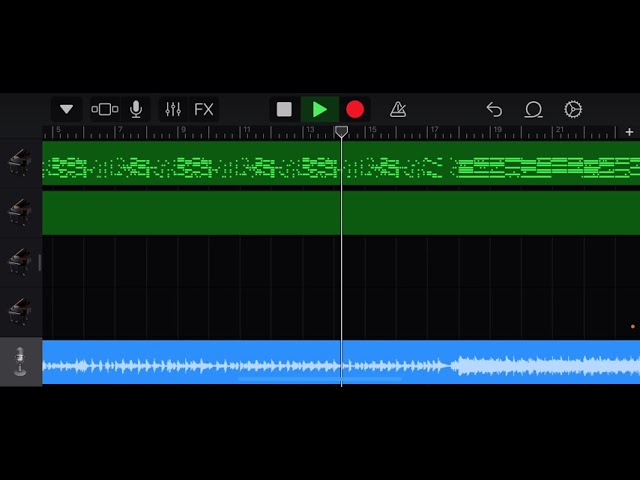
Why not take advantage of the long summer vacation to dive into songwriting? Whether you’ve composed before or not, start by listening to a variety of songs and researching how each is structured and what instruments are used.
Once you’ve decided on the kind of song you’d like to create, use existing works as references for elements like chord progressions and melody flow, and begin crafting your own original piece.
When it’s ready, record it using your smartphone or DTM software, and if you burn it to a disc or similar, your summer assignment is complete!
The chemical reaction of vinegar and baking soda

This is an experiment to study the chemical reaction between vinegar and baking soda.
First, add purple sweet potato powder to the vinegar and mix well.
Then add about the same amount of oil as the vinegar.
Next, when you add baking soda, a chemical reaction occurs and a large number of carbon dioxide bubbles are produced.
It’s visually striking and provides a clear opportunity to observe the process of a chemical reaction, so I think it’s a good idea to record it on video.
In the end, the purple color of the purple sweet potato turns blue.
This experiment confirms the change from neutral to alkaline.

A portable cloud?!

Let’s make a portable cloud.
First, prepare a plastic bottle and an incense stick.
Put a little water into a 2-liter plastic bottle and trap the smoke from a lit incense stick inside.
Squeeze the bottle with your hands for about 30 seconds to create pressure changes inside.
This cools the air inside and produces water vapor.
When that vapor mixes with the smoke, a portable cloud forms inside the bottle.
Clouds are formed when moisture in the air mixes with tiny particles, and in this experiment, smoke is used as a substitute for those particles.
dilatant fluid

Despite its grandiose name, all you need to prepare it is water and potato starch, so you can make it right now.
Put a large amount of potato starch into a bowl filled with water.
When you squeeze it tightly with your hand, it briefly becomes hard like a solid, but when you release the pressure, it returns to its original liquid state.
From here, think about why this phenomenon occurs and in what situations it can be applied, and put your thoughts together in a report.