

[I don't want to be like everyone else!] Recommended independent research topics for high school students


When it comes to summer break independent research projects, many high school students struggle to choose a topic.
Independent research can be especially time-consuming and challenging.
But don’t worry! Here, we introduce interesting independent research ideas recommended for high school students.
Some involve using fire or slightly more complex methods, so you’re sure to find something that interests you.
From experiments using familiar materials to hands-on crafts, there’s a wide range—from simple projects to those that take more time.
Dive in and turn your project into a fulfilling experience.
Have fun and learn a lot along the way!
- Recommended for high school students! A collection of easy one-day science project ideas
- Stand out with your junior high school independent research! A collection of fun experiment and craft ideas
- [Middle School Students] Easy One-Day Science Projects and Crafts Ideas
- For upper-grade boys! Simple yet awesome craft project [Don’t call it lazy]
- [For Adults] Simple yet Impressive Crafts: A Stylish, Eye-Catching Collection
- Simple and cute summer project crafts! A collection of ideas for girls that will make you want to create
- Recommended for middle school students! A collection of quick science project ideas you can do in a short time.
- [I don't want to be like everyone else!] Recommended independent research topics for high school students
- DIY science projects that elementary school boys will love: ideas you can make with everyday materials
- Simple yet amazing crafts: craft ideas that elementary school students will want to make
- Simple but awesome! Craft ideas for upper-grade girls
- Elementary School Students: Simple One-Day Science Project and Craft Ideas
- [5th Grade Elementary School] Independent Research Themes & Crafts | A Collection of Ideas That Lead to Learning
[Don't Want to Be Like Everyone Else!] Recommended Independent Research Topics for High School Students (31–40)
Let’s make diamond dust

You’ve heard the term “diamond dust,” right? But not many people know what it actually is or how it forms.
Diamond dust is a phenomenon where tiny ice crystals, called ice needles, fall through the air and sparkle like diamonds.
How about trying to create it yourself? The conditions are calm air and humid air at below minus 15 degrees Celsius.
You can generate and observe it using just an empty can frozen in a freezer, some bubble wrap, and a light source to create those conditions.
Why not film the setup and observe it in a video?

Artificial Intelligence Programming

Artificial intelligence, where machines learn and act on their own, has now made its way into smartphones, TVs, refrigerators, and washing machines.
How about trying to create one yourself? It’s a great independent research project for anyone aiming to become a programming engineer.

Light a match with steam

This is an experiment conducted using a device made from an empty can and metal tubes.
It’s an experiment where a match is ignited by exposing it to water vapor.
Normally, a match ignites at temperatures above 150°C.
However, under normal conditions, water vapor does not exceed 100°C, so it shouldn’t ignite the match.
In this experiment, though, the water vapor is further heated so that its temperature exceeds 100°C, allowing it to ignite the match.
This is called superheated steam, and a familiar application is in convection microwave ovens.
Let’s research and summarize other situations where it is used.

Water Quality Survey

Even elementary school students can do simple water quality tests, but how about trying it seriously? You could examine tap water from various places, or choose a natural setting—like a river or pond in your area—as your theme.
agar culture
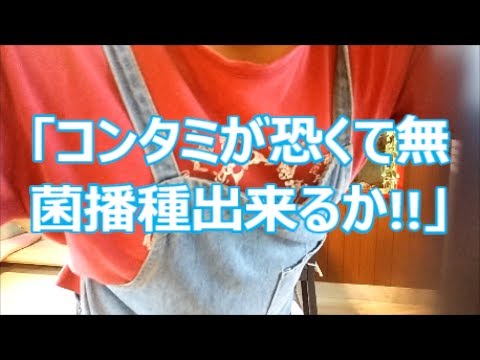
How about trying cultivation using agar, which is known as an ingredient for making jelly? Cultivation basically means growing bacteria and microorganisms.
All you need to prepare is yogurt, cheese, or natto.
Use agar as the food source and observe how the bacteria and microorganisms spread.
Even without using those foods, you could, for example, poke an agar plate with a toothpick that’s been touched to the ground and see what kinds of microbes grow from it.
With the right ideas, all sorts of things are possible, and there are many ways to present your findings.
[Stand Out from the Crowd!] Recommended Independent Research Topics for High School Students (41–50)
Building a smartphone app

Most people probably use smartphone apps in their daily lives.
So, what I’d like to propose is making a smartphone app.
The process of creating a smartphone app can be divided into three main steps: first, designing the concept and features; second, developing the app itself; and third, undergoing the review process to publish it on the marketplace.
It’s exciting to think that the app you created will appear in the store, isn’t it? Start by researching the basics, such as how apps work.
Attending a workshop is also a good option.

Let’s explore the secrets of sound
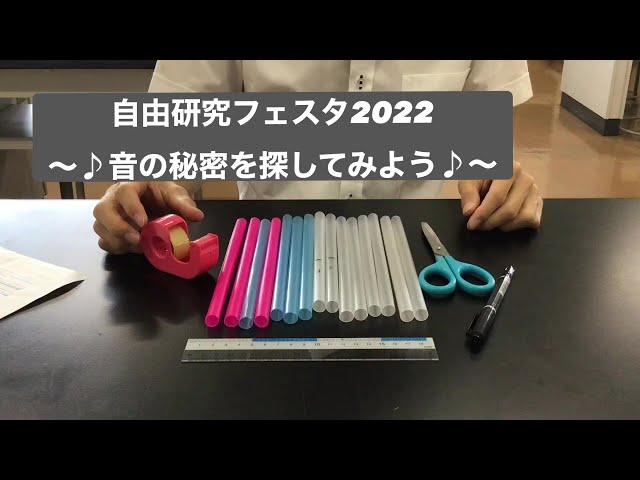
Here’s an idea for a flute you can make just by connecting straws.
Prepare straws that are all the same thickness and length.
You’ll need 8 straws for the mouthpiece, and since you’ll place spacer straws between them, prepare an additional 7, for a total of 15.
Cut the spacer straws to 5 cm.
The straws that become the flute pipes will vary in length depending on the pitch, so be sure to measure their lengths carefully with a ruler.
After cutting, seal one end of each straw with tape to make it a closed pipe.
Once everything is connected and glued together, it’s done.
Try experimenting with different lengths to see what sounds they make.
