

Nostalgic Japanese hit songs from the 1970s: the golden age of idols and kayōkyoku (Japanese pop songs)

What songs come to mind when you think of Japanese hit songs from the 1970s?
Those who lived through that era in real time probably recall a wide range of hits.
With the spread of color television, people began to enjoy music from a visual perspective as well.
The 1970s are often called the golden age of kayōkyoku and idols.
Even generations who weren’t yet born will find many familiar, approachable songs that make you think, “Hey, I’ve heard this before!”
Please enjoy these captivating hit songs from the 1970s!
- Classic and hit songs by nostalgic Japanese idols from the 1970s
- A collection of nostalgic hit songs and classics from the 70s
- [1970s] Collection of Japanese hit songs. Nostalgic masterpieces of Japan
- Debut song of a 1970s idol
- Popular Showa-era pop. Timeless hit songs.
- [Showa Kayō] A roundup of Japanese love songs that hit in the 1970s
- [Recommended for people in their 70s] Classic nostalgic hits: A collection of youth songs
- Great enka masterpieces and hit songs of the 1970s
- Heart-touching, tear-jerking masterpieces from the Showa era
- Evokes the charm of the good old days. Showa-era inspirational songs that are still loved today.
- Memorable Youth Songs: Looking Back on New Music Masterpieces from the 1970s–80s
- [2026 Edition] Songs Loved by People in Their 60s: Classic Hits from Their Youth
- [Winter Songs] Classic Showa-era masterpieces. Popular songs you’ll want to listen to in winter.
Nostalgic Japanese pop hits of the 1970s: The golden age of idols and kayōkyoku (11–20)
Drifters’ Zundoko BushiZa Dorifutāzu

“Drifters’ Zundoko-bushi” was released in 1969 and was performed on the Drifters’ variety show “It’s 8 o’clock! Everyone Gather!” in the 1970s, becoming a familiar number in living rooms across Japan.
The song is based on “Navy Ditty,” which was popular in 1945.
Lyrics for verses 1 through 5 were written by Rei Nakanishi as supplementary lyrics, while verse 6 uses the original lyrics.
Verse 1 was sung by Cha Kato, verse 2 by Koji Nakamoto, verse 3 by Boo Takagi, verse 4 by Chū Arai before his departure and by Ken Shimura after, verse 5 by Chosuke Ikariya, and verse 6 by all the members together.
In addition to the Drifters’ version, there are also “Zundoko-bushi” recordings by Yoshio Tabata, Michiko Anjo and Ichiro Suzumura, Akira Kobayashi, Yukiji Asaoka, and Kiyoshi Hikawa.
lieNakaijō Kiyoshi

The third place in the 1974 annual rankings went to Kiyoshi Nakajo.
He still appears on music TV shows today, so many people probably know him.
Back then, he achieved a massive hit with over 1.5 million copies sold, propelling him into the spotlight.
Northern SpringSen Masao
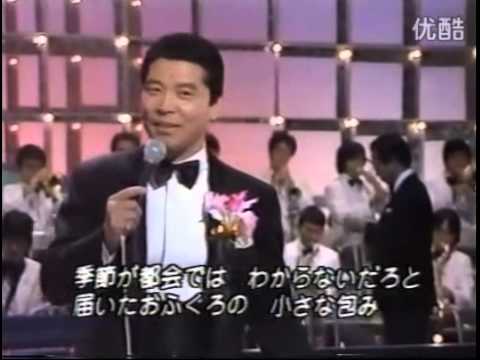
Hokukuni no Haru (Spring in the Northern Country) is a single released in 1977.
It became a monster hit with total sales of 3 million copies and became Masao Sen’s signature song.
The lyrics depict the homesickness of a man who left his rural hometown for the city.
On TV shows, Sen performed dressed in a tattered coat and rubber boots, with a tenugui around his neck and a battered suitcase in hand.
His migrant-worker style, which matched the song’s lyrics, became a major talking point.
The song has been covered by illustrious artists such as Keisuke Kuwata, Kiyoshi Hikawa, Hibari Misora, and Takashi Hosokawa, and is a classic that Japan is proud of.
Funky Monkey BabyCAROL

It’s a song released in 1973.
CAROL is well known as the band that featured Eikichi Yazawa and Johnny Okura.
The song was later used in a segment of the variety show “Mecha-Mecha Iketeru!” so it may be relatively familiar even to younger people.
It’s that song whose famous chorus line immediately comes to mind.
Love without meetingUchiyamada Hiroshi to Cool Five

“Awasu ni Aishite” is the third single by Hiroshi Uchiyamada and the Cool Five, released in 1969.
Following their hit “Nagasaki wa Kyō mo Ame Datta,” it also became a major success.
It reached No.
1 on the Oricon charts and sold around 1.2 million copies, achieving million-seller status.
Hiroshi Uchiyamada and the Cool Five are a kayō (Japanese popular song) band known for their distinctive “wa-wa-wa” chorus.
They released many singles with a triplet rock ballad rhythm.
“Awasu ni Aishite” is, of course, a mood-kayō number with a comfortable triplet rhythm.
Hiroshi Uchiyamada served as bandleader and played guitar, while Kiyoshi Maekawa was the lead vocalist.
Mother on the QuayFutaba Yuriko

“The Mother at the Quay” is a popular song modeled on Ise Tanno, who waited for her son—sent to the front in World War II—to return on a repatriation ship.
The lyrics were written by Masato Fujita, winner of the Japan Lyricist Award and the Japan Record Award Special Prize, and the music was composed by Namiryu Hirakawa.
In 1954, Akiko Kikuchi released it as a single, which became a hit selling over one million copies.
In 1972, Yuriko Futaba covered the song, leading to a revival hit that sold 2.5 million copies.
The work was adapted into a film of the same title in 1976, with Tamayo Nakamura starring as Ise Tanno.
Nostalgic Japanese Hit Songs of the 1970s: The Golden Age of Idols and Kayōkyoku (21–30)
A street corner where stars fallSatoi Ito to Happī & Burū

It has a light, catchy rhythm that makes your body sway side to side without thinking.
The line “Let’s dance,” and the background “turuturuturu~” part are really memorable.
He’s super handsome and cool.
Any girl who hears this is sure to have her heart skip a beat.