

Nostalgic Japanese hit songs from the 1970s: the golden age of idols and kayōkyoku (Japanese pop songs)

What songs come to mind when you think of Japanese hit songs from the 1970s?
Those who lived through that era in real time probably recall a wide range of hits.
With the spread of color television, people began to enjoy music from a visual perspective as well.
The 1970s are often called the golden age of kayōkyoku and idols.
Even generations who weren’t yet born will find many familiar, approachable songs that make you think, “Hey, I’ve heard this before!”
Please enjoy these captivating hit songs from the 1970s!
- Classic and hit songs by nostalgic Japanese idols from the 1970s
- A collection of nostalgic hit songs and classics from the 70s
- [1970s] Collection of Japanese hit songs. Nostalgic masterpieces of Japan
- Debut song of a 1970s idol
- Popular Showa-era pop. Timeless hit songs.
- [Showa Kayō] A roundup of Japanese love songs that hit in the 1970s
- [Recommended for people in their 70s] Classic nostalgic hits: A collection of youth songs
- Great enka masterpieces and hit songs of the 1970s
- Heart-touching, tear-jerking masterpieces from the Showa era
- Evokes the charm of the good old days. Showa-era inspirational songs that are still loved today.
- Memorable Youth Songs: Looking Back on New Music Masterpieces from the 1970s–80s
- [2026 Edition] Songs Loved by People in Their 60s: Classic Hits from Their Youth
- [Winter Songs] Classic Showa-era masterpieces. Popular songs you’ll want to listen to in winter.
Nostalgic Japanese Hit Songs of the 1970s: The Golden Age of Idols and Kayōkyoku (21–30)
A Midsummer IncidentHirayama Miki

A hit song from 1971.
Rather than a massive hit, it was more of a smash hit for the time, peaking at No.
5 on the Oricon weekly chart and ranking 37th for the year.
Yet as the crowning achievement of Kyōhei Tsutsumi’s melodies and as the work of the one-and-only, distinctive singer Miki Hirayama, it became a quintessential piece of 1970s kayō pop, forever etched in people’s memories.
YOUNG MAN(Y.M.C.A.)Saijō Hideki

Released in 1979, this big hit from the end of the ’70s is a track arranged from the disco song “Y.M.C.A.,” which was popular in the U.S.
at the time.
From the intro, it’s an instant mood-lifter.
It’s a happy kayōkyoku-style song that gets everyone pumped up doing the “Y.M.C.A.” pose together.
Nostalgic Japanese Hit Songs of the 1970s: The Golden Age of Idols and Kayōkyoku (31–40)
Run, Kotaro!Sorutī Shugā

1970.
It’s a comic song by Salty Sugar.
There are hit comic songs by folk groups like “Kaettekita Yopparai” and “Akatonbo no Uta,” but in terms of sound, this song in a C&W style is, I think, the most appealing.
Journey of the Heartchūrippu

Although we had released two singles and two albums since our debut, none were hits, and this song was born at a time when we were saying that if the next one didn’t sell, we’d go back to our hometown.
It was released by Toshiba Musical Industries on April 20, 1973, and sold 508,000 copies.
Lyrics and music by Kazuo Zaitsu.
The Bride of SetoKoyanagi Rumiko

Although it was overshadowed by the monster hit “Onna no Michi,” Rumiko Koyanagi once again took the No.
2 spot on the 1972 annual singles chart.
This song also boasted sales of around 700,000 copies and remains a popular choice for karaoke even today.
The Day the Seagulls FlewWatanabe Machiko
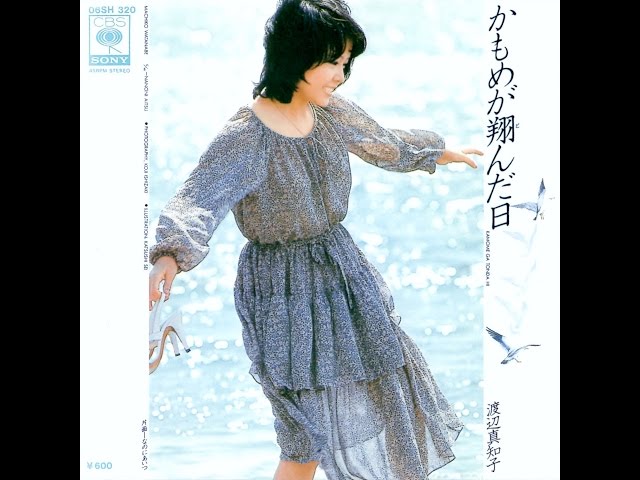
Machiko Watanabe’s second single, released in April 1978.
Its brisk, up-tempo feel is striking, and the lyrics—overlaying thoughts of a former lover with the free flight of a seagull—resonate deeply.
The evocative imagery that recalls the sea of Yokosuka is another highlight.
The single sold 460,000 copies and achieved the feat of winning the Japan Record Award for Best New Artist.
In 2007, a special stadium version was produced for use at Chiba Lotte Marines games.
This song explores universal themes—parting with a lover and the yearning for freedom—that anyone can relate to.
ChampionArisu

It’s a signature song by the folk trio composed of Shinji Tanimura, Takao Horiuchi, and Toru Yazawa.
It’s an empowering track about a champion who, after time has passed and their peak is behind them, rises to their feet once more.
Perhaps some in the father’s generation—who have aged and now see the next generation in the spotlight—find courage in this song.