

Johann Strauss II | Introducing Famous and Classic Pieces

Johann Strauss II, a leading Romantic composer who was active in Vienna, Austria.
Focusing on dance music such as the Viennese waltz and the polka, a Czech folk dance, he was known as the “Waltz King” and the “Sun of Vienna.”
Moreover, having produced masterpieces in operetta as well, he was also called the “King of Operetta,” enjoying immense popularity not only in Austria but throughout Europe.
In this article, we introduce some of Strauss II’s famous and staple pieces.
Why not immerse yourself in his dazzling music?
- [Masterpiece Classics] A special showcase of gem-like masterpieces so beautiful they’ll move you to tears
- A masterpiece by Richard Strauss. Popular classical music.
- Cool classical masterpieces. Recommended classical music.
- [Orchestra] Introducing famous and popular pieces
- Timelessly beautiful classical masterpieces. Recommended classical music.
- Dvořák’s masterpiece. Popular classical music.
- Jean-Philippe Rameau Popular Songs Ranking [2026]
- A poignant classic masterpiece. Recommended classical music.
- Classical Masterpieces: Recommended Works You Should Hear at Least Once
- Elgar’s masterpiece. Popular classical music.
- Mozart: An Introduction to His Signature and Popular Works
- Today's Classics: Recommended classical music and great performances to listen to today
- Robert Schumann | Introduction to his famous and representative works
Johann Strauss II | Introducing Famous and Classic Pieces (31–40)
Waltz “Voices of Spring”Johann Strauss II
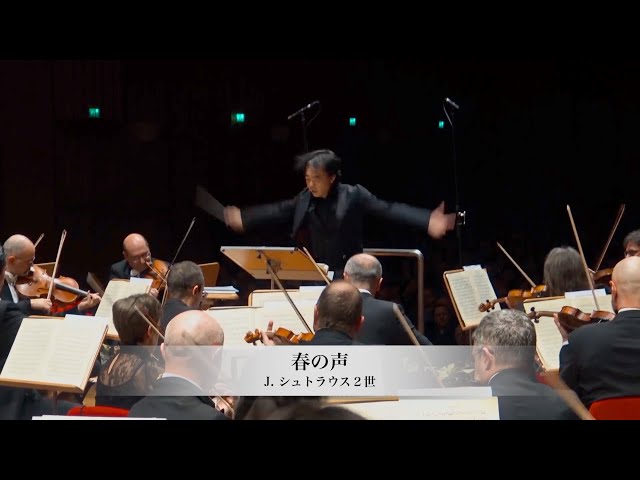
A work by Johann Strauss II, known as the “Waltz King,” and a familiar piece from the Vienna Philharmonic’s New Year’s Concert.
Its flowing waltz melody is radiant, evoking the warmth of spring sunshine.
Carried by the pleasant rhythm of the strings, the flute and violin sing lightly, conjuring images of dancers stepping elegantly and gliding through a waltz.
The piece is captivating for its phrases like the gentle murmur of a peaceful stream and its splendid climax.

Overture to the operetta ‘Die Fledermaus’Johann Strauss II

It is the overture to a comic opera composed in 1874 by a German composer.
The opera incorporates comedic elements, and the overture features a light and cheerful character that heightens the start of its amusing story.
It is also frequently performed at the Vienna Philharmonic’s New Year’s Concert.
Annen PolkaJohann Strauss II

It is said that Johann Strauss II had something of a mother complex, and this piece is also said to have been secretly dedicated to his mother, Anna.
His father, Johann Strauss I, also composed a piece with the same title, the Annen-Polka, in 1842, which is also well known, but it has an entirely different musical character.
Indigo and the Forty ThievesJohann Strauss II

In 1870, misfortunes struck Johann’s family one after another, and Johann Strauss II, who had a morbid fear of death, was utterly devastated mentally.
Having lost his creative drive, Strauss was passionately urged by those around him to compose an operetta.
Encouraged by Offenbach as well to try his hand at operetta, Johann decided to pursue that path.
This was his first operetta, a work based on One Thousand and One Nights.
Egyptian MarchJohann Strauss II

Originally, it was called the Circassian March, named after the Circassian people, a minority in the Caucasus region.
With the opening of the Suez Canal, various composers contributed pieces.
The canal’s inauguration inspired Europeans and stoked their interest in the Orient.
In this atmosphere, Johann Strauss II also changed the title of his Circassian March to Egyptian March in honor of the Suez Canal’s opening and dedicated it to Grand Duke Frederick I of Baden.
However, since modern-day Egypt is not in the Caucasus, the piece feels, if anything, more Russian in character.
Johann Strauss II | Introducing Famous and Classic Pieces (41–50)
Persian MarchJohann Strauss II

It was dedicated to the Shah of Persia (modern-day Iran).
In Russia, the work’s title was “Persian Army March,” but its premiere under the current title took place that December at a charity concert in Vienna.
The Persian monarch did not visit Vienna for the first time until nine years later, in 1873.
Rather than a heavy, militaristic march, it is a march intended to evoke the Middle East.
Roses of the TropicsJohann Strauss II

On October 1, 1880, he premiered his own operetta, The Queen’s Lace Handkerchief.
King Umberto I of Italy was very fond of the operetta, and news of this eventually reached Johann Strauss II, who immediately arranged motifs from the operetta into Roses from the South, dedicating the piece to Umberto I.
This music has also been used in Star Trek.