

Johann Strauss II | Introducing Famous and Classic Pieces

Johann Strauss II, a leading Romantic composer who was active in Vienna, Austria.
Focusing on dance music such as the Viennese waltz and the polka, a Czech folk dance, he was known as the “Waltz King” and the “Sun of Vienna.”
Moreover, having produced masterpieces in operetta as well, he was also called the “King of Operetta,” enjoying immense popularity not only in Austria but throughout Europe.
In this article, we introduce some of Strauss II’s famous and staple pieces.
Why not immerse yourself in his dazzling music?
- [Masterpiece Classics] A special showcase of gem-like masterpieces so beautiful they’ll move you to tears
- A masterpiece by Richard Strauss. Popular classical music.
- Cool classical masterpieces. Recommended classical music.
- [Orchestra] Introducing famous and popular pieces
- Timelessly beautiful classical masterpieces. Recommended classical music.
- Mozart: An Introduction to His Signature and Popular Works
- Elgar’s masterpiece. Popular classical music.
- Dvořák’s masterpiece. Popular classical music.
- Jean-Philippe Rameau Popular Songs Ranking [2026]
- A poignant classic masterpiece. Recommended classical music.
- Classical Masterpieces: Recommended Works You Should Hear at Least Once
- Masterpieces by Franz Schubert: Sparkling classical works left by the King of Song. Recommended classical music.
- Today's Classics: Recommended classical music and great performances to listen to today
Johann Strauss II | Introducing Famous and Classic Pieces (41–50)
Explosive PolkaJohann Strauss II

The title of the piece became “Explosions Polka” after the invention of nitro.
It seems that Johann Strauss II also incorporated trendy elements into his works.
At the time, the word “explosive” was popular among young people.
It was composed for a charity concert called “The Joyful Explosions Festival.” Throughout the polka, many effects evoke explosions, and especially at the end, there is a loud explosive sound.
Polka of the HuntJohann Strauss II

It is a polka composed by Johann Strauss II.
Johann, who often arranged music that appeared in his operettas into polkas and waltzes, derived this piece from “Oh, My Steed,” a number from the operetta Cagliostro in Wien, composed in 1875.
Emperor Franz Joseph I Rescue Celebration MarchJohann Strauss II

Johann Strauss II, who had been disliked by the court, took advantage of a ceremony to compose a piece, dedicated it to the Emperor, and at last was permitted to conduct dances at court.
He then composed works such as the Emperor Franz Joseph I Life-Saving Celebration March, and thus was able to secure work at the court.
Waltz “Voices of Spring” with solo voiceJohann Strauss II

The brilliantly festive and joy-filled piece Frühlingsstimmen (Voices of Spring) is a world-famous vocal waltz composed by Johann Strauss II, inspired when his close friend, the great pianist Franz Liszt, was playing an improvised piano duet with the hostess at a party in Budapest, Hungary.
Waltz “Artist’s Life,” Op. 316Johann Strauss II

Johann Strauss II was born in Vienna in 1804.
His father, Johann I, produced numerous dance pieces and was known as the “Father of the Waltz.” In 1867, Johann II composed the waltz “Artist’s Life,” a piece that depicts a lively gathering of Viennese artists.
The Blue DanubeJohann Strauss II
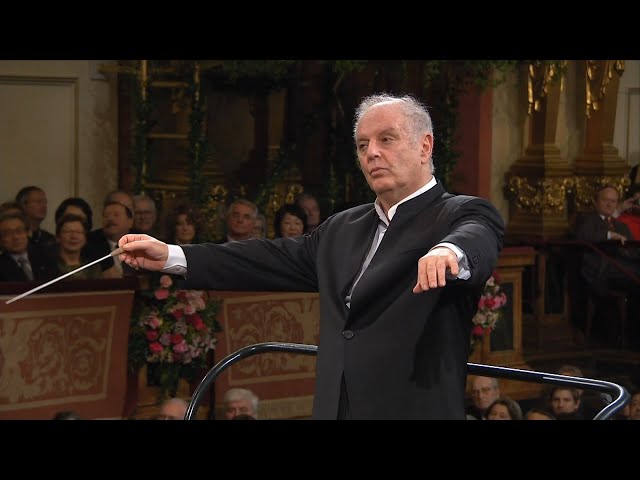
The Blue Danube, a staple encore at the Vienna Philharmonic’s New Year’s Concert, is regarded as a signature work of Johann Strauss II, known as the “Waltz King.” Strauss composed it in 1867 at the request of the Vienna Men’s Choral Association to lift the spirits of his homeland after its defeat in the war with Prussia.
Depicting the beauty of the Danube Canal, the piece is so beloved by the public that it is often called Austria’s second national anthem.
It is a gentle and radiant work, evoking the image of clear blue waters flowing slowly through the city of Vienna under the sunlight.

Polka: “Thunderclap and Lightning”Johann Strauss II

As the title suggests, this is a very powerful piece.
Johann Strauss II composed it for the Artists’ Association “Hesperus.” While the opening might make it seem tense, the overall mood is actually very bright.
It’s also a familiar track often used as background music at sports days, so many people may have heard it.
The cymbals and bass drum stand out vividly, lifting the energy not only of the runners but also the audience.
It’s a highly recommended piece that really gets you pumped up when you listen to it!
