

Trivia & fun facts about June

June brings lots of rain, and somehow it can dampen our mood, too.
Maybe many of you are wishing that the refreshing days of May would come back, or that the fun-filled summer would hurry up and arrive! In this article, we’ll introduce trivia and fun facts about June—the rainy season.
It’s packed with eye-opening tidbits that can flip a gloomy mood in an instant! Once you know the information we’re about to share, you might find June just a little more interesting and enjoyable.
Discover the unique charm of June—a month that holds its own against any other!
- Rainy season trivia roundup: fun facts you'll want to share with someone
- [For Kids] Trivia & Fun Facts Quiz About June
- Useful right away in daily life! Surprising trivia and handy tips
- [For Seniors] Trivia Quiz & Fun Facts for June
- Trivia about hydrangeas. A collection of fun facts related to ajisai (hydrangeas).
- Fun facts you’ll want to share! A roundup of October trivia and tidbits
- Recommended in March! A collection of surprising, little-known trivia that elementary school students will want to share
- Fun facts about the Moon. A rapid-fire quiz!
- Fun facts you’ll want to share! January trivia and tidbits special
- A collection of trivia and fun facts about August that will warm your heart
- Fun facts you’ll want to share! A special feature on November trivia and tidbits
- [Interesting] Compilation of Trivia Quiz Questions
- [For Seniors] Introducing trivia related to May!
Trivia & Fun Facts About June (21–30)
June 19 is Cream Puff Day
Cream puffs with sweet cream inside their brown pastry shells are delicious.
Did you know there’s a Cream Puff Day? The 19th of every month is Cream Puff Day.
It’s said to have been chosen as a wordplay because “choux” sounds similar to the number 19 in Japanese.
Why not enjoy a cream puff with a leisurely cup of tea on June 19th, too, in honor of Cream Puff Day? During the rainy season in June, we tend to spend more time indoors.
Of course, cream puffs are a perfect treat for those days as well.

The etymology of kappa is ‘capa.’
A kappa, which serves as an umbrella substitute in the rain, is also called a raincoat.
Its origin is the Portuguese word “capa,” meaning cloak.
When Japanese people heard this word, it apparently sounded like “kappa.” It’s surprising that the origin is Portuguese, but the shape of a kappa does indeed resemble a cloak.
また、漢字で書くと河童は「合羽」となり、その由来は、合羽を着た人の姿が翼を広げた鳥のように見えるためだという説があります。

The smell when lightning strikes is ozone.
You might wonder, “Does lightning even have a smell?” but it actually does.
If you’ve experienced a lightning strike nearby, you may have noticed it.
People describe the smell in various ways—burnt, sour, or fishy—but the cause is ozone produced by the electrical discharge.
At low concentrations, ozone is hard for the human nose to detect, but when its concentration increases due to discharge, it becomes noticeable.
That said, it’s dangerous, so don’t get close to lightning just to try to smell it.
The temperature of lightning is hotter than the surface of the Sun.
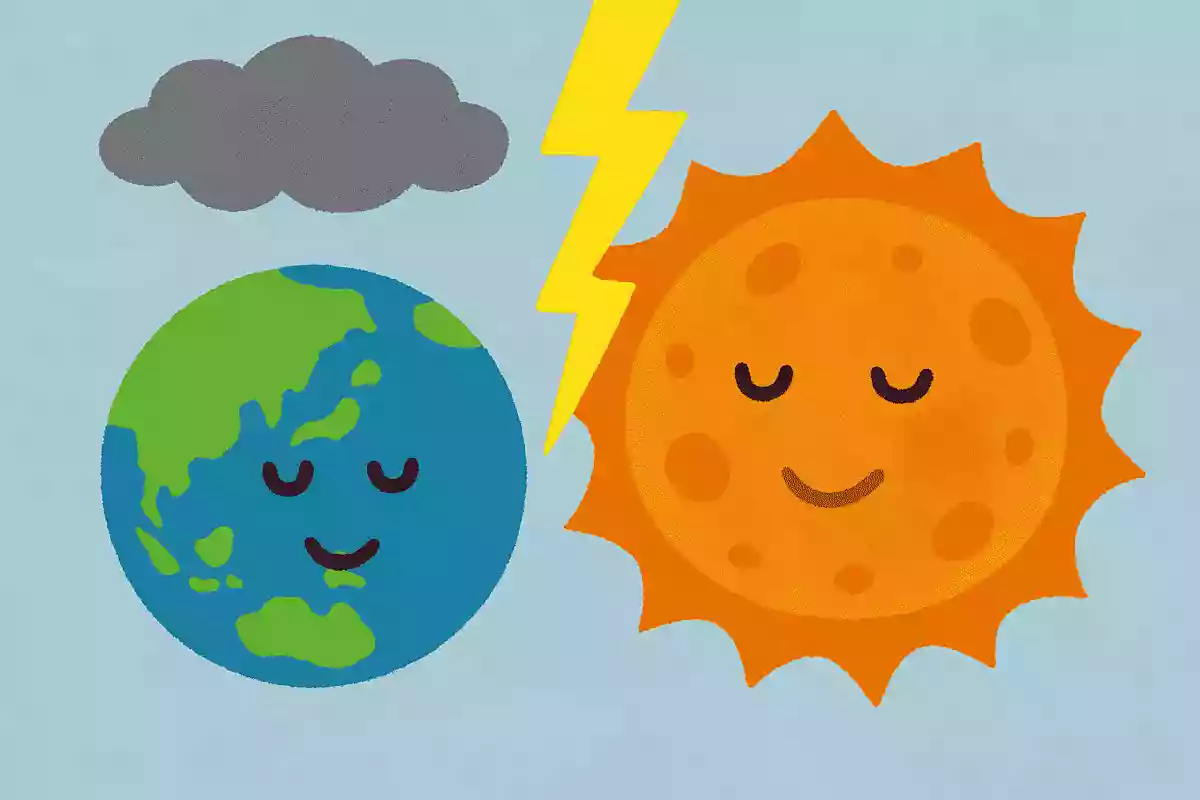
We tend to think of the sun as something unreachable out in space, and lightning as something we might encounter in everyday life—separate things that are far apart.
Surprisingly, though we rarely compare them side by side, it’s said that lightning can be hotter than the sun’s surface.
The sun’s surface temperature is about 6,000°C, while lightning is reported to reach roughly five times that—around 30,000°C.
Unlike the ever-burning sun, lightning is a brief phenomenon, but the fact that it can bring heat more intense than the sun’s surface is truly frightening.

June 16 is Wagashi Day

June 16 has been designated “Wagashi Day” by the National Wagashi Association.
While many of these ‘such-and-such Days’ are based on wordplay, Wagashi Day actually stems from a historical anecdote.
In the Heian period, when epidemics were spreading, Emperor Nimmyō—said to have received a divine oracle—offered 16 sweets before the deities on June 16 to pray for an end to the plague and for good health.
This later became a ritual known as Kashō no Hi (Day of Good Omen).
June 16 is thus a day to enjoy traditional Japanese confections and to wish for health and safety.
The birthstone for June is the pearl.

It’s said that wearing your birthstone can bring you happiness.
If you were born in June, do you know what your birthstones are? In fact, June has three: moonstone, alexandrite, and pearl.
Pearl is known as the queen of gemstones and is said to be especially powerful for improving women’s fortunes.
It’s also sometimes called “mermaids’ tears,” giving it a somewhat mysterious aura.
Pearls are also believed to have protective, warding powers, so if you were born in June, why not try wearing them?
The first umbrellas were not for rain but for shade—parasols.
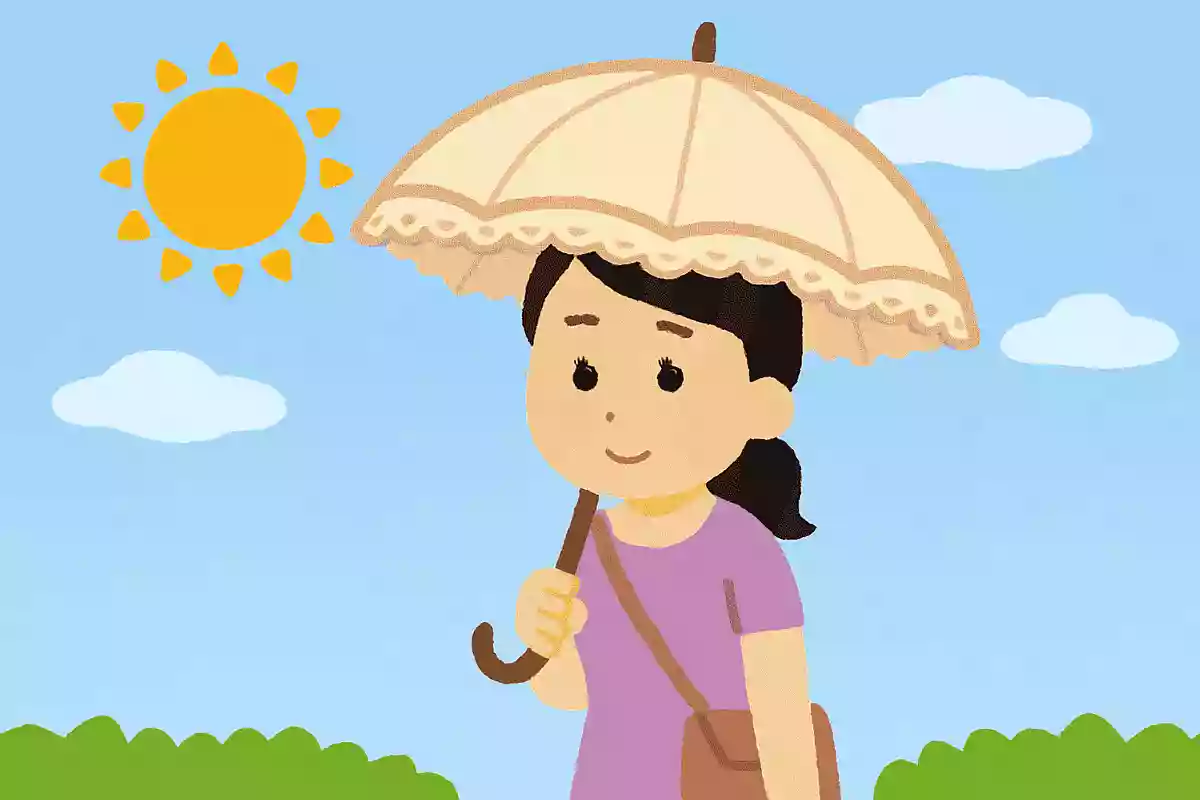
When you hear the word “umbrella,” many of you probably think of it as rain gear.
If the weather forecast calls for rain, a lot of people head out with an umbrella.
However, umbrellas were originally made as parasols.
Even today, some people carry them on hot days to block the sun, but they were literally developed as tools to create shade.
Umbrellas existed as far back as ancient Greece, where high-ranking individuals had their attendants carry them.
The folding umbrella you’re familiar with was born in 13th-century Italy.
It wasn’t until the 18th century that umbrellas began to be used for rain.