

A collection of nostalgic hits from the ’70s to 2000s that are perfect for livening up karaoke


When you go to karaoke with people from the same generation—like at class reunions, year-end parties, or New Year’s gatherings—nothing gets the energy up like nostalgic hits! The real charm of these retro tunes is that only those who lived through the same era can sing and listen while reminiscing about those days.
In this article, we’ve carefully selected hit songs from the 1970s, 80s, 90s, and 2000s—tracks that were beloved back then and are still cherished by many today.
Use this as a guide when choosing songs for karaoke with friends from your generation!
- [Recommended for people in their 70s] Songs that get everyone excited. Songs you’ll want to sing at karaoke.
- Songs Everyone Knows: A Popular Karaoke Collection You Can Sing Regardless of Age
- [Recommended for people in their 70s] Classic nostalgic hits: A collection of youth songs
- A collection of nostalgic hits from the Heisei era: Let’s look back at iconic songs from the 1990s and 2000s.
- From Showa-era kayōkyoku to J-POP! A nostalgia-packed roundup of karaoke crowd-pleasers
- [Karaoke] A roundup of songs that are easy for women to sing!
- Even karaoke beginners can relax! Easy-to-sing songs for men
- Karaoke Popularity Ranking by Generation [50s] [2026]
- Karaoke songs you’ll want to sing for men in their 70s: Enka and nostalgic Showa-era pop
- When you want to hype it up with your peers! Karaoke songs recommended for Gen Z
- [For People in Their 40s] Karaoke Songs That Are Easy to Sing: 2026 Ranking
- [Nostalgic Songs] A compilation of classic anime themes that hit home for those born in the Showa and Heisei eras
- Timeless classics only! Showa-era hit songs perfect for acoustic sing-alongs
1990s (61–70)
The road where the morning sun shines AS TIME GOES BYOrijinaru Ravu

This 1994 release by Original Love, led by Takao Tajima, became a hit after being used in a shampoo commercial.
Many people may not be very familiar with Original Love, but Takao Tajima has excellent musical sensibilities, and their other songs are also highly recommended.
Besides this track, the hits Primal and Kiss are also recommended.
A town where it snowsyunikōn

A 1992 song by Unicorn that takes the year’s end as its theme.
It’s a representative track from their later period, when their music shifted from the early style to more lyrical, emotive songs, and I think this trajectory leads into Subarashii Hibi.
The choice to focus on the end of the year—rather than Christmas or New Year’s—also feels very much like Unicorn.
Chronic LoveNakatani Miki

This song, the theme for the TBS drama “Keizoku,” sung by lead actress Miki Nakatani herself, still sounds wonderful today.
While part of its appeal lies in Nakatani’s vocal timbre, a large share surely comes from Ryuichi Sakamoto’s compositional and arranging sensibilities.
The original source was “Wonder Trip Lover,” a piece to which Sakamoto added lyrics and provided to Yukiko Okada; Nakatani then wrote new lyrics for this version.
Sakamoto’s arrangement is superb, perfectly aligning with the drama’s atmosphere and culminating in a beautifully crafted track.
AutomaticUtada Hikaru
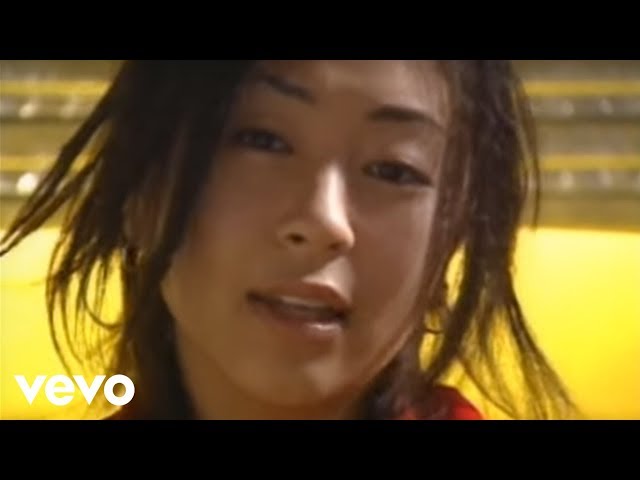
Hikaru Utada is a singer-songwriter who took the J-POP scene by storm in her teens and continues to evolve while working energetically today.
Her debut single “Automatic,” used as the ending theme for the variety show “Warau Inu no Seikatsu -YARANEVA!!-,” achieved double million sales despite being a debut track, and is still known as one of her signature songs.
The soulful melody is quite challenging, but that’s exactly why it’s so fun to sing at karaoke.
For those of that generation, it’s a revolutionary number that’s sure to hype up the room if you sing it while imitating the music video at karaoke.

presentJITTERINl’ JIN

Not only does it have a light, breezy ska rhythm, but the lyrics are irresistibly nostalgic too.
This was JITTERIN’JINN’s second single, which gained popularity on the legendary TV show “Ika-Ten,” officially titled “Miyake Yūji’s Ikasu Band Tengoku,” and it was released in 1990.
On the surface, it’s a pop tune with crisp, cutting guitar, but in fact it’s a sad breakup song.
The gifts the heroine receives are luxuriously stylish—very bubble era! The trendy London fashion, the guys who’d “mitsu-gu” (shower someone with gifts)…
Enjoy it as you reminisce about those days!

Beyond the Night SkySMAP

Since their disbandment in 2016, calls for a reunion have never ceased, and attention continues to focus on the individual activities of the five-member idol group SMAP.
Their 27th single, “Yozora no Mukō,” which became the group’s first million-selling hit, was used as the theme song for the variety show “SMAP×SMAP.” The arrangement—marked by acoustic guitar tones and a floating, airy melody—leaves a poignant impression.
Its sentimental lyrics also resonate deeply, making it a major hit number.
TOMORROWMayo Okamoto

This is the debut single by singer-songwriter Mayo Okamoto, who also performs as a pianist under the name “mayo,” showcasing the depth of her talent.
The song was used as the theme for the TV drama Second Chance, and despite being her debut single, it is known as one of her signature tracks.
With positive lyrics that comfort wounded hearts and a light, driving melody, it’s perfect for a rousing karaoke sing-along.
It’s an immortal classic you’ll want to sing when you want to boost your spirits.