

A collection of nostalgic hits from the ’70s to 2000s that are perfect for livening up karaoke


When you go to karaoke with people from the same generation—like at class reunions, year-end parties, or New Year’s gatherings—nothing gets the energy up like nostalgic hits! The real charm of these retro tunes is that only those who lived through the same era can sing and listen while reminiscing about those days.
In this article, we’ve carefully selected hit songs from the 1970s, 80s, 90s, and 2000s—tracks that were beloved back then and are still cherished by many today.
Use this as a guide when choosing songs for karaoke with friends from your generation!
- [Recommended for people in their 70s] Songs that get everyone excited. Songs you’ll want to sing at karaoke.
- Songs Everyone Knows: A Popular Karaoke Collection You Can Sing Regardless of Age
- [Recommended for people in their 70s] Classic nostalgic hits: A collection of youth songs
- A collection of nostalgic hits from the Heisei era: Let’s look back at iconic songs from the 1990s and 2000s.
- From Showa-era kayōkyoku to J-POP! A nostalgia-packed roundup of karaoke crowd-pleasers
- [Karaoke] A roundup of songs that are easy for women to sing!
- Even karaoke beginners can relax! Easy-to-sing songs for men
- Karaoke Popularity Ranking by Generation [50s] [2026]
- Karaoke songs you’ll want to sing for men in their 70s: Enka and nostalgic Showa-era pop
- When you want to hype it up with your peers! Karaoke songs recommended for Gen Z
- [For People in Their 40s] Karaoke Songs That Are Easy to Sing: 2026 Ranking
- [Nostalgic Songs] A compilation of classic anime themes that hit home for those born in the Showa and Heisei eras
- Timeless classics only! Showa-era hit songs perfect for acoustic sing-alongs
1970s–1980s (21–30)
Midnight DoorMatsubara Miki
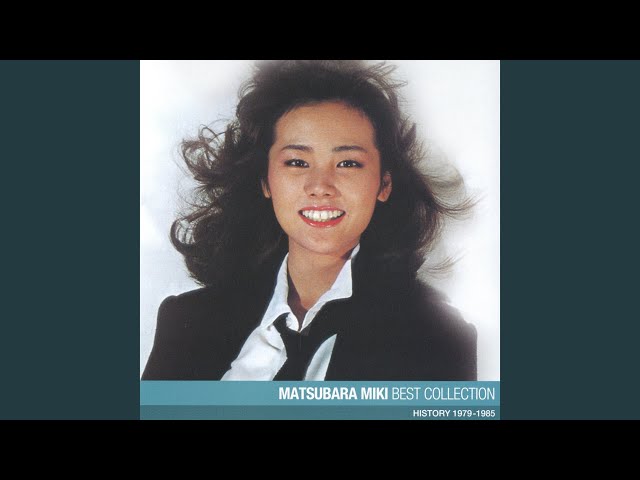
Miki Matsubara’s “Mayonaka no Door — Stay With Me” is a song that regained the spotlight as Japanese city pop, especially gaining popularity overseas.
Released in 1979 as her debut single, it was composed by Tetsuji Hayashi, a prolific songwriter behind many hits.
Its 16-beat guitar cutting creates a pleasant groove, making it easy to see why it became a hit in the club scene.
It’s a classic well known among younger generations too, so give it a try at karaoke!

1970s–1980s (31–40)
Rainy BlueTokunaga Hideaki

This is the debut single by singer-songwriter Hideaki Tokunaga, whose androgynous singing voice has captivated fans and whose recent cover albums have also drawn attention.
It’s known as a clear, transparent love ballad that perfectly pairs Tokunaga’s emotional high tones with sentimental lyrics.
Those in their 40s and older who likely heard it in real time may find themselves wanting to sing it at karaoke with peers.
However, because the song’s key is quite high, be sure to adjust it to a range where you can sing comfortably at karaoke.

GloriaZIGGY

This is one of ZIGGY’s signature songs, which became a major hit after being chosen as the theme for the TV drama “Dō-kyū-sei” (Classmates).
It has been covered by artists like EXILE’s TAKAHIRO and Mariko Takahashi, leading many to rediscover how good the song is.
It’s a track you’ll want to sing with full energy and momentum.
Sword DanceHikaru GENJI

This is Hikaru GENJI’s fifth single, following Starlight, Garasu no Jūdai, Paradise Ginga, and Diamond Hurricane.
The ending of this song feels great to sing, so if you’re from the Hikaru GENJI generation, try singing it at karaoke at least once.
applausechiaki naomi
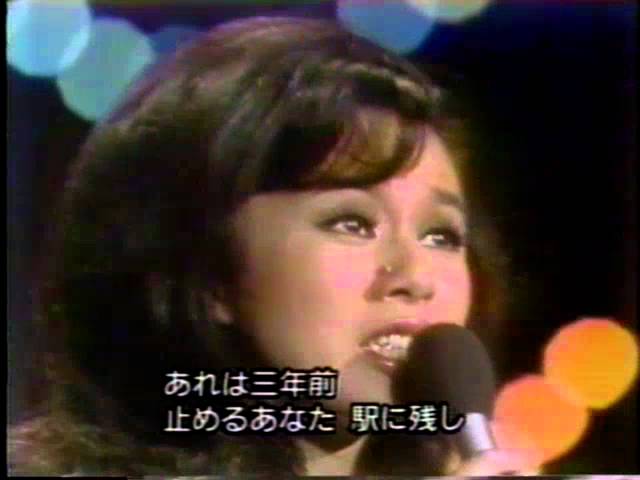
This is an award-winning song from the 1972 Japan Record Awards and one of Naomi Chiaki’s signature numbers.
The lyrics, written from the perspective of someone mourning a deceased lover, are heartrending and captured the hearts of many fans at the time.
Its richly atmospheric, quintessentially Showa-era accompaniment pairs perfectly with Chiaki’s expansive, deeply resonant vocals.
Hugely popular at karaoke as well, this song can make you feel as if you’ve traveled back to the moment it was released.

SEVEN DAYS WARTM NETWORK

This is a 1998 work by TM Network that was used as the theme song for the film “Our Seven-Day War,” starring Rie Miyazawa.
Among TM Network’s songs, it has a relatively slow, medium tempo, so I think it’s easy to sing at karaoke, but it modulates suddenly in the chorus, so it’s important not to go off pitch.
Let yourself go with the flow of timeTeresa Ten

This is the 16th single by Teresa Teng, the singer who, thanks to her immense popularity across Asian countries including Japan, is still remembered as the very embodiment of the “Diva of Asia.” Its wistful melody, carried by her delicate, translucent voice, is one that many people have surely heard at least once.
Released in 1986, it’s a guaranteed crowd-pleaser not only at reunions for those in their 50s and 60s, who grew up with it, but also at year-end parties where multiple generations gather, thanks to its fame.
A timeless masterpiece that remains sung across eras, it stands as an enduring classic in J-pop history.