

How many can you solve? Brain-flexing math riddle quiz


Math is truly fascinating! It’s not just about calculation drills—there are rules and puzzles you can use in everyday life hidden within it.
Here, we’ve gathered math quizzes that nurture children’s thinking skills and number-based riddles that spark inspiration, all designed to make learning fun.
From intuitive, illustration-based questions to logical problems where you fill in the blanks with numbers, we’ll share the full appeal of math.
There might even be some problems that adults surprisingly can’t solve.
Gather the whole family and dive in together with excitement!
- Math quiz for elementary school students
- [For Elementary School Students] Cipher Quiz: Fun Puzzle Riddles
- [Interesting] Collection of Math Quiz Problems
- [Easy] Quizzes That Elementary School Students Can Solve! A Collection to Nurture Wisdom
- [Satisfying When Solved] Challenging Quizzes Recommended for Elementary School Students!
- [Interesting] Collection of Matchstick Quiz Problems
- A math quiz for adults. Can you solve it?
- Fun quizzes for elementary school kids: a collection of questions everyone can enjoy together
- [Get Friendly with Games] Math Games, Apps, and Activities
- Easy Riddles for Elementary School Students
- [For Elementary School Students] Recommended Riddle Collection
- Do you get tripped up too? A fun roundup of 10-time quiz questions
- [Trick Quiz] Quiz Questions That Excite Everyone from Kids to Adults
How many can you solve? Brain-flexing math riddle quiz (21–30)
What number goes in the question mark?

If you’re not good at arithmetic and don’t even want to look at numbers, how about getting used to them with riddle-like puzzles? For example, consider this sequence: 11×11=4, 22×22=16, 33×33=36—at first glance, the operations and answers don’t seem to make sense.
At the end, you have 55×55=? and you’re asked to determine what should go in the question mark based on the rule behind the previous expressions.
The hint is to break the numbers in each expression into separate parts.
If you get that flash of insight and find the answer, your discomfort with numbers should start to fade! Give it a try.

[Arithmetic Olympiad Super-Challenge] What is the perimeter of the rectangle?
![[Arithmetic Olympiad Super-Challenge] What is the perimeter of the rectangle?](https://i.ytimg.com/vi/AzAGNc7T9j4/sddefault.jpg)
At first glance, the perimeter here looks difficult to figure out, but since the light green shape inside is a square, you can easily find the answer by setting up an equation: let the side length of the square be ○, let the part obtained by subtracting the square’s side from 12 cm be □, and the part obtained by subtracting the square’s side from 9 cm be △.
For problems that seem hard, it’s a good idea to try replacing numbers with symbols and see if you can simplify your approach.
Give it a try!

Seven Rooms

This is a problem from the Math Olympiad for first- to third-grade elementary school students.
Twenty-eight children enter seven rooms labeled A through G at random, and based on five given conditions, you must determine which room has the most children and how many children are in that room.
At first glance, it looks like a problem that even adults might struggle with.
However, if you check each condition one by one and perform the calculations, you can arrive at the answer.
The calculations themselves are simple, but the problem tests your ability to think logically and to derive equations from the given conditions.

If you understand it: One question from an IQ 150+ quiz

Rather than arithmetic, it’s a puzzle of rules that uses numbers.
As long as you know numbers and hiragana, anyone can solve it.
Flexible-minded children might have a higher success rate than rigid-thinking adults.
Want to take on the challenge of the IQ-150 barrier?
[Junior High School Entrance Exam Problem] What are the angles of the 10 corners?
![[Junior High School Entrance Exam Problem] What are the angles of the 10 corners?](https://i.ytimg.com/vi/GyjhNwdPk3I/sddefault.jpg)
This is a problem involving shapes with interesting forms that are likely to engage children who haven’t encountered such difficult questions before.
It asks for the total measure of the angles in the red-shaded parts of the figure, and at the same time, it allows you to learn a simple rule.
addition, subtraction, and multiplication
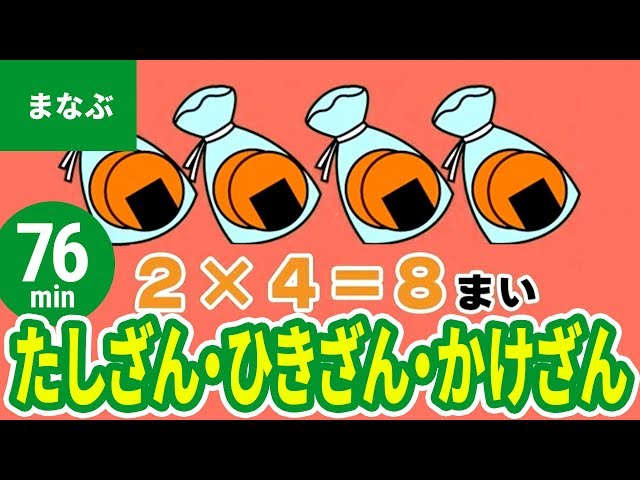
Elementary school math actually covers a surprisingly wide range, doesn’t it? I’d be happy if children come to like multiplication by the lower grades.
Forcing education isn’t very good, but simply playing this video naturally should spark their interest and help them grow to like it.
I’d be glad if they enjoy it.
Where you look is the key.

There is a figure where a large rectangle is divided into nine smaller rectangles.
Each small rectangle is labeled with the sum of the lengths of its sides, and you are to use those clues to find the answer.
However, if you try to calculate it straightforwardly from the given numbers, the computation becomes extremely complicated.
If you pause and change your perspective, though, you can reach the correct answer using only a very simple multiplication.
The key to solving geometry problems is to take your time looking at the figure and identify distinctive features.
Use the flexible thinking unique to elementary school students to arrive at the solution!