

How many can you solve? Brain-flexing math riddle quiz


Math is truly fascinating! It’s not just about calculation drills—there are rules and puzzles you can use in everyday life hidden within it.
Here, we’ve gathered math quizzes that nurture children’s thinking skills and number-based riddles that spark inspiration, all designed to make learning fun.
From intuitive, illustration-based questions to logical problems where you fill in the blanks with numbers, we’ll share the full appeal of math.
There might even be some problems that adults surprisingly can’t solve.
Gather the whole family and dive in together with excitement!
- Math quiz for elementary school students
- [For Elementary School Students] Cipher Quiz: Fun Puzzle Riddles
- [Interesting] Collection of Math Quiz Problems
- [Easy] Quizzes That Elementary School Students Can Solve! A Collection to Nurture Wisdom
- [Satisfying When Solved] Challenging Quizzes Recommended for Elementary School Students!
- [Interesting] Collection of Matchstick Quiz Problems
- A math quiz for adults. Can you solve it?
- Fun quizzes for elementary school kids: a collection of questions everyone can enjoy together
- [Get Friendly with Games] Math Games, Apps, and Activities
- Easy Riddles for Elementary School Students
- [For Elementary School Students] Recommended Riddle Collection
- Do you get tripped up too? A fun roundup of 10-time quiz questions
- [Trick Quiz] Quiz Questions That Excite Everyone from Kids to Adults
How many can you solve? Brain-flexing math riddle quiz (21–30)
Basic arithmetic

As you become an adult, you realize subtraction is more useful than addition.
However, many children struggle with subtraction even within basic arithmetic.
Let’s show them that math can be fun with this video.
People often say it’s not good to let kids watch too many videos, but for learning like this, let’s make good use of them.
Basic addition

As the saying goes, addition is an unknown world for children who don’t know their right from their left.
If they come to dislike it at first, that dislike can turn into a weakness.
Many parents may have had experiences like that themselves.
Let’s show them this fun math video and see how they react.
How many can you solve? Brain-flexing math riddle quiz (31–40)
A geometry problem that adults can’t solve

There will be three questions using various shapes.
Most of them involve areas, and you’ll need flexible thinking to solve them.
As we become adults, we tend to get worse at these kinds of problems, so it can be fun to challenge an adult and see who does better.

Math that delights children

These days, there are many educational apps and educational snacks available.
While they’re easy to view on a smartphone, why not try displaying them on a larger screen like a computer or TV and enjoy them together as a parent and child? Get some paper and a pen ready, and be sure to praise them when they do well!
18 division problems for 3rd grade elementary school math

There are 18 problems in which a two-digit number is divided by a one-digit number.
Even adults who don’t do division regularly may find it hard to come up with answers quickly, so why not try it as brain training together with your child? All the problems are at textbook level with no trick questions.
20 column-style arithmetic problems for 3rd-grade elementary school students

In long subtraction, there are 20 problems involving three-digit numbers without borrowing.
Adults can try solving them mentally, while children can copy the equations into their notebooks and use long subtraction to find the answers.
Work through many problems and steadily improve your subtraction speed.
One math problem for fourth-grade elementary school students
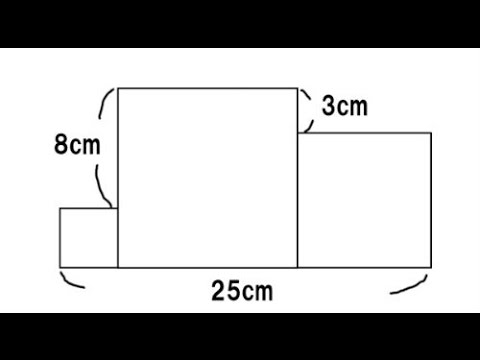
It’s a fourth-grade math problem that became a hot topic on Twitter because, despite looking simple, it’s surprisingly difficult.
The equation itself is easy, but you need quite a bit of creativity to solve it.
Since there’s a detailed explanation provided, why not try it on your own first and then check your answer?