

How many can you solve? Brain-flexing math riddle quiz


Math is truly fascinating! It’s not just about calculation drills—there are rules and puzzles you can use in everyday life hidden within it.
Here, we’ve gathered math quizzes that nurture children’s thinking skills and number-based riddles that spark inspiration, all designed to make learning fun.
From intuitive, illustration-based questions to logical problems where you fill in the blanks with numbers, we’ll share the full appeal of math.
There might even be some problems that adults surprisingly can’t solve.
Gather the whole family and dive in together with excitement!
- Math quiz for elementary school students
- [For Elementary School Students] Cipher Quiz: Fun Puzzle Riddles
- [Interesting] Collection of Math Quiz Problems
- [Easy] Quizzes That Elementary School Students Can Solve! A Collection to Nurture Wisdom
- [Satisfying When Solved] Challenging Quizzes Recommended for Elementary School Students!
- [Interesting] Collection of Matchstick Quiz Problems
- A math quiz for adults. Can you solve it?
- Fun quizzes for elementary school kids: a collection of questions everyone can enjoy together
- [Get Friendly with Games] Math Games, Apps, and Activities
- Easy Riddles for Elementary School Students
- [For Elementary School Students] Recommended Riddle Collection
- Do you get tripped up too? A fun roundup of 10-time quiz questions
- [Trick Quiz] Quiz Questions That Excite Everyone from Kids to Adults
How many can you solve? Brain-flexing math riddle quiz (41–50)
Math riddle

Math is a subject where we arrive at answers through calculation, so we tend to strongly associate it with numeric answers.
However, this quiz asks for things that aren’t numbers, which can be quite disorienting for those who assume it’s all about calculation.
The shapes of numbers and calculations are important for reaching the answer, so read the problems carefully and picture the numbers in your mind.
There are also mixed patterns where something you assumed was a number turns out to be a paraphrased word, or something you thought was a word turns out to be a number, so it’s crucial to switch your mindset between calculation and language as needed.

A shape that looks easy but is surprisingly hard to solve

Something a fourth grader can solve! It’s a problem about finding the perimeter of a shape.
If it were just a rectangle, you could get the answer by adding up the lengths of all the sides, but in this problem part of the rectangle is bumpy, and there are sections whose lengths aren’t given.
At first glance it looks really difficult, but try connecting the unknown parts together.
Then they’ll match the lengths of the known parts, right? With some addition skills and a bit of insight, even lower-grade students who are good at math might be able to solve it!

Calculation Quiz
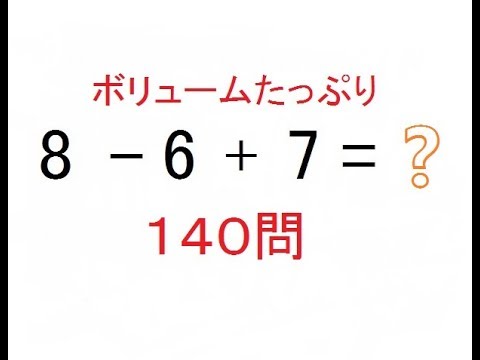
What is your favorite subject? Maybe many people would say, “I’m not so good at math…” But don’t worry.
The calculations in this game are very simple.
Let’s try a “calculation quiz” and compete with everyone! The questions are about as easy as “2 + 0 + 1.” With this, the whole school, including lower grades, can have fun.
You can set a time limit like “How many can you solve in 10 seconds?” or make it a time attack like “How many seconds does it take to solve 10 problems?”—both are sure to get everyone excited! It’s a recommended quiz that makes math, which you might not have been great at, fun.
Calculation Quiz!! Derive the answer using mental math
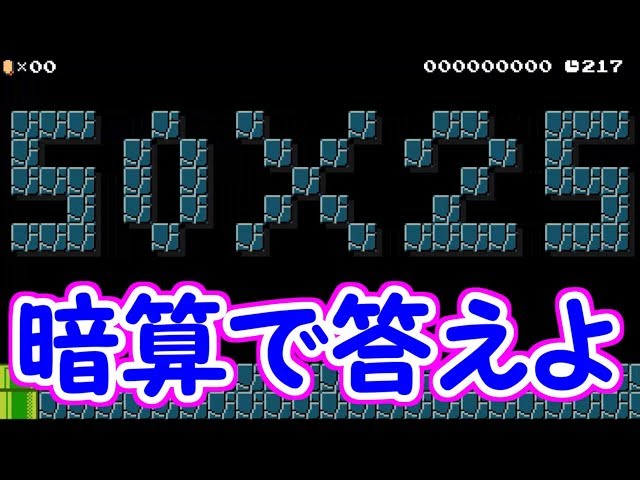
These are arithmetic problems involving addition, subtraction, multiplication, and division, but solving them mentally is a bit challenging.
The background is a Mario-style game, making it enjoyable in a gamified way.
You might end up being more interested in how the game unfolds than in the calculations themselves.
Three entrance exam problems from a highly selective elementary school

This is a quiz that compiles entrance exam questions from ultra-competitive elementary schools.
They are word problems, so even the math questions all require strong reading comprehension.
After checking your answers, there are careful explanations, but they’re quite complex and can be confusing.
Train both your ability to calculate mathematical formulas and your Japanese language skills to understand the problems.
What is the area of the isosceles triangle?

A question that always appears on tests: finding the area of an isosceles triangle! When the height is unknown, we usually use the Pythagorean theorem to find the area, right? But this problem says to find the area without using the Pythagorean theorem.
Looking closely, we don’t even know the length of the base…
Elementary school students who are good at math, how would you solve it? The key is to slightly shift the figure and draw an auxiliary line, then use the triangles formed to determine the height.
If you can solve it with just this hint, that’s amazing!
In conclusion
How was it? The charm of arithmetic isn’t just about calculation skills. Try tackling geometric brainteasers, puzzling over riddles that use formulas, or hunting for math quizzes hidden in everyday life. Even adults who struggled with it in elementary school may find their interest sparked by approaching it in a playful way. Open the door to arithmetic—enjoy it while nurturing your thinking skills.