

Have fun training your brain with a memory game! A party-friendly activity everyone can enjoy

Memory games are popular as brain training that anyone can enjoy casually.
Remembering numbers or cards, recalling sequences—these seemingly simple activities can really invigorate your brain.
You can, of course, play solo, but playing with friends and family in a lively setting also creates more opportunities for communication.
In this article, we’ll introduce memory games for the general public.
We’ll cover games you can play using everyday items at home, as well as card games and board games.
Fun Brain Training with a Memory Game! A Crowd-Pleasing Activity (1–10)
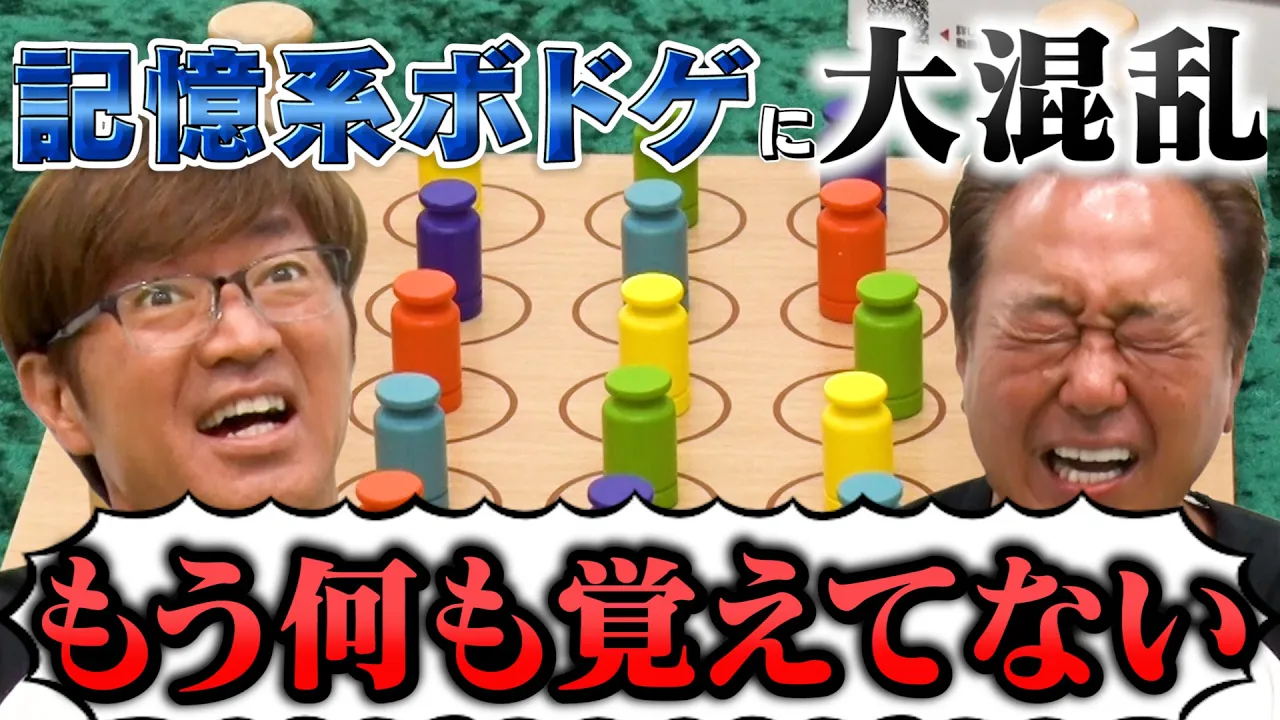
Board game ‘Cloak’

This is a game where you rearrange pieces of various colors to line up three of the same color before your opponent.
It’s not just about moving pieces—each player also has lids to cover the pieces, so you have to remember which color is inside as you play.
Even if you place a piece yourself, you still need to remember it, so it really tests advanced strategy and memory.
There are even situations where you declare a match but it turns out not to be correct due to a memory slip, and that kind of bluffing and mind game is part of the fun.

Co-op game “Too Many Orders”

This is a game where you play as staff at a hamburger shop and work together to remember the orders of customers who place large, complicated orders.
You memorize orders according to the number of players, and if you use up the corresponding cards in your hand, you move on to the next level.
Instead of competing over individual memory skills, everyone cooperates to advance the game, letting you make up for each other’s weaknesses and strengthen your bonds.
Figuring out strategies together—like how to make the orders easier to remember—is also a key element that makes the game more exciting.
Vague Memory Quiz!
https://www.tiktok.com/@gyagyakidsland/video/7489385051805928710It’s a game where photos of everyday items—like candy packages—are converted to black and white, and you try to recall their original colors.
It tests whether you truly pay attention to the small details in daily life and whether you remember them accurately.
Even if you can identify the main color, the finer details can be tricky, and those subtle memory gaps or small mistakes are part of the fun.
A recommended approach is to start with simple images and gradually move on to ones with more intricate color schemes.
Working Memory Game
https://www.tiktok.com/@bear_kids_official/video/7511199169600589063It’s a game where you move to a sample shape posted at a distance, check it, and then copy it at your own spot.
Since the flow is to move and check, then return to your place and draw, it’s a short distance but it’s important to remember it well.
The more complex the sample shape is, the harder it becomes to remember, so prepare shapes suited to the participants.
The interesting point is that adding the action of moving and then drawing makes even simple memories more difficult.
Sorting Challenge
https://www.tiktok.com/@quuun_tiktok/video/7255554387064442120It’s a game where you memorize the order of plastic bottles filled with colored water lined up on a table, then put on a blindfold and figure out how they were swapped.
You only have a limited time to look at the initial arrangement, so it really tests how much you can imprint it in your memory.
By adjusting the initial memorization time and the time to think about which ones were swapped, you can change the game’s difficulty.
The closer the colors are, the harder it becomes to remember, so try various patterns by tweaking the colors and time settings.
Infinite Shiritori
https://www.tiktok.com/@hannariz.haru/video/7520914017481772306This is a game of shiritori—where you take the last character of a word and connect it to a new word—that adds a memory element.
Instead of just saying the next word, you also line up all the words that have been said so far and then add the next one.
As the turns progress, it gets harder because you have to recall the sequence of how you got to the current word.
If you keep the turns moving to a rhythm, the difficulty increases but the rhythm helps you remember, so that pattern is recommended.
Memory Mimic Game
https://www.tiktok.com/@aya_ouchi_asobi/video/7472668423705627925It’s a game where sheets of construction paper in various colors and shapes are laid out on a table, and players act according to those papers, aiming to remember and reproduce the movements.
It’s recommended to decide the number of movements to be prompted in advance, and start with a few simple steps, gradually increasing the number.
Not only change where you place your hands, but also how you place them; the more complex it gets, the more sharply your memory will be honed.
Because the flow is simple, you can imagine many variations—such as the types of movements or the items you arrange.