

Mendelssohn’s Masterpieces | Popular Classical Music

Mendelssohn, a composer who represents German Romanticism.
He was active not only as a composer but also as a pianist and conductor, and from a young age he possessed such musical talent that he was called a child prodigy.
In this article, we introduce some of the masterpieces Mendelssohn left behind.
Whether you’re a fan of Mendelssohn or not very familiar with him, please take a look.
We hope you’ll notice the characteristics and charm of his style and discover some new favorite pieces.
If you play an instrument or sing, do try performing them yourself!
- [Masterpiece Classics] A special showcase of gem-like masterpieces so beautiful they’ll move you to tears
- [Orchestra] Introducing famous and popular pieces
- [Quartet] Masterpieces and Popular Pieces for String Quartet
- [Violin] A curated selection of beloved classic masterpieces and popular pieces that continue to be cherished across eras
- Sibelius’s famous piece. Popular classical music.
- Brahms's masterpieces. Popular classical music.
- Classical Masterpieces: Recommended Works You Should Hear at Least Once
- Classical music by Japanese composers. Recommended classical music.
- [Haydn] Pick up famous and representative pieces!
- Masterpieces of classical piano that are too beautiful for words. A gathering of delicate tones that cleanse the soul.
- Robert Schumann | Introduction to his famous and representative works
- Pick up Beethoven’s famous and representative works!
- Timelessly beautiful classical masterpieces. Recommended classical music.
Mendelssohn’s Masterpieces | Popular Classical Music (1–10)
A Midsummer Night’s Dream, Op. 21: OvertureFelix Mendelssohn

A Midsummer Night’s Dream is a comedy by Shakespeare with the same title.
Set in ancient Athens, it features a stubborn father determined to marry his daughter off to the man he chose, the daughter who loves someone else, and the father plotting to have his disobedient child executed.
There’s also the daughter’s best friend and her lover.
The fairy king Oberon uses a love potion in a whirlwind of slapstick to somehow bring two pairs of lovers together, and the story ends happily with their weddings.
Mendelssohn wrote the incidental music for this drama—11 (or 12) pieces including intermezzi and a scherzo—with the drama beginning with the Overture.
Since Frederick Ashton’s 1964 choreography, it has been performed as a ballet.
The complete music runs about 50 minutes; to start, please listen to the opening Overture.
Wedding March from A Midsummer Night’s Dream, Op. 61Felix Mendelssohn

Mendelssohn’s masterpiece A Midsummer Night’s Dream was composed for Shakespeare’s play.
One section, the Wedding March, has a bright, majestic tone and a festive atmosphere.
After it was performed at the 1858 wedding of Queen Victoria’s eldest daughter in Britain, it became widely beloved as a wedding standard.
Many of you have probably heard it at least once.
It is performed by a resplendent orchestral ensemble, and its powerful, fanfare-like motif is particularly striking.
Songs Without Words, Book II, Op. 30, No. 6: “Venetian Boat Song No. 2”Felix Mendelssohn

From the eight volumes of Songs Without Words he composed throughout his life, here is one piece whose beautiful melody resonates in the heart.
Written in F-sharp minor, it paints in music the scene of a gondola gliding gracefully across the water.
Published in 1835, it is one of the five pieces that Mendelssohn himself titled “Venetian Boat Song.” Set in a gentle 6/8 meter, it envelops the listener in warmth.
Let your ears attend to the beautiful melodic line in the right hand, borne along by the quiet accompaniment in the left.
Mendelssohn’s Masterpieces | Popular Classical Music (11–20)
Rondo Capriccioso, Op. 14, U 67, E majorFelix Mendelssohn
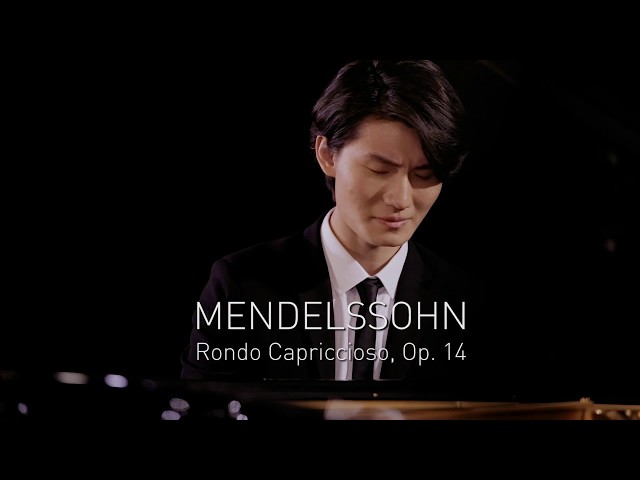
It is one of the most widely beloved pieces among Mendelssohn’s piano works.
Composed between 1828 and 1830, it was first published in London in 1830 or 1831.
Originally conceived as an étude, it later gained a songlike, expressive introduction and became a gift to the pianist Delphine von Schauroth.
While not the most technically demanding piece, it requires a delicate touch and a wide range of expression.
Play it with ample nuance—romantically and passionately.
String Octet in E-flat major, Op. 20Felix Mendelssohn

“The piano that this boy improvises at first sight is nothing short of a miracle!” Mendelssohn, whom Goethe called a child prodigy, was a precocious genius.
He made his debut as a composer at nine, wrote a string quartet at twelve, and completed his Symphony No.
1 at fifteen.
The present work dates from when he was sixteen, already exhibiting refinement and a fully formed beauty.
Composed as a birthday gift for a friend, it reflects the worldview of Mendelssohn as he was growing from boyhood into youth.
It consists of four movements and is scored for four violins, two violas, and two cellos, though it is now also performed by orchestras as a string ensemble.
The performance time is about 35 minutes.
Please give it a listen.
Fingal’s Cave, Op. 26: Concert OvertureFelix Mendelssohn

This piece is the overture Mendelssohn composed after being inspired by Fingal’s Cave during his visit to Scotland at age 20.
It vividly depicts the cave’s mysterious atmosphere and the movement of the sea, as if painting a landscape with music.
The opening theme conveys the cave’s power and beauty, while the second theme portrays the surging waves.
Richard Wagner reportedly praised it as “a work like a first-rate landscape painting.” Highly recommended for those who want to express natural scenery through music.
With a performance time of about nine minutes, why not listen while imagining Scotland’s majestic landscapes?
Piano Trio No. 1 in D minor, Op. 49Felix Mendelssohn
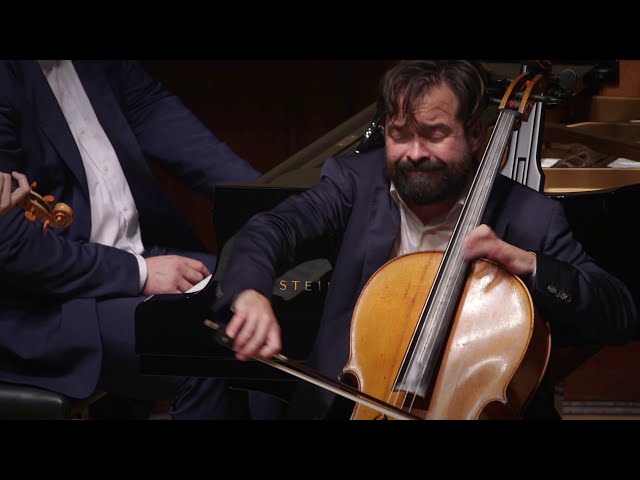
This piano trio for piano, violin, and cello is the work that Schumann praised, saying: “Just as Beethoven’s B-flat major and D major trios and Schubert’s E-flat major trio are their masterpieces, this is the trio of a grand master of our time.
It is an exceptionally fine work that will delight our grandchildren and great-grandchildren for many years to come.” Schumann, his wife Clara Schumann, and Mendelssohn enjoyed a warm friendship.
Mendelssohn, founder and director of the Leipzig Conservatory, was one year older than Schumann and offered them support in many ways.
As a critic and concert promoter (producer), Mendelssohn also helped introduce Schumann’s symphonies.
The performers are the Borodin Trio; movements I–IV, total performance time approximately 31 minutes.
If it feels long, please listen in sections.