

Four-character idioms with numbers: clear explanations of meanings and usage

“Isshin furan” (single-minded devotion), “shichiten hakki” (fall down seven times, get up eight), “juunin toiro” (to each their own)…
Have you noticed that these common four-character idioms all contain numbers? Many four-character idioms with numbers express life lessons and mindsets.
Some describe achieving two results with one action, while others convey the strength to rise no matter how many times you fail.
Knowing their meanings can make daily life feel richer.
In this article, we’ve collected four-character idioms that include numbers.
We also explain their meanings and usage in detail, so try incorporating them into your everyday conversations.
- Boost your vocabulary with four-character idioms that include numbers! A collection of four-character idioms for elementary school students to learn.
- Amusing four-character idioms you’ll want to use right away! A collection of expressions to remember as general knowledge.
- Become positive with four-character idioms that resonate with the heart! Common yet deeply meaningful words.
- Enrich your heart with beautiful four-character idioms! A collection of expressions you'll want to use in everyday life.
- Interesting four-character idioms for elementary schoolers! Words you'll want to use once you understand their meanings
- Four-character idioms that help you achieve goals! Phrases you can use in everyday situations
- Learn the meanings too! Cool four-character idioms that elementary school students will want to remember
- General: Four-character idioms that encourage determination—powerful, heart-stirring words
- [Four-Character Idioms] Impressive and Cool Sound! A Collection of Famous Quotes Worth Knowing as General Knowledge
- [Kakizome] Four-character idioms fit for the New Year: Introducing words that resonate with the heart and their meanings
- Easy to remember and fun! A collection of number pun/mnemonic ideas
- A collection of four-character idioms perfect for baseball: words to rouse both teams and individuals
- Surprisingly tricky! Check your general knowledge with a four-character idiom quiz
Four-character idioms that include numbers: Clear explanations of meanings and usage (21–30)
Kill two birds with one stone

A four-character idiom used when you gain two benefits with one action is isseki nichō (literally “one stone, two birds”).
It’s widely known in Japan, but in fact it’s a translation of the English proverb “kill two birds with one stone.” The phrase is said to have originated from the idea that when a stone was thrown at one bird, two fell.
People sometimes say “one stone, three birds” or “one stone, four birds,” but those are coinages derived from “one stone, two birds.” A famous antonym is the saying “He who chases two rabbits catches neither.”

writhe in agony
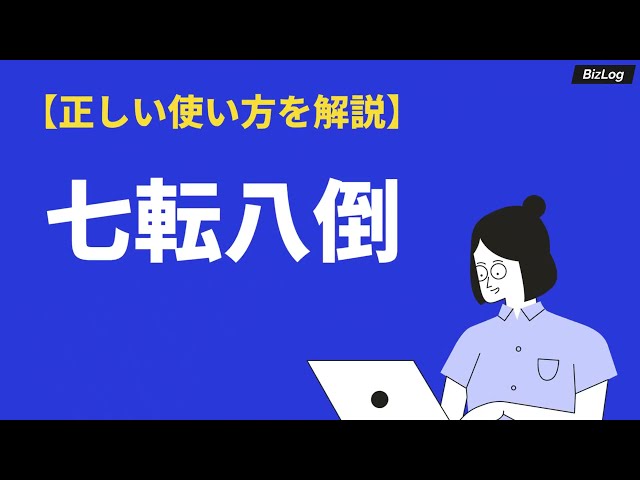
This is a four-character idiom used when someone is in intense pain or in a state of severe confusion.
As the kanji “七転八倒” literally depict “falling seven times and collapsing eight,” you can imagine the severity of the pain or turmoil.
The phrase originates from a Chinese anecdote and is said to describe a world in chaos.
In everyday conversation, it’s used to express situations like being injured or experiencing an event so sad you can’t even stand.
Although the kanji look similar to '七転八起,' their meanings are completely different, so be sure not to mix them up.
Three cold days, four warm days

Sankan-shion refers to a pattern in which cold days and warm days alternate in a seven-day cycle.
The sharp weekly swings in weather are said to be caused by the Siberian High.
This term is actually a proverb describing winters in northeastern China and the Korean Peninsula, which are influenced by the Siberian High.
Japan, however, is also affected by the Pacific High, so true sankan-shion is relatively uncommon there.
As a result, in Japan the term is increasingly used to describe the temperature fluctuations in early spring, when low- and high-pressure systems arrive alternately.
three-legged race

It’s famous as a sports day event, but this four-character idiom is also often used in everyday life when spouses or families work together, or when you proceed with a task alongside a partner at work.
It’s commonly used when two people combine their efforts to tackle a single task or goal.
Examples include: “Thanks to his support, the new project is progressing smoothly as a two-person, three-legged race,” “Parent and child take on the entrance exams together, like a three-legged race,” and “As a married couple, we joined forces and started the company together, like a three-legged race.” It’s frequently used to describe taking on a long journey while mutually supporting each other.
It’s a good phrase to use when talking about family, too.

Five viscera and six bowels
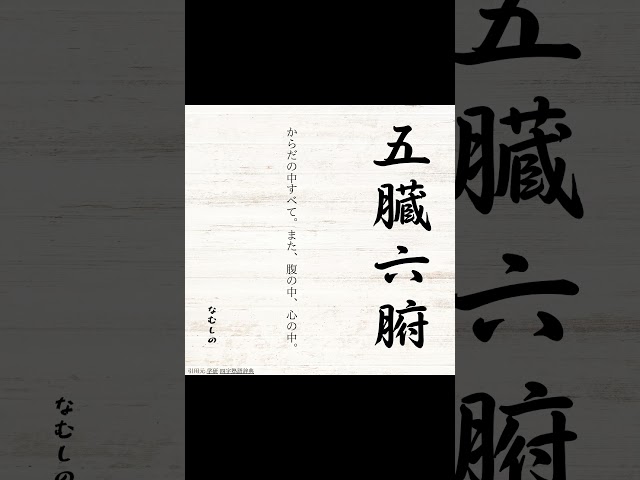
This four-character idiom originally means “all the internal organs of the human body,” but nowadays it’s used in the sense of “from the depths of one’s being” or “with one’s whole body.” The “five viscera” refer to the liver, heart, spleen, lungs, and kidneys, while the “six bowels” refer to the gallbladder, small intestine, stomach, large intestine, bladder, and triple burner (san jiao).
This idiom is often used when a drink or food permeates the body, or when one is deeply moved or feels something intensely.
A quiz that uses this idiom while asking questions about body parts could be a fun way to liven things up.
around the clock

When it comes to four-character idioms that people from children to adults often hear, isn’t shiroku-shichū the one that comes to mind? The “shiroku” refers to 4×6=24—meaning twenty-four hours—and it’s commonly used when you’re doing something or thinking about something all day long.
For example: “He’s on his phone around the clock,” or “Work is on my mind around the clock.” It’s a four-character idiom frequently used in daily conversation and business settings, and it’s easy for anyone to adopt.
Try replacing “all the time” with “around the clock” when you speak.
to struggle desperately; to have a hard time; to be in dire straits (shiku-hakku)

Shiku-hakku is a four-character idiom that means to struggle greatly.
It is said to originate from Buddhist terminology.
The initial “four sufferings” are birth, aging, sickness, and death; the subsequent “eight sufferings” add separation from loved ones, contact with those one hates, frustration from unfulfilled desires, and the suffering arising from the five aggregates.
In Buddhism, these eight sufferings are considered unavoidable for humans.
An example of usage would be: “Even though I struggled mightily, I finally reached the goal.” Also, be careful not to misread it as “shikku-hakku.”