

Famous opera masterpieces | Featuring many great opera singers

Opera is fairly familiar in Japan, even being included in school textbooks.
Still, many people may recognize the melodies without knowing much about the famous opera pieces themselves.
For those readers, we’ve selected a number of renowned opera masterpieces.
In addition to introducing the works, we explain them from various angles—the background of their creation, the appeal of the opera singers performing them, and more—so both regular opera listeners and those less familiar with opera can enjoy the content.
Please take your time and enjoy it to the very end.
- Famous pieces recommended for opera beginners. Recommended opera songs.
- [Masterpiece Classics] A special showcase of gem-like masterpieces so beautiful they’ll move you to tears
- [Baroque Music] A Curated Selection of Timeless Masterpieces and Famous Works
- [Orchestra] Introducing famous and popular pieces
- Cello Masterpieces: A comprehensive introduction to exquisite classical works that let you savor its profound timbre
- Masterpieces of the bolero. Recommended popular pieces in bolero form and outstanding performances.
- Mozart: An Introduction to His Signature and Popular Works
- Oskar Merikanto Popular Song Rankings [2026]
- [Unrequited Love] Heart-wrenching Love Songs | A Roundup of Tear-Inducing Crush and Breakup Tracks
- Debussy’s masterpiece. Popular classical music.
- Vivaldi’s masterpiece. Popular classical music.
- [Christmas] Classical music to listen to at Christmas: recommended sacred Christmas songs
- Masterpieces of the Romantic Era: A sweeping introduction to soul-stirring, celebrated gems!
Famous Opera Masterpieces | Many Great Opera Singers Also Appear (71–80)
Live for song, live for loveLeontyne Price

From Puccini’s Tosca, Tosca’s aria in Act II.
Although this work is synonymous with Italian prima donna opera, it isn’t performed very frequently in Japan due to the difficulty of the title role.
It’s a moving scene in which Tosca’s heartfelt lament to God is deeply affecting and brings tears to the eyes.
Tears unseen by anyoneLuigi Alva

Nemorino’s aria from Act 2 of Donizetti’s L’elisir d’amore.
Among the most famous Romantic-era tenor arias, it is typically sung by a lyric leggero.
It’s moving to see the cheerful, guileless young Nemorino grow a little more mature as he becomes confident in Adina’s love.
Recondita armoniaPlacido Domingo
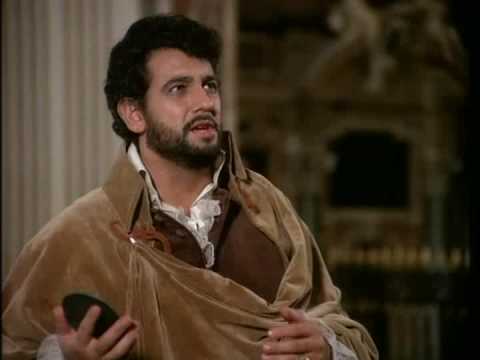
From Puccini’s Tosca, Cavaradossi’s aria from Act I.
While not particularly flashy compared to other works of the same era, this piece is woven with Puccini’s characteristically beautiful melodies and, like the Act III aria, appears to enjoy great popularity.
Because it contains many sustained high notes, a high level of vocal technique is required to sing it.
You devil, you fiend.Renato Bruson

From Verdi’s Rigoletto, the Act II aria by Rigoletto.
Sung as he tries to get his daughter back, this aria combines fierce anger with music that pleads for mercy, and because it demands extremely high technique, it is said to be the pinnacle that Verdi baritones devote their careers to reaching.
The current singing voiceRita Streich

From Rossini’s The Barber of Seville, Rosina’s aria from Act 1.
You can hear the advanced technique called agilità, frequently used in Rossini’s music, in which a single word is sung through a rapid succession of notes.
Incidentally, this aria exists in two versions—mezzo-soprano and soprano—with different keys for each.
Largo al factotumThomas Hampson

From Rossini’s The Barber of Seville, Figaro’s aria in Act 1.
It’s an extremely challenging piece that demands a very high range for a baritone.
In addition, the rapid-fire patter—emblematic of the witty narrator—never lets up, and if performed flawlessly, it brings the house down with thunderous applause.
My fatherAna Maria Marutinesu: uta

This is one of the arias from the opera Gianni Schicchi.
Lauretta, the daughter, is in love with the young Rinuccio and wants to marry him, but she faces opposition from Zita, a relative of Rinuccio’s, because Lauretta’s family is not wealthy.
There is also an inheritance dispute on Zita’s side of the family, so the marriage is not permitted.
In this aria, Lauretta pleads with her father—Gianni Schicchi, an educated man—to find a good solution.
Though desperate in content, the piece also possesses a wistful elegance.