

Famous opera masterpieces | Featuring many great opera singers

Opera is fairly familiar in Japan, even being included in school textbooks.
Still, many people may recognize the melodies without knowing much about the famous opera pieces themselves.
For those readers, we’ve selected a number of renowned opera masterpieces.
In addition to introducing the works, we explain them from various angles—the background of their creation, the appeal of the opera singers performing them, and more—so both regular opera listeners and those less familiar with opera can enjoy the content.
Please take your time and enjoy it to the very end.
- Famous pieces recommended for opera beginners. Recommended opera songs.
- [Masterpiece Classics] A special showcase of gem-like masterpieces so beautiful they’ll move you to tears
- [Baroque Music] A Curated Selection of Timeless Masterpieces and Famous Works
- [Orchestra] Introducing famous and popular pieces
- Cello Masterpieces: A comprehensive introduction to exquisite classical works that let you savor its profound timbre
- Masterpieces of the bolero. Recommended popular pieces in bolero form and outstanding performances.
- Mozart: An Introduction to His Signature and Popular Works
- Oskar Merikanto Popular Song Rankings [2026]
- [Unrequited Love] Heart-wrenching Love Songs | A Roundup of Tear-Inducing Crush and Breakup Tracks
- Debussy’s masterpiece. Popular classical music.
- Vivaldi’s masterpiece. Popular classical music.
- [Christmas] Classical music to listen to at Christmas: recommended sacred Christmas songs
- Masterpieces of the Romantic Era: A sweeping introduction to soul-stirring, celebrated gems!
Famous Opera Masterpieces | Many Great Opera Singers Also Featured (11–20)
Gelido in ogni venaCecilia Bartoli

Antonio Vivaldi’s opera Farnace.
Among the pieces that appear in the work, Gelido in ogni vena is particularly well known.
As you would expect from a piece composed by Antonio Vivaldi, one of Italy’s representative Baroque composers, it carries an overall heavy, somber atmosphere.
Not many people may know this, but Klaus Nomi’s Cold Song, by the German singer-songwriter, was likely strongly inspired by this piece.

E lucevan le stelleJonas Kaufmann

E lucevan le stelle, a famous piece composed by Giacomo Puccini.
It is one of the best-known numbers from the opera Tosca, and in Japan it is known under the title Hoshi wa Hikarinu (“The Stars Shone”).
It is a signature piece for tenor singers and pairs especially well with dramatic voices.
This time, we’ve highlighted a performance by Jonas Kaufmann.
His rich, almost baritone-like timbre fits the atmosphere of the piece perfectly.
Ave MariaLuciano Pavarotti
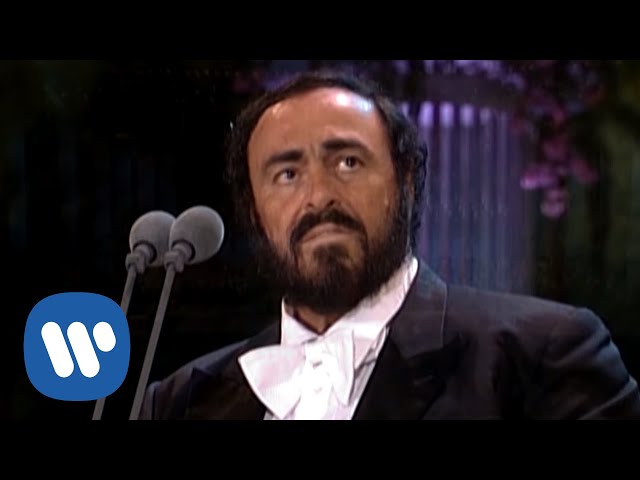
Franz Schubert’s song Ave Maria.
This piece is Schubert’s final song and, among the many works bearing the name Ave Maria, it is particularly popular.
It is a celebrated masterpiece that has been sung by numerous tenors, but the one who performs it best is undoubtedly Luciano Pavarotti.
His warm timbre—often described as the voice of the sun—fits this profoundly religious piece perfectly.
Una furtiva lagrimaL’Elisir d’Amore

Gaetano Donizetti, a leading Italian musician of the early 19th century.
“Una furtiva lagrima” is a piece from his representative opera L’elisir d’amore, known in Japan as “Hitoshirenu Namida” (A Secret Tear).
The melody is quintessentially “this is an aria!!!” — highly lyrical and beautifully crafted.
Consequently, the work is also famous for how dramatically its quality can vary depending on the singer’s skill.
If you’d like to savor this piece more deeply, why not compare performances by multiple vocalists?
Cantique de NoëlEnrico Caruso

The famous piece based on the poem by Placide Cappeau, “Cantique de Noël.” In the English-speaking world it is known as “O Holy Night,” and in Japanese as “Kiyoshi Kono Yoru,” making it one of the most famous Christmas carols in the world.
While familiar in pop music, it has also been covered as an operatic work and has long been performed by many opera singers.
This time, among the oldest surviving recordings, we’ve highlighted a rendition by Enrico Caruso.
Why not savor the depth of this song along with the sound quality of the era?
E lucevan le stelleJosé Carreras

I’d like to introduce a slightly unusual piece here.
“En Aranjuez con tu Amor,” known in Japanese as “Aranjuez Concerto,” is generally recognized as a concerto centered on the guitar.
It blends well with popular music and has been covered by jazz musicians such as Miles Davis, and of course, there are song (vocal) arrangements as well.
One example is this video: the Spanish tenor José Carreras delivers vocals that perfectly match the piece’s dramatic atmosphere.
Please give it a listen.
Famous Opera Masterpieces | Many Great Opera Singers Also Appear (21–30)
Opera Dido and Aeneas (by Henry Purcell)Uīn Kontsentsusu Mujikusu

The orchestral piece begins with a harmony of beautiful melodies that greatly heightens the anticipation for the opera to follow, and that expectation is fulfilled as the entire work is performed.
Dido and Aeneas is one of the masterpieces of Baroque opera and premiered in London in December 1689.