

Famous opera masterpieces | Featuring many great opera singers

Opera is fairly familiar in Japan, even being included in school textbooks.
Still, many people may recognize the melodies without knowing much about the famous opera pieces themselves.
For those readers, we’ve selected a number of renowned opera masterpieces.
In addition to introducing the works, we explain them from various angles—the background of their creation, the appeal of the opera singers performing them, and more—so both regular opera listeners and those less familiar with opera can enjoy the content.
Please take your time and enjoy it to the very end.
- Famous pieces recommended for opera beginners. Recommended opera songs.
- [Masterpiece Classics] A special showcase of gem-like masterpieces so beautiful they’ll move you to tears
- [Baroque Music] A Curated Selection of Timeless Masterpieces and Famous Works
- [Orchestra] Introducing famous and popular pieces
- Cello Masterpieces: A comprehensive introduction to exquisite classical works that let you savor its profound timbre
- Masterpieces of the bolero. Recommended popular pieces in bolero form and outstanding performances.
- Mozart: An Introduction to His Signature and Popular Works
- Oskar Merikanto Popular Song Rankings [2026]
- [Unrequited Love] Heart-wrenching Love Songs | A Roundup of Tear-Inducing Crush and Breakup Tracks
- Debussy’s masterpiece. Popular classical music.
- Vivaldi’s masterpiece. Popular classical music.
- [Christmas] Classical music to listen to at Christmas: recommended sacred Christmas songs
- Masterpieces of the Romantic Era: A sweeping introduction to soul-stirring, celebrated gems!
Famous Opera Masterpieces | Featuring Many Great Opera Singers (31–40)
Opera La Traviata (Giuseppe Verdi)Tōkyō Firuhāmonī Kōkyō Gakudan

La Traviata, counted among the masterpieces of opera for its dramatic power and exceptionally high number of performances, nevertheless suffered a major failure at its premiere at Venice’s La Fenice in March 1853 and went unappreciated for a time.
The soprano singing the role of Violetta was considered overly stout and therefore comical, and the subject matter—centered on a courtesan—was still difficult for Italian audiences to accept.
The recognition of this superb opera had to await a more suitable time.
The Champagne SongEzio Pinza

From Mozart’s Don Giovanni, the Act I aria of Don Giovanni.
As its title suggests, it erupts with torrential energy like champagne bursting from a bottle, surging forward and then rushing past.
It’s a piece that conveys Don Giovanni’s brutality while still exuding a wild allure.
Pourquoi me reveiller / O spring breeze, why do you awaken me? (O spring breeze, why do you awaken me?)Jonas Kaufmann/yonasu·kaufuman: song

This is one of the arias from the opera Werther (also rendered as Wether), which is based on the novel The Sorrows of Young Werther.
In it, Werther sings of his feelings for Charlotte, who is already engaged to be married, expressing a heartrending, maddening unrequited love.
Mozart – The Marriage of Figaro Overture (K.492) – Wiener Symphoniker – Fabio Luisi (HD)Wolfgang Amadeus Mozart

Born in 1756, the Australian composer Wolfgang Amadeus Mozart’s work, the opera The Marriage of Figaro, from which this is the Overture.
The Marriage of Figaro is one of the most famous and beloved operas of all time.
The overture is also frequently performed on its own.
Comic opera The Elixir of Love (by Gaetano Donizetti)Uīn Kokuritsu Kagekijō Kangen Gakudan
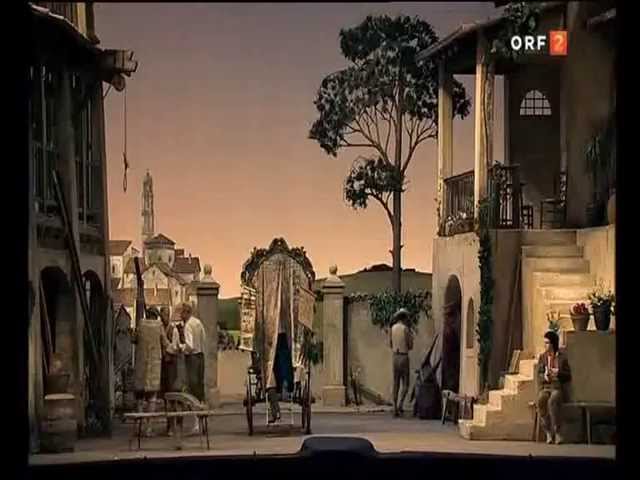
It’s an opera that is romantic and tinged with melancholy, with an engaging story centered on the push and pull of love.
Above all, when Adina hears that Nemorino has become a soldier to raise money to buy a love potion, and he sees her eyes fill with tears, he sings the aria “Una furtiva lagrima,” believing in her love—the poignantly beautiful melody sends a shiver through the heart.
Famous Opera Masterpieces | Featuring Many Great Opera Singers (41–50)
The current singing voiceTeresa Berugansa: Uta

This is a piece from The Barber of Seville, an opera that depicts events prior to The Marriage of Figaro.
Count Almaviva, who has fallen in love with the young Rosina, disguises himself as a poor student named Lindoro to conceal his identity and sings of his love for her.
This particular piece is sung in the scene where Rosina, while writing a letter to Lindoro, realizes her own feelings of love.
Opera Der Freischütz (by Weber)Hanburuku Firuhāmonī Kangen Gakudan

The prelude’s structure is superb, and the “Huntsmen’s Chorus” along with the other arias are dazzling, making this a brilliant opera.
By completing the style of German national opera in Der Freischütz, Weber created a work that became the catalyst for the emergence of many later masterpieces of German opera.