

[Orchestra] Introducing famous and popular pieces


Among classical music, the orchestra is the most opulent and offers the widest range of expression.
When a variety of instruments, each infused with the performer’s own sensibility, come together to create a single piece of music, it produces a unique allure found nowhere else.
In this article, we’ve picked out famous and popular orchestral pieces.
Even within orchestral music, there are many genres—from symphonies and concertos to operas.
We’re introducing everything from pieces everyone has heard to works well-known among classical enthusiasts, so be sure to check them out.
- Cool classical masterpieces. Recommended classical music.
- [Masterpiece Classics] A special showcase of gem-like masterpieces so beautiful they’ll move you to tears
- Classical Masterpieces: Recommended Works You Should Hear at Least Once
- Classical masterpieces. Recommended classical music.
- Timelessly beautiful classical masterpieces. Recommended classical music.
- Masterpieces of Ballet Music: Introducing Classic Favorites
- Dvořák’s masterpiece. Popular classical music.
- [Quartet] Masterpieces and Popular Pieces for String Quartet
- Sibelius’s famous piece. Popular classical music.
- [Violin] A curated selection of beloved classic masterpieces and popular pieces that continue to be cherished across eras
- Mendelssohn’s Masterpieces | Popular Classical Music
- A poignant classic masterpiece. Recommended classical music.
- Today's Classics: Recommended classical music and great performances to listen to today
[Orchestra] Introducing famous and popular pieces (11–20)
Wedding March from A Midsummer Night’s DreamFelix Mendelssohn

When it comes to wedding music, many people probably think of this piece.
The fanfare at the beginning is incredibly famous.
This piece is one of the incidental music numbers from A Midsummer Night’s Dream, composed by the German composer Felix Mendelssohn.
A Midsummer Night’s Dream is a play written by William Shakespeare, telling a story woven by aristocratic men and women about to be married and by fairies.
It is characterized by a simple, memorable melody and a bright yet dignified atmosphere.

Pavane for a Dead QueenMaurice Ravel

This piece was composed in 1899 by the French composer Maurice Ravel.
It was originally written for piano, and in 1910 Ravel himself arranged it for orchestra.
Thanks to its exceptionally beautiful melody and a difficulty level that isn’t too high, it is often performed at concerts, so many people may find themselves thinking, “I didn’t know the title, but I’ve heard this before.” It’s a highly recommended piece for anyone seeking music that cleanses the soul.
Suite ‘Pictures at an Exhibition’Modest Mussorgsky=Maurice Ravel

This suite, subtitled “In Memory of Viktor Hartmann,” was inspired by a posthumous exhibition held in tribute to Hartmann, a painter and friend who died at the age of 39.
It consists of the walking interlude “Promenade,” in which Mussorgsky moves through the gallery, and ten pieces based on impressions of the paintings.
Although it was neither performed nor published during Mussorgsky’s lifetime, it was later discovered and edited for publication by Rimsky-Korsakov.
Subsequently, the piano suite was orchestrated by Ravel, known as the “magician of orchestration.”
Prélude to the Afternoon of a FaunClaude Debussy
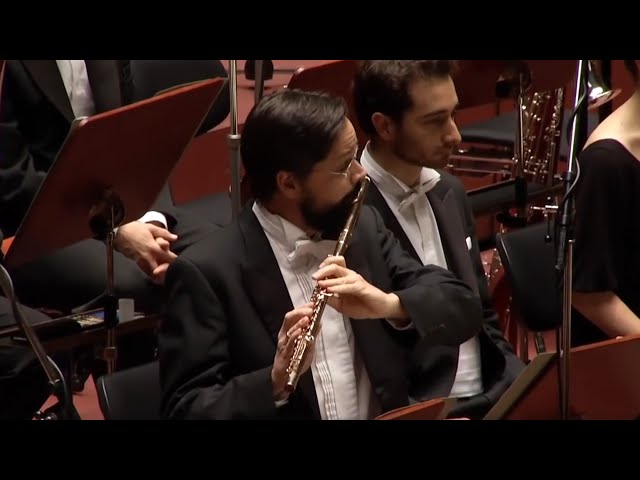
Claude Debussy, known as a pioneer of Impressionist music.
The orchestral work he composed between 1892 and 1894 can truly be called a masterpiece in which his talent blossomed.
Inspired by a poem by Mallarmé, the piece depicts the reverie of a faun on a summer afternoon.
Opening with a flute solo, with the harp heightening the mood, it evokes the feeling of a drowsy, sultry afternoon.
His skillful use of the flute’s middle register to convey a languid atmosphere was innovative for its time.
At its premiere in December 1894, it was so well received that it was encored twice, and it became a masterpiece that exerted a major influence on modern music.
Ride of the ValkyriesRichard Wagner

A piece used in Richard Wagner’s music drama Die Walküre, by the composer also known as the “King of Music Drama,” who was famous not only as a theorist and man of letters but also for writing most of his own librettos.
It is the music that plays as the prelude to Act III, evolving from an opening that gives a sense that something is about to begin into a grand, expansive style—an arrangement that showcases the dramatic dynamics unique to the orchestra.
In Japan, it has been featured in numerous TV programs and events, including commercials.
Whether you’re a symphony enthusiast or a newcomer to classical music, it’s one of those staple classical numbers that will stir your heart.

Symphony No. 7Ludwig van Beethoven

An upbeat and valiant, forward-looking piece that seems to embody Beethoven’s vitality as he overcame hardships—such as a life made difficult by war and his parting with his beloved Thérèse—and set out on a new path.
Each movement employs striking rhythms, and the first movement is especially notable for being built on the repetition of the same rhythmic figure.
Owing to its rhythmic character, it is frequently used in films and TV dramas.
With its emphasis on rhythm and brisk development, it’s an approachable work even for those who don’t usually listen to classical music.
[Orchestra] Introducing Famous and Popular Pieces (21–30)
Rhapsody in BlueGeorge Gershwin

Highly acclaimed as “symphonic jazz,” a fusion of jazz and classical music, it catapulted Gershwin’s name to worldwide fame.
Legend has it that he suddenly conceived the idea for this rhapsody on a train bound for Boston, inspired by the rhythm of the rails; you can practically picture a steam locomotive about to depart, then gradually accelerating and surging forward.
From the orchestra’s sprightly, jazz-like rhythms and the kaleidoscope of timbres produced by various wind techniques to the near-improvisational piano cadenza, it’s a piece overflowing with points of interest!