

![[Orchestra] Introducing famous and popular pieces](https://i.ytimg.com/vi/ytQfhqWmr9M/hqdefault.jpg)


Among classical music, the orchestra is the most opulent and offers the widest range of expression.
When a variety of instruments, each infused with the performer’s own sensibility, come together to create a single piece of music, it produces a unique allure found nowhere else.
In this article, we’ve picked out famous and popular orchestral pieces.
Even within orchestral music, there are many genres—from symphonies and concertos to operas.
We’re introducing everything from pieces everyone has heard to works well-known among classical enthusiasts, so be sure to check them out.
- Cool classical masterpieces. Recommended classical music.
- [Masterpiece Classics] A special showcase of gem-like masterpieces so beautiful they’ll move you to tears
- Classical Masterpieces: Recommended Works You Should Hear at Least Once
- Classical masterpieces. Recommended classical music.
- Timelessly beautiful classical masterpieces. Recommended classical music.
- Masterpieces of Ballet Music: Introducing Classic Favorites
- Dvořák’s masterpiece. Popular classical music.
- [Quartet] Masterpieces and Popular Pieces for String Quartet
- Sibelius’s famous piece. Popular classical music.
- [Violin] A curated selection of beloved classic masterpieces and popular pieces that continue to be cherished across eras
- Mendelssohn’s Masterpieces | Popular Classical Music
- A poignant classic masterpiece. Recommended classical music.
- Today's Classics: Recommended classical music and great performances to listen to today
[Orchestra] Introducing Famous and Popular Pieces (1–10)
Jupiter from The Planets SuiteGustav Holst
One piece from The Planets, composed by the British composer Gustav Holst.
The Planets is a work inspired by the relationship between the planets in astrology and Roman mythology, and it consists of seven movements: Neptune, Mars, Venus, Jupiter, Saturn, Uranus, and Mercury.
In Japan, the middle section of this piece is famous through Ayaka Hirahara’s release “Jupiter,” while in the UK it is known as a patriotic song and hymn, sometimes called a second national anthem.
Its distinctive harmonies and richly colored orchestration invite us out into the cosmos.

Symphony No. 9 “From the New World”Antonín Dvořák

A symphony by Antonín Dvořák, a Czech composer of the late Romantic period who moved to America and contributed to music education as a conservatory director.
The subtitle “From the New World” carries the meaning of “a message from America to his homeland of Bohemia,” and the piece is famous as a representative work from Dvořák’s American years.
Even those not well-versed in classical music may recognize the second movement, which has been arranged as ‘Going Home,’ and the fourth movement, which shifts from an opening that evokes the film Jaws to a majestic tone.
It’s a highly recommended piece for anyone unsure where to begin with classical music.

Suite “Carmen”Georges Bizet

A suite that excerpts and arranges the prelude, interludes, arias, and more from Bizet’s masterpiece opera Carmen.
The opera is a love story depicting the passion and jealousy between Don José, a conscientious soldier, and Carmen, a Romani woman who lives freely.
Based on Prosper Mérimée’s novella Carmen, it is written in the opéra comique style, in which spoken dialogue connects the musical numbers.
Since this suite was not selected or edited by Bizet himself, some conductors change the order of movements or compile their own original suites by selecting freely from the two existing Carmen suites.
It’s a suite that lets you enjoy the atmosphere of various scenes from the opera all at once!
“The Moldau” from “Má vlast”Bedrich Smetana

A beautiful masterpiece depicting the landscapes surrounding the Vltava (Moldau) River flowing through Prague.
It passes through forests, by a farmhouse wedding, and at night water nymphs dance in the moonlight…
such scenes vividly come to mind.
It is a work filled with Smetana’s love for his homeland.
BoleroMaurice Ravel
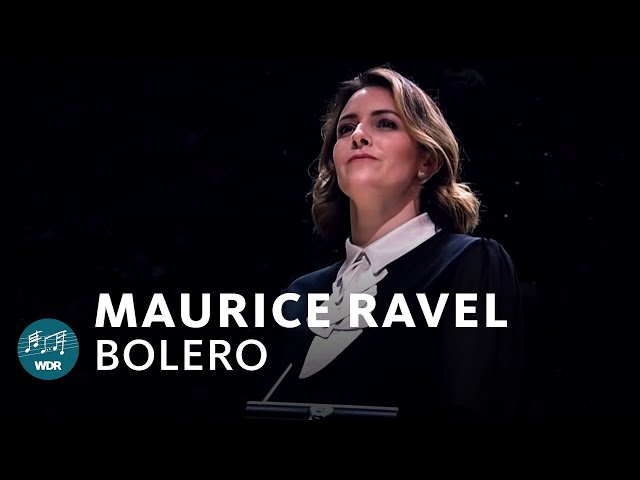
An orchestral work composed in 1928 by the French composer Maurice Ravel.
One of his signature pieces, it is characterized by its repetitive, monotonous rhythm and masterful orchestration.
Over a steady snare drum rhythm, various instruments take turns playing the melody, gradually increasing in volume and intensity.
With a performance time of about 15 minutes and no change in tempo, it is unparalleled in how captivating it is despite using only two melodies.
This work lets you fully enjoy the orchestra’s rich palette of colors and is recommended not only for those interested in classical music but also for anyone who wants to experience the spellbinding power of music.
Pomp and Circumstance Marches, No. 1Edward Elgar

Among the orchestral marches Pomp and Circumstance by the British composer Edward Elgar, this is the most famous piece.
Its middle section melody is especially well known; in the United Kingdom it is sung under the title Land of Hope and Glory and is cherished as a kind of second national anthem.
At the BBC Proms, the summer classical concert series held in London, the piece is traditionally performed as the closing number of Part 2 on the Last Night of the Proms.
The original title Pomp and Circumstance is taken from a line in Act 3, Scene 3 of Shakespeare’s play Othello.
Overture to the operetta “Die Fledermaus”Johann Strauss II

Johann Strauss II, a composer emblematic of Vienna.
His work Die Fledermaus is an operetta set in 19th-century Vienna.
The overture is distinguished by lively, elegant Viennese waltz melodies.
Its music, bubbling like champagne, brilliantly conveys the comic atmosphere of the entire piece.
It premiered in 1874 at the Theater an der Wien.
The story, woven from disguises and deceptions, satirizes the glitter and frivolity of the social scene of the time and brims with humor.
It’s a perfect piece for anyone who wants to savor the charm of Vienna through music.