

Become positive with four-character idioms that resonate with the heart! Common yet deeply meaningful words.

Four-character idioms that express a positive mindset—such as “nanakorobi yaoki” (fall down seven times, get up eight), “shinki itten” (a fresh start), and “futō fukutsu” (unyielding and indomitable)—can support our hearts when we feel down or face difficulties.
These idioms, infused with the wisdom of the ancients, have the power to gently nudge us forward in our modern lives.
In this article, we’ll introduce commonly used, uplifting four-character idioms, along with their meanings and how to use them.
Encountering words that encourage you in everyday life will surely bring a fresh breeze to your heart.
- General: Four-character idioms that encourage determination—powerful, heart-stirring words
- Easy-to-remember, positive four-character idioms for elementary school kids! Words that brighten the heart
- [Kakizome] Four-character idioms fit for the New Year: Introducing words that resonate with the heart and their meanings
- Four-character idioms that express an indomitable spirit! Words to know when facing difficulties
- Four-character idioms that help you achieve goals! Phrases you can use in everyday situations
- [Four-Character Idioms] Impressive and Cool Sound! A Collection of Famous Quotes Worth Knowing as General Knowledge
- Four-character idioms for New Year’s resolutions! A collection of motivational phrase ideas
- Easy for elementary school students to remember! A four-character idiom that expresses the feeling of trying your best
- Learn the meanings too! Cool four-character idioms that elementary school students will want to remember
- Enrich your heart with beautiful four-character idioms! A collection of expressions you'll want to use in everyday life.
- Four-character idioms that pioneer the future: powerful words that express challenge and effort, perfect as personal mottos.
- Four-character idioms wishing happiness: a collection of heartwarming expressions for everyday use
- Four-character idioms that help elementary schoolers not give up: words that spark the power to keep trying
Become positive with four-character idioms that resonate with the heart! Common yet deeply meaningful expressions (71–80)
innocent and pure
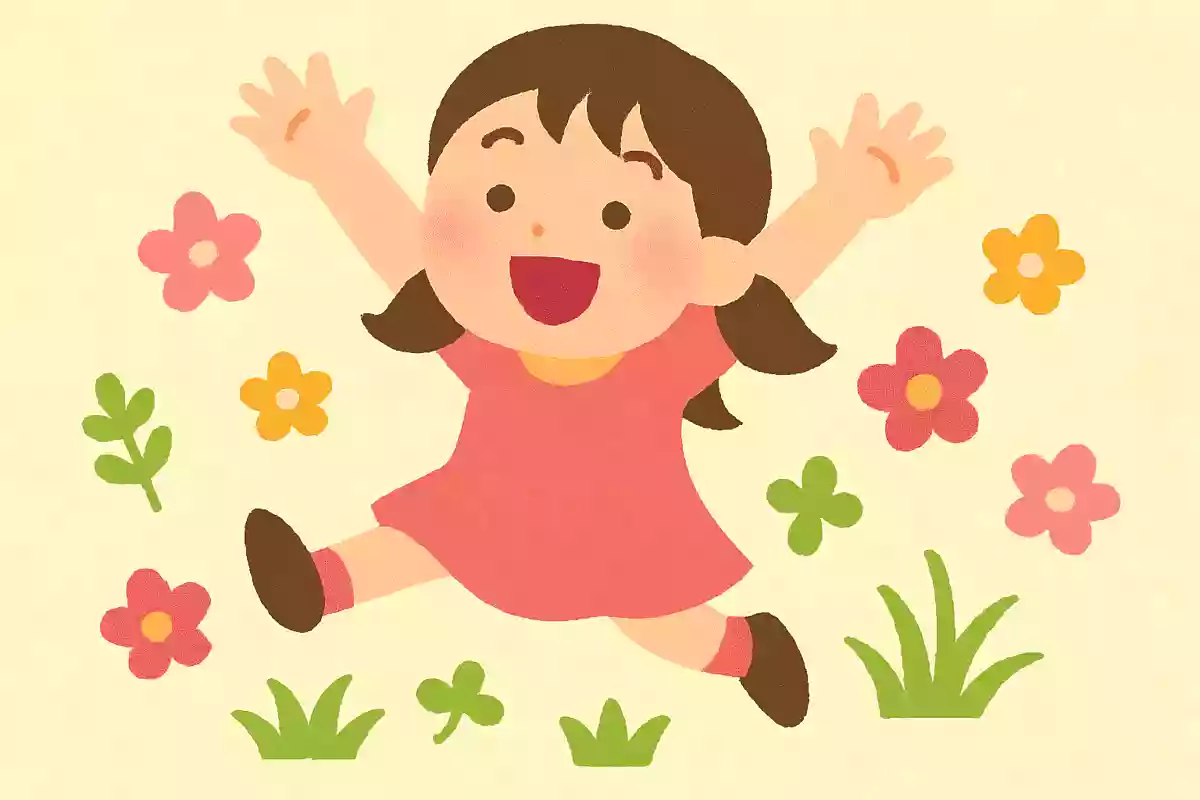
This is a four-character idiom that describes an unadorned, innate natural disposition, expressing innocence and straightforwardness.
“Tenshin” means the unaltered form given by heaven, and “ranman” depicts a radiant state like flowers blooming in profusion, thereby conveying pure light.
It has a nuance close to “childlike innocence,” and using this term can also underscore how valuable purity is.
It’s a phrase that can convey a truthful, straightforward personality and a pure heart.

a woman of both talent and beauty

It means someone who is smart and also beautiful.
In other words, it refers to an amazing person who has both intelligence and good looks.
For example, if there’s someone at school who can present clearly and also has a charming smile, you could say that person is “saishoku kenbi.” It’s a cool, stylish expression that both kids and adults can use, so it’s worth remembering.
Aim to be “saishoku kenbi” yourself—study hard and have fun with fashion too!

Excellence in both academics and sports

A four-character idiom that means “Let’s work hard at both studying and sports!” It says that it’s important to study properly at school while also playing energetically with friends and getting exercise.
For example, if you memorize kanji and read books every day while also enjoying soccer or basketball, both your mind and body will grow stronger.
By aiming for bunbu ryōdō—excellence in both the literary and the martial—you can grow in a balanced way, both mentally and physically, and your everyday life will become more fun.
Even as an adult, valuing both your job and your hobbies follows the same idea of bunbu ryōdō.
Try living each day in a cool, well-balanced way with bunbu ryōdō!
a clear and serene mind

It’s a four-character idiom that describes a state where the mind is bright like a polished mirror and calm like still water.
For example, before a competition you might feel your heart pounding.
If you take a deep breath and steady your mind at such times, you’ll feel refreshed, like a tranquil lake without a single ripple, and you can reach a state of meikyō-shisui.
With both your head and heart clear, it’s easier to perform at your best.
“Meikyō-shisui” is the perfect phrase for when you want to cleanse and calm your mind.
Whether you’re a child or an adult, if your heart feels unsettled, try remembering this phrase.
work in the fields on sunny days, read books on rainy days

It’s a four-character idiom that describes a lovely way of life: working in the fields on sunny days and reading books at home on rainy days.
It carries the meaning of living in harmony with nature while taking good care of both body and mind.
For example, you might use it like this: “Since the weather is nice today, let’s play in the garden, and if it rains, let’s read books at home.” A seikō-udoku lifestyle—‘plowing in fair weather, reading in rainy weather’—offers a hint for enjoying each day at a relaxed pace.
It’s a phrase that helps both children and adults cherish comfortable moments.
Even when you’re busy, try being active outdoors on sunny days and taking it slow with some reading on rainy days to refresh yourself.
Queen of the Night
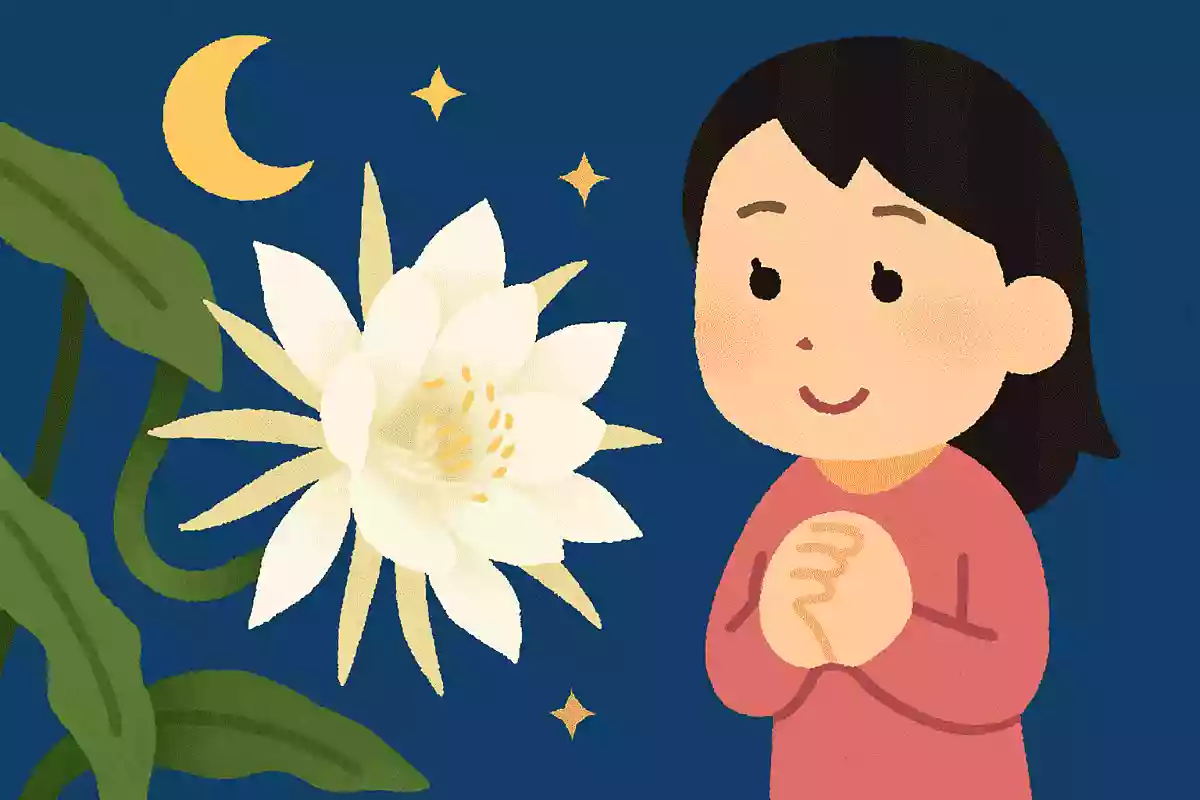
Gekka-bijin is the name of a flower, also affectionately known by the alternative name “Night Queen,” a type famed for blooming only at night.
The way it quietly displays its beauty while people are fast asleep makes it seem as if it deliberately conceals its own charm.
Another point is that its beauty has spawned various folk tales, suggesting that it has long been cherished as a special flower.
Strictly speaking, it’s not a four-character idiom but simply a name; still, as a cool four-character word, it comes highly recommended.
Say what you mean, do what you say.

It’s a four-character idiom meaning “to firmly carry out what you say.” For example, if you say, “I’ll study every day starting tomorrow!” then actually continuing to study every day is yūgen-jikkō (literally, ‘spoken words, carried out’).
Instead of stopping at just talk, seeing things through once you decide to do them builds your confidence.
For instance, if you tell everyone before a soccer match, “I’m going to score a goal!” and you really do score, that’s super cool and feels great, right? Even with small things, if you start with what you can do and act responsibly according to your words, people around you will trust you more.
Starting today, try aiming for ‘yūgen-jikkō’!