

Become positive with four-character idioms that resonate with the heart! Common yet deeply meaningful words.

Four-character idioms that express a positive mindset—such as “nanakorobi yaoki” (fall down seven times, get up eight), “shinki itten” (a fresh start), and “futō fukutsu” (unyielding and indomitable)—can support our hearts when we feel down or face difficulties.
These idioms, infused with the wisdom of the ancients, have the power to gently nudge us forward in our modern lives.
In this article, we’ll introduce commonly used, uplifting four-character idioms, along with their meanings and how to use them.
Encountering words that encourage you in everyday life will surely bring a fresh breeze to your heart.
- General: Four-character idioms that encourage determination—powerful, heart-stirring words
- Easy-to-remember, positive four-character idioms for elementary school kids! Words that brighten the heart
- [Kakizome] Four-character idioms fit for the New Year: Introducing words that resonate with the heart and their meanings
- Four-character idioms that express an indomitable spirit! Words to know when facing difficulties
- Four-character idioms that help you achieve goals! Phrases you can use in everyday situations
- [Four-Character Idioms] Impressive and Cool Sound! A Collection of Famous Quotes Worth Knowing as General Knowledge
- Four-character idioms for New Year’s resolutions! A collection of motivational phrase ideas
- Easy for elementary school students to remember! A four-character idiom that expresses the feeling of trying your best
- Learn the meanings too! Cool four-character idioms that elementary school students will want to remember
- Enrich your heart with beautiful four-character idioms! A collection of expressions you'll want to use in everyday life.
- Four-character idioms that pioneer the future: powerful words that express challenge and effort, perfect as personal mottos.
- Four-character idioms wishing happiness: a collection of heartwarming expressions for everyday use
- Four-character idioms that help elementary schoolers not give up: words that spark the power to keep trying
Become positive with four-character idioms that resonate with the heart! Common yet deeply meaningful expressions (71–80)
Future-oriented
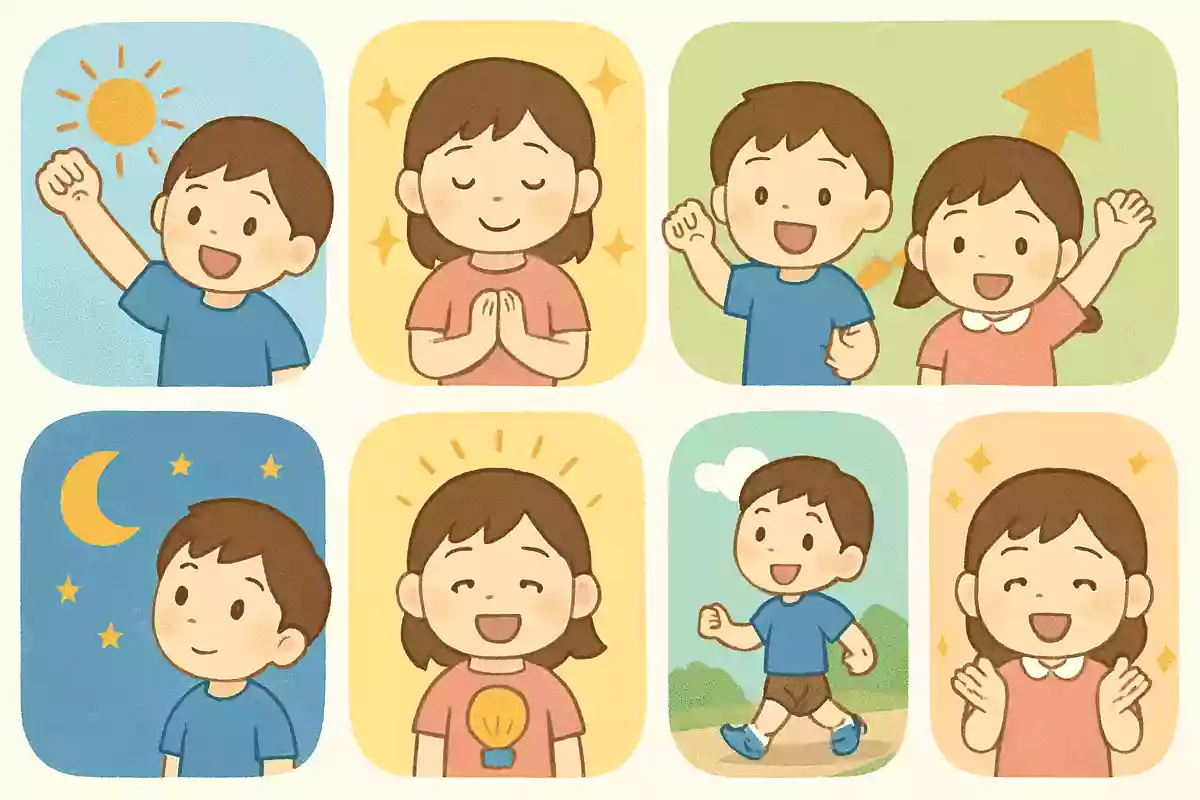
It means “thinking positively about what lies ahead and aiming for a better future.” For example, even if you make mistakes on a test, thinking “I’ll do my best next time!” is future-oriented thinking.
Instead of dwelling on past failures or unpleasant experiences, it’s important to ask yourself, “How can I make things better?” The feeling of “I can’t swim yet, but if I practice every day, I’ll be able to someday!” is also future-oriented.
When both adults and children adopt a future-oriented mindset, their spirits lift and their actions become more positive.
The future is something we create from now on.
That’s why it’s important to focus on what you can do and what you want to do, and enjoy each and every day!

A hundred flowers in full bloom
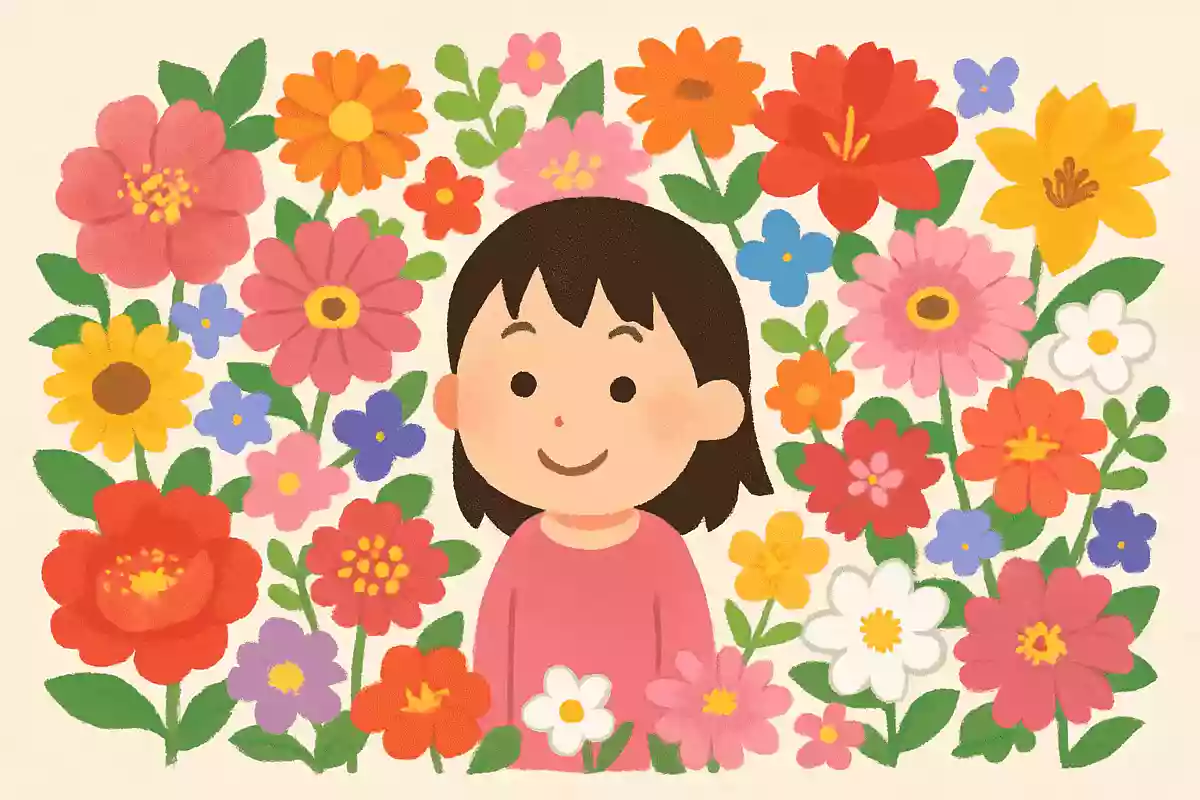
A four-character idiom that describes the scene of many flowers blooming beautifully all at once.
It also means that various things are shining beautifully at the same time.
For example, when everyone showcases different strengths at a school cultural festival, you can say, “It’s like hyakka ryōran.” The image of this phrase is that many unique personalities and talents sparkle all at once.
It’s easier to remember if you picture a spring landscape full of blossoms.
When everyone’s good qualities come together, the world becomes more fun—like a flower field in full hyakka ryōran.
flowery rhetoric

They’re “beautiful words” and “lovely turns of phrase.” For example, things like “You look super cool!” or “That picture is like a dream!”—words that feel nice to hear.
Using flowery expressions makes your speech and writing more enjoyable and really resonates with the listener.
“Your smile shines like the sun!” is another example.
When you use words with care, you can make others happy and lift their spirits.
Try using lots of kind, beautiful words at school and at home that will make others smile!
Uplifting four-character idioms that resonate with the heart! Common yet deeply meaningful phrases (81–90)
The beauties of nature — flowers, birds, wind, and the moon (a poetic expression appreciating nature’s elegance)
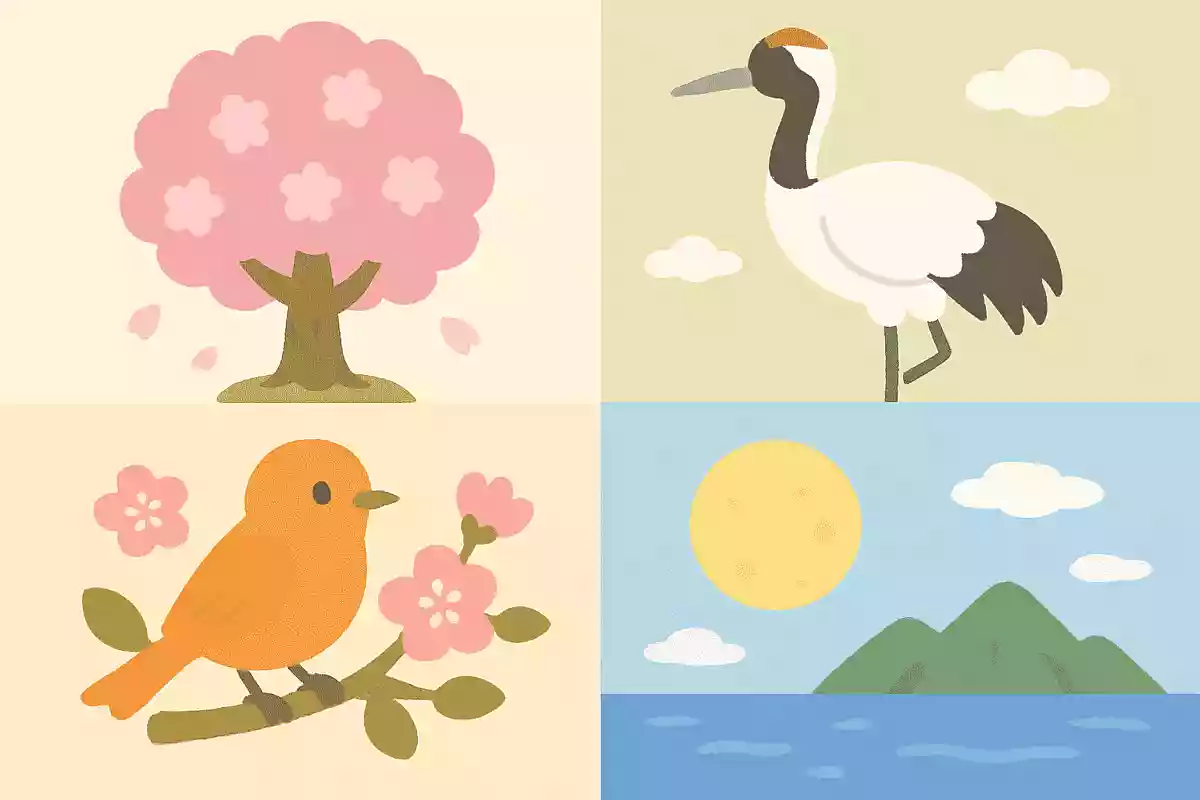
A four-character idiom that expresses an appreciation for the beauty of nature—flowers, birds, wind, and the moon.
It refers to things like feeling excited when seeing spring blossoms, feeling good when hearing birdsong, relaxing in a gentle breeze, and finding peace when gazing at the moon in the night sky.
For example, during summer vacation, going to the mountains to listen to birds or chatting while looking at the moon are times when you’re enjoying “kacho-fugetsu.” By sensing the beauty of nature, your heart becomes kinder and you notice new things.
Both children and adults should cherish the spirit of “kacho-fugetsu,” spending unhurried time in nature to make each day more enjoyable!
sincerity

It means “to work with all your heart, sincerely and earnestly.” For example, when a friend is in trouble, helping them honestly and wholeheartedly is an act of ‘seishin seii.’ Remembering this phrase can brighten your mood, because when you are sincere, the people around you smile and trust grows.
If you study for a test with ‘seishin seii,’ you’ll gain confidence and feel happy.
Both children and adults should cherish this phrase and spend each day energetically and joyfully!
Snow, Moon, Wind, and Flowers
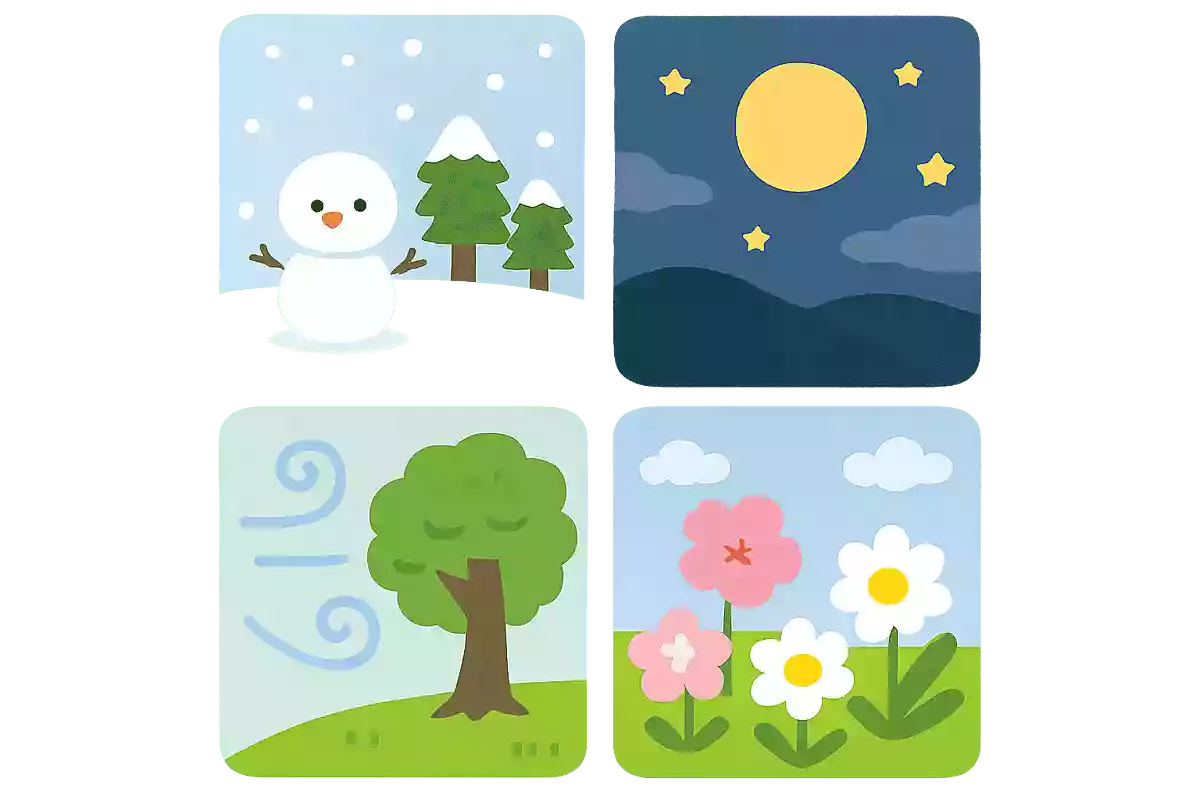
This four-character idiom depicts the beautiful natural scenery of each season.
By listing the symbols of each season—winter’s snow, autumn’s moon, summer’s wind, and spring’s flowers—it expresses the changing of the seasons.
Each symbolizes the beauty of its season, conveying a sense of affection for nature.
Displaying this idiom as something you value also highlights your appreciation of elegance and refinement.
It’s an idiom that evokes history as well, suggesting a beauty that remains unchanged across the ages.

blue sky and white sun

Originally, it was a term that described a perfectly clear, cloudless day, and from there it came to be used to mean “having a clear conscience and being pure” or “having false charges lifted.” It is a four-character idiom said to originate from the words of the Chinese poet Han Yu, and it spread as a symbol of a pure heart.
It’s even said that the flag of the Republic of China was once designed based on this expression, which shows how highly it has been valued.
Let’s use this word to clearly convey that we are people of integrity.