

Become positive with four-character idioms that resonate with the heart! Common yet deeply meaningful words.

Four-character idioms that express a positive mindset—such as “nanakorobi yaoki” (fall down seven times, get up eight), “shinki itten” (a fresh start), and “futō fukutsu” (unyielding and indomitable)—can support our hearts when we feel down or face difficulties.
These idioms, infused with the wisdom of the ancients, have the power to gently nudge us forward in our modern lives.
In this article, we’ll introduce commonly used, uplifting four-character idioms, along with their meanings and how to use them.
Encountering words that encourage you in everyday life will surely bring a fresh breeze to your heart.
- General: Four-character idioms that encourage determination—powerful, heart-stirring words
- Easy-to-remember, positive four-character idioms for elementary school kids! Words that brighten the heart
- [Kakizome] Four-character idioms fit for the New Year: Introducing words that resonate with the heart and their meanings
- Four-character idioms that express an indomitable spirit! Words to know when facing difficulties
- Four-character idioms that help you achieve goals! Phrases you can use in everyday situations
- [Four-Character Idioms] Impressive and Cool Sound! A Collection of Famous Quotes Worth Knowing as General Knowledge
- Four-character idioms for New Year’s resolutions! A collection of motivational phrase ideas
- Easy for elementary school students to remember! A four-character idiom that expresses the feeling of trying your best
- Learn the meanings too! Cool four-character idioms that elementary school students will want to remember
- Enrich your heart with beautiful four-character idioms! A collection of expressions you'll want to use in everyday life.
- Four-character idioms that pioneer the future: powerful words that express challenge and effort, perfect as personal mottos.
- Four-character idioms wishing happiness: a collection of heartwarming expressions for everyday use
- Four-character idioms that help elementary schoolers not give up: words that spark the power to keep trying
Become Positive with Four-Character Idioms That Resonate with the Heart! Common Yet Deeply Meaningful Words (91–100)
unrestrained; freely and effortlessly; moving about with complete freedom (literally: in all directions)

The four-character idiom that means being able to move freely anywhere and perform to your heart’s content is “jūōmujin” (縦横無尽).
For example: “By coming up with new ideas, I’m really shining ‘jūōmujin’ even in class.” The future is still unclear, but if you act “jūōmujin,” you can take on challenges without fear.
When you remember this word, it inspires the feeling that you can advance freely through the wide world spreading out around you on your own power.
Precisely because we live in an era without clear answers, believe in your ability to be yourself and move forward anywhere!

a miraculous comeback

These words express the act of getting back up even in the ultimate pinch—when you feel you can’t go on or stand up again.
There have been, and will be, many moments in life when you think, “This is impossible.
I can’t handle it.
I’m going to lose.” If you give up there, nothing about your situation will change, and it may even get worse.
If you’re someone who quickly gives up or throws in the towel with a “I’m done,” remember these words and try shifting your mindset to, “Let me try one more time.”

killing two birds with one stone

They say, “If you take a walk in the park, you can refresh your mind and make up for a lack of exercise—truly killing two birds with one stone.” This means that by walking in the park and moving your body, you’ll both lift your spirits and address insufficient exercise.
It’s a four-character idiom used to express gaining two benefits or results from a single action.
When using the idiom ‘ikkyō ryōtoku’ (killing two birds with one stone), clearly explaining what action you take and what benefits or results you gain will make your point more persuasive and easier for others to understand.

Once-in-a-lifetime encounter
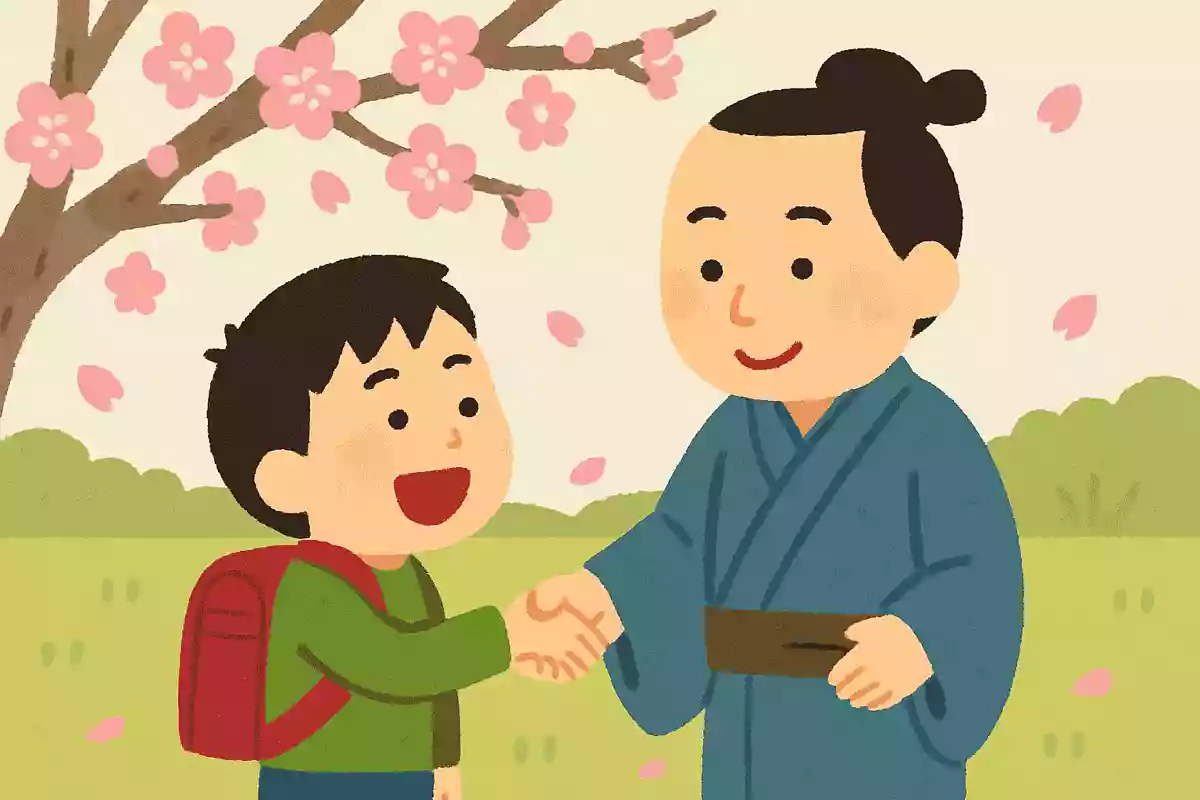
The four-character idiom “ichigo ichie” carries the meaning of cherishing the special, once-in-a-lifetime moment at hand, and is rooted in the teachings of the tea master Sen no Rikyū.
Through the words of Rikyū’s disciple Yamanoue Sōji, the phrase spread in the Edo period when the tea master Ii Naosuke recorded it as “ichigo ichie” in his collection Tea Gatherings: Once-in-a-Lifetime Meetings.
“Ichigo” means “a lifetime,” and “ichie” means “a single tea gathering.” It’s a beautiful saying that encourages both the host and the guests of a tea gathering to approach the occasion with wholehearted sincerity, as if it were a once-in-a-lifetime moment.
telepathy; tacit understanding (literally: ‘heart-to-heart communication’)
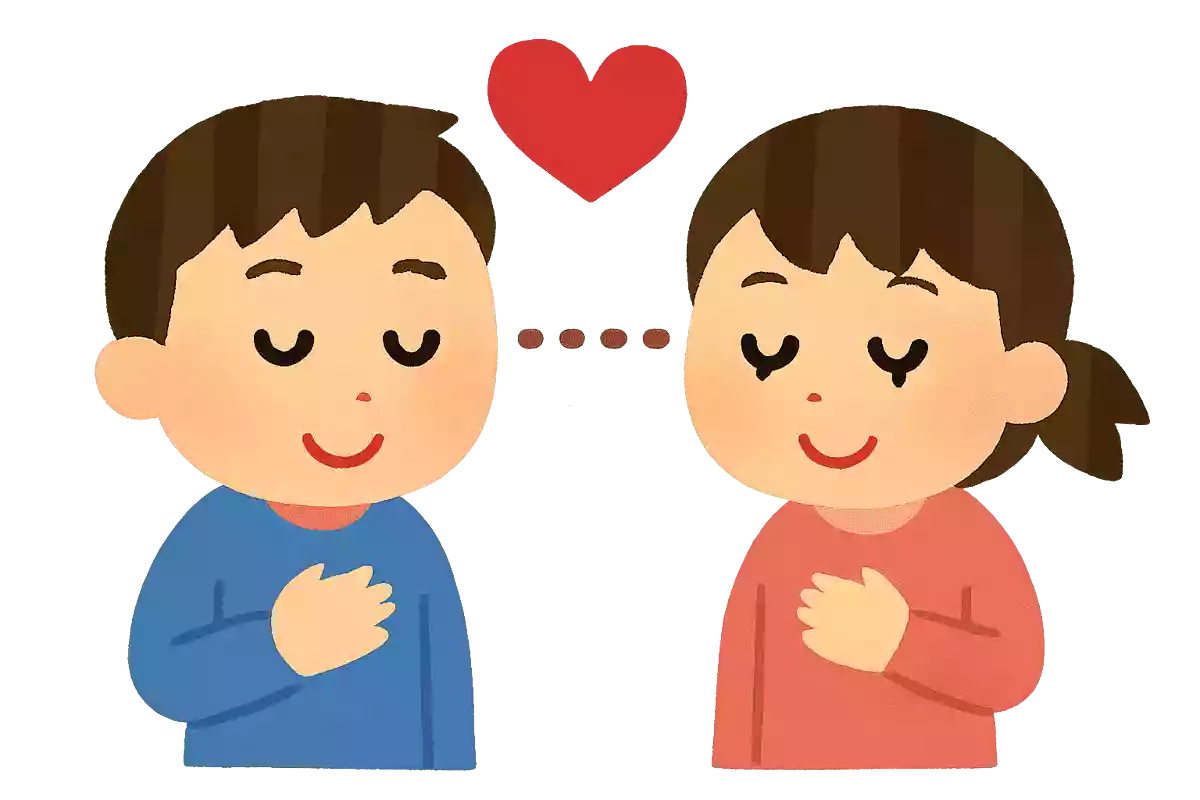
Communicating solely through the heart is called “ishin-denshin.” Normally, when we convey something to someone, we use spoken or written words.
But there are times when it’s hard to express things in words.
In such moments, it’s nice to have someone who can pick up on how you feel.
With a close friend, you may sometimes understand each other without putting your feelings into words.
Someone you can share ishin-denshin with is likely a person who always pays close attention to you and understands you deeply.

to be surrounded on all sides; isolated with no allies (literally: ‘songs of Chu on all four sides’)
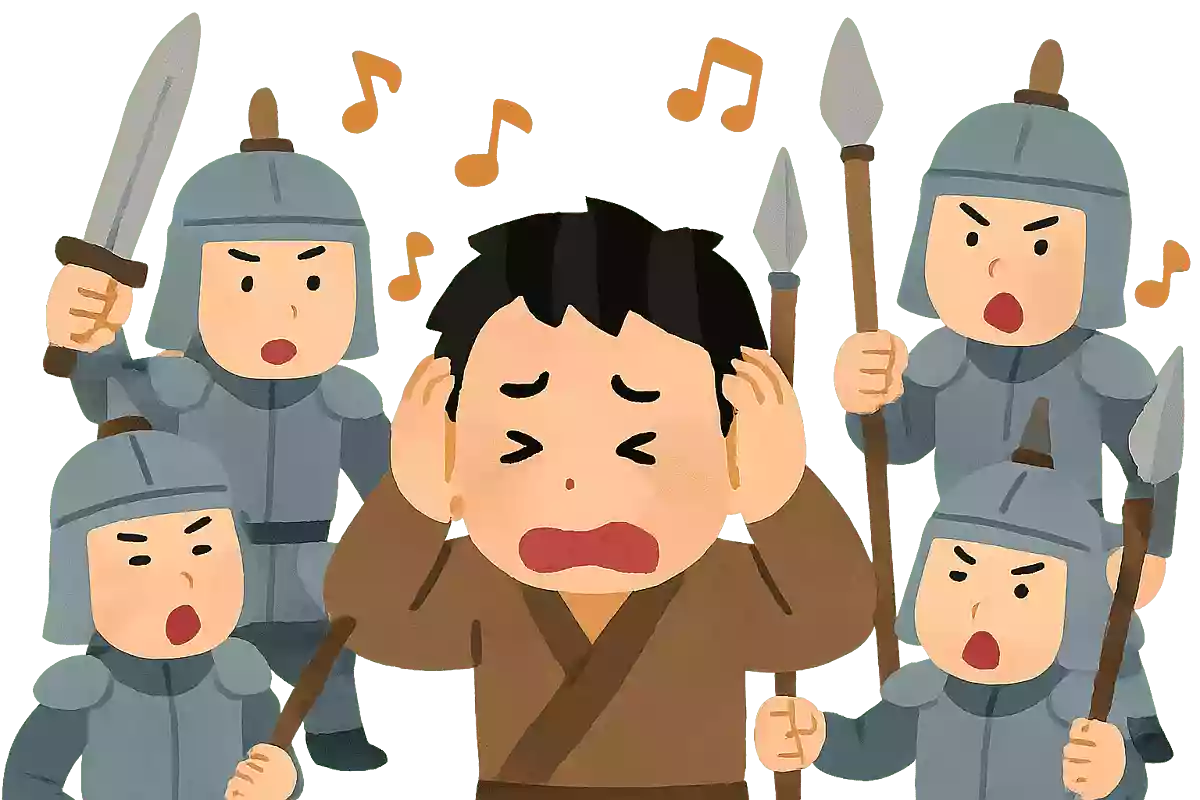
“Shimensoka” is read as ‘shi-men-so-ka’ and refers to a situation where you’re surrounded by enemies with no allies.
For an elementary schooler, it’s like playing tag or dodgeball and everyone else becomes ‘it’ or moves to the outside, leaving only you in the middle… You’ve probably experienced that kind of situation.
That is exactly what ‘shimensoka’ describes.
Expressions like “isolated and without support” or “all is lost” carry similar meanings.
Because ‘shimensoka’ describes a rather unfavorable state, it’s all the more important to find your next move from there.
Late bloomer
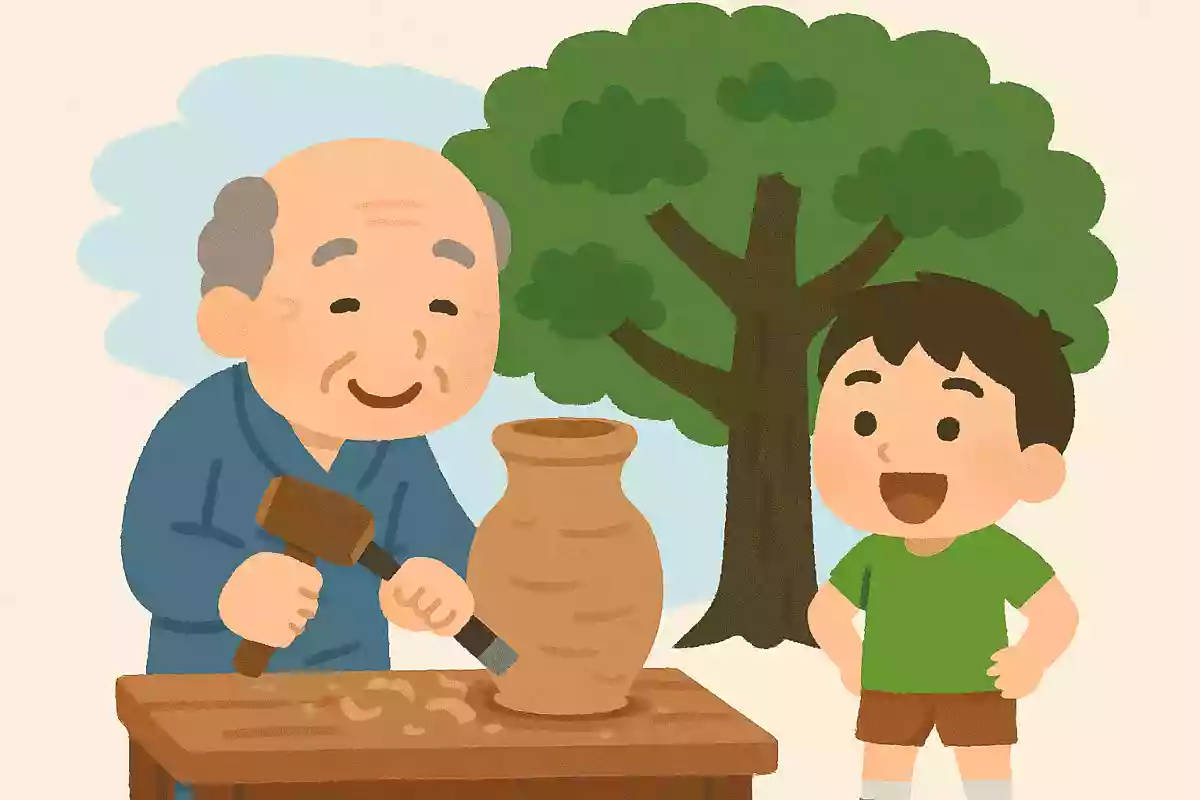
This four-character idiom expresses the idea that great talent and extraordinary people often go unnoticed in their youth and achieve greatness later than others.
Just as it takes time to craft a large vessel, it likewise takes time to shape a great person.
Its origin is said to come from the writings of Laozi, the ancient Chinese philosopher, which shows it’s a phrase with historical depth.
It also conveys a positive outlook: the fact that one hasn’t succeeded yet means they’re accumulating the ability needed for the future.
