

Prefectural anthems you might not know well. Explore the lyrics and history of your hometown

You may have heard prefectural anthems at least once in your school music classes or at local events.Did you know that not every prefecture actually has one, and that some prefectures have even established multiple songs as their prefectural anthems?In this article, we’ll introduce all the prefectural anthems from around the country.The more you learn about these songs—filled with hometown scenery, history, and the pride of their residents—the deeper the world they reveal becomes.Be sure to check out the songs from your own hometown or any regions you’re curious about!
- [Japanese School Anthems] A Hot Topic at Koshien! From Beautiful Anthems to Unique Ones, All Introduced at Once
- [Local Songs] Recommended tracks packed with Japan’s nationwide classics and hometown pride
- A roundup of regional enka songs: classic hits that feature places from all across Japan in their lyrics.
- A Nationwide Compilation of Timelessly Beloved Railway Songs
- [Elementary School Music] List of Popular and Nostalgic Songs That Have Appeared in Textbooks
- Party songs and official theme songs of Japanese political parties. Surprisingly catchy fight songs, too.
- Miyagi Songs: Popular tracks that celebrate famous sights and specialties, and timeless pieces filled with love for home
- [Elementary School Chorus Songs] A comprehensive introduction from classic standards to the latest hit songs!
- [Songs of Saitama] A Wealth of Humor-Filled Classics! Local Anthems Packed with Love for Saitama
- Chiba Songs: A comprehensive introduction, from famous tunes filled with hometown love to local theme songs
- [Akita Songs] A Collection of Gem-Like Local Tunes Filled with Love for Hometowns
- [Japanese Folk and Regional Songs] A Collection of Beloved Masterpieces from Across Japan, Brimming with Local Pride
- [Folk and Children's Songs of Hokkaido] Songs of Hokkaido that continue to be loved across generations
Kantō (1–10)
Tokyo Metropolis SongTōkyō-to

This work, which symbolizes the Tokyo Metropolis, was established in April 1947 during the postwar reconstruction period and has been passed down as a song carrying the hopes of Tokyo’s residents.
The lyrics by Shigehisa Harada and the music by Hiroshi Kasuya, both chosen through a public competition, depict a morning moving toward peace and abundant nature.
It is also historically notable that, when it was designated as the Tokyo citizens’ song, a 78 rpm record was released by King Records and a related wind band arrangement was produced.
Even today, it continues to be featured through tie-ins with public relations efforts timed to Tokyo Citizens’ Day, such as the 2024 issue of “Koho Tokyo.” While conveying the weight of history, this piece embodies a wish for a bright future and can rightly be called a song that represents the pride of Japan’s capital, Tokyo.
Prefectural AnthemTochigi-ken
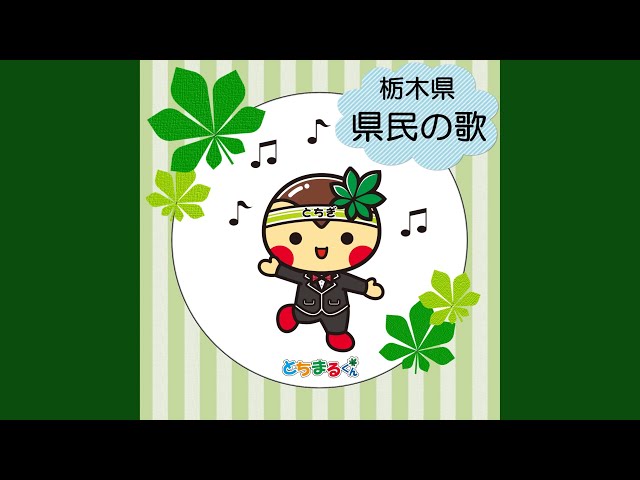
This work vividly evokes Tochigi’s beautiful scenery, from “horse-chestnut leaves” to Mount Nantai and the Kinu River.
Since its adoption in December 1962, it has been a song beloved by the prefecture’s residents for over half a century.
With lyrics by Kiyoshi Oka and music by Hiroshi Kawashima, it brightly and boldly sings of the region’s rich nature, industrial development, and the harmony of its people.
In September 2017, a cover version by Da Capo was also released, whose crystal-clear harmonies add a new charm.
As the melody played at times such as Tochigi Television’s sign-off, it is a familiar presence to locals.
Chiba Prefectural AnthemChiba-ken

This work was created in 1964 as a symbol of Chiba Prefecture riding the wave of rapid economic growth.
The lyrics, written by Yataro Suzuki, who was selected through a public call, and set to music by Yoshio Hasegawa, powerfully depict the rich seas of Boso, fields of rapeseed blossoms, and the resounding sounds of construction.
It was even featured in the 1972 public relations film “Kenmin no Uta,” reflecting a history in which it supported the prefecture’s development alongside visual media.
Listening to its march-like melody, you may sense the vibrant atmosphere of the era.
Yamanashi Prefecture SongYamanashi-ken

The Song of Yamanashi Prefecture was established to help the region overcome the turmoil of the postwar period.
Set in 1950, the piece embodies a longing for the revival of local culture and the beauty of the homeland’s nature.
Woven with landscapes unique to Yamanashi—such as Mount Fuji and its vineyards—it portrays people joining hands toward a bright future, uplifting listeners with a sense of optimism.
In the year it was adopted, it was produced as an SP record by Japan Victor.
Even in 2019, the prefectural assembly discussed measures to promote its dissemination, and it remains a cherished song of the people, lovingly passed down to this day.
New LightKanagawa-ken

Enacted in April 1950 during the postwar reconstruction period, this prefectural residents’ song has long been cherished as a symbol of Kanagawa Prefecture.
Notable for its lyrics that entrust hopes to a new era and evoke the region’s rich natural environment of sea and mountains, the piece also captivates with its dignified melody composed by Nobuo Iida.
As for recordings, in addition to an SP disc by Noriaki Fujii and Ryoko Fujiwara, a cover version by Koichi Miura and Hamako Watanabe was produced in 1966.
It can be described as a song imbued with the history of the homeland and the sentiments of its residents.
Song of Gunma PrefectureGunma-ken

A prefectural anthem composed by Ryoichi Hattori, a composer renowned in the history of Japanese popular music, featuring a grand and radiant melody.
The lyrics, which depict the majestic nature including Mount Akagi and the people of the prefecture boldly advancing into the future with hope, were selected through a public contest.
Did you know that this song is actually Gunma Prefecture’s third prefectural anthem? It was instituted in October 1968 as part of the projects commemorating the 100th anniversary of the Meiji era.
Because it was broadcast for many years at the start and end of Gunma Television’s programming, many people may remember hearing its melody.
For more than half a century, it has remained a beloved classic through regional ceremonies and broadcasts.
Shinano ProvinceNaganoken

This is a prefectural anthem overflowing with local pride that enjoys overwhelming support from the people of Nagano.
Composed as a school song in 1900, it was officially adopted as the prefectural anthem in 1968.
Its lyrics, which comprehensively cover Nagano’s rich mountains and rivers as well as notable historical figures, are distinctive, and it’s counted among Japan’s three great prefectural anthems.
Although its content is like a geography or history textbook, the melody is easy to remember and singing it sets your heart ablaze.
It was even performed at the 1998 Nagano Winter Olympics, and it’s a song whose passion will surely overwhelm you, even if you’re not from Nagano Prefecture.