

Prefectural anthems you might not know well. Explore the lyrics and history of your hometown

You may have heard prefectural anthems at least once in your school music classes or at local events.Did you know that not every prefecture actually has one, and that some prefectures have even established multiple songs as their prefectural anthems?In this article, we’ll introduce all the prefectural anthems from around the country.The more you learn about these songs—filled with hometown scenery, history, and the pride of their residents—the deeper the world they reveal becomes.Be sure to check out the songs from your own hometown or any regions you’re curious about!
- [Japanese School Anthems] A Hot Topic at Koshien! From Beautiful Anthems to Unique Ones, All Introduced at Once
- [Local Songs] Recommended tracks packed with Japan’s nationwide classics and hometown pride
- A roundup of regional enka songs: classic hits that feature places from all across Japan in their lyrics.
- A Nationwide Compilation of Timelessly Beloved Railway Songs
- [Elementary School Music] List of Popular and Nostalgic Songs That Have Appeared in Textbooks
- Party songs and official theme songs of Japanese political parties. Surprisingly catchy fight songs, too.
- Miyagi Songs: Popular tracks that celebrate famous sights and specialties, and timeless pieces filled with love for home
- [Elementary School Chorus Songs] A comprehensive introduction from classic standards to the latest hit songs!
- [Songs of Saitama] A Wealth of Humor-Filled Classics! Local Anthems Packed with Love for Saitama
- Chiba Songs: A comprehensive introduction, from famous tunes filled with hometown love to local theme songs
- [Akita Songs] A Collection of Gem-Like Local Tunes Filled with Love for Hometowns
- [Japanese Folk and Regional Songs] A Collection of Beloved Masterpieces from Across Japan, Brimming with Local Pride
- [Folk and Children's Songs of Hokkaido] Songs of Hokkaido that continue to be loved across generations
Kyushu and Okinawa (1–10)
Saga Prefectural SongSaga-ken

Composed in 1974, the song “Saga Prefectural Anthem” was created to commemorate the 90th anniversary of the Saga prefectural government and the hosting of the Wakakusu National Sports Festival.
The lyrics were selected through a public contest, and the music was composed by Ikuma Dan, with references throughout the lyrics to the region’s rich natural features, such as the Genkai Sea, the Ariake Sea, and Mount Tenzan.
Its stately melody evokes the pride of the prefecture’s residents and hope for the future.
A flexi disc was produced at the time, and a choral arrangement was performed in 2005, reflecting how the piece has been sung for many years.
It is a grand and powerful composition that conjures images of Saga’s beautiful landscapes.
Miyazaki Prefectural SongMiyazaki-ken
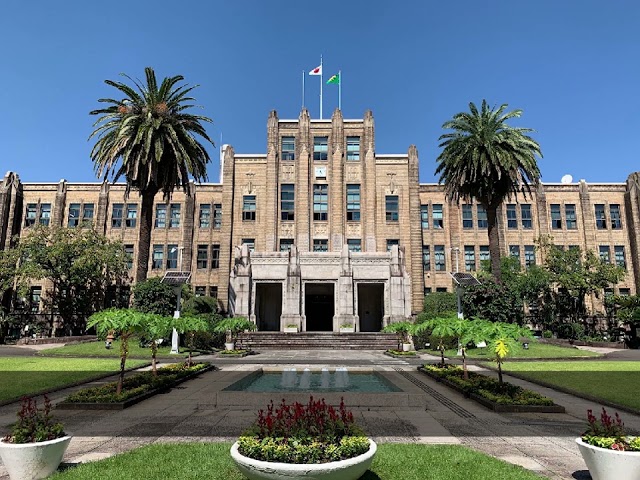
This work, established in 1964 as the prefectural anthem, is the second generation.
The lyrics were written by Mr.
Yuharu Sakai, selected from 362 submissions, and the composition was by Mr.
Nobuo Iida.
With words like the southern blue sky, the Kuroshio Current, and the prefectural flower, the spider lily (hamayū), it conveys Miyazaki’s rich natural beauty, the development of its industries, and hope for the future.
In 2014, the 50th anniversary of its adoption, it was chosen—through cooperation with JR Kyushu—as the departure melody at Miyazaki Station.
Isn’t it wonderful that even after more than half a century, it continues to accompany the lives of people using the station? It blends a sense of historical weight with an open, cheerful spirit, making it truly rich in character.
Okinawa Prefectural AnthemOkinawa-ken

This is the prefectural anthem that symbolizes Okinawa’s new beginning, established on May 15, 1972, the very day of its reversion to the Japanese mainland.
Poet Seiko Miyazato and vocalist Shigeru Shiroma created it, and it was recorded with the Tokyo Mixed Chorus.
The lyrics are imbued throughout with a strong resolve to overcome the trials of war and to pray for peace and prosperity.
Together with imagery quintessentially Okinawan—such as the beautiful sea and deigo blossoms—the structure, which proclaims hope for the future, deeply moves listeners.
As a song that marks the historic moment of reversion, it continues to be cherished and passed down by the people of the prefecture.
Kumamoto Prefecture Citizens’ SongKumamoto Prefecture

Released in 1960, this work is Kumamoto Prefecture’s prefectural song, established to coincide with the 15th National Sports Festival held the same year.
Weaving in the majestic landscapes and history of Mount Aso, Kumamoto Castle, and Amakusa, it sings of the fiery spirit of the land and a hope for renewal.
Far from being a stiff ceremonial piece, it is characterized by a dignified melody that stirs the pride of its people.
At the time, it was recorded as an SP record by Nippon Columbia featuring vocals by Hisao Itoh, with a marching arrangement on the B-side.
In addition to being performed at the National Sports Festival, it has long been cherished as the opening theme for Kumamoto Broadcasting and as the hold music for the prefectural office’s telephone system.
After the 2016 Kumamoto earthquakes, it drew renewed attention as a symbol of recovery, remaining a beloved song across generations.
South windNagasaki-ken

Established in 1961, this piece features lyrics crafted by the prefectural residents’ song lyric committee and music composed by Kensaku Yamaguchi.
It embodies a history of embracing foreign cultures, beautiful natural scenery, and hope for the future, shining a bright light in the hearts of listeners.
At the time of its adoption, it was released as an SP record sung by Akira Wakayama and the first Columbia Rose.
The arrangement by Toru Funamura is another luxurious highlight.
It has continued to be sung at important occasions for over half a century, including a performance at the ceremonies of the 2014 Nagasaki Ganbaranba National Sports Festival.
Today, various versions such as wind band and choral arrangements have been developed, and it is widely cherished in schools and communities.
Kagoshima Prefectural AnthemKagoshimaken

Composed by the renowned composer Kosaku Yamada, this piece is imbued with the passion of the prefecture’s residents striving for postwar reconstruction.
With lyrics by Toshio Sakaguchi, it weaves hopes for peace and a spirit of friendship together with images of rich natural beauty—such as Sakurajima, the southern blue sky, and the Kuroshio Current.
Characterized by a 6/8 rhythm, it’s a song that conveys an embracing gentleness and a sense of expansiveness.
Established in December 1948, it has been used at official ceremonies like the Prefectural Citizens’ Commendation Ceremony and the Prefectural Sports Festival, and has been sung for generations.
It also serves as the start-of-work chime at the prefectural government building, making it a familiar melody for residents.
It is a work that allows us to feel the sentiments of those who rose from the devastation of the postwar period and sought to build a new homeland.
Light of hopeFukuoka-ken

This song, Light of Hope, which was designated as the prefectural anthem in October 1970.
The lyrics were based on a piece selected from a public competition and further refined by the poet Yutaka Maruyama, while the music was composed by Hachidai Nakamura, known for songs such as Sukiyaki (Ue o Muite Arukō).
The lyrics feature Fukuoka’s unique natural scenery and place names—such as Genkai, Mt.
Hiko, and Chikushino—and even include the word “airport,” evoking a sense of leaping into the future.
The piece has a simple structure with a march-like, sprightly rhythm and the repetition of bright phrases, making it sure to lift your spirits just by listening.
In conclusion
Prefectural anthems are creations in which the land’s climate, history, and people’s pride are gently woven into the melody. Even if we rarely have the chance to hear them, tracing the lyrics can reveal local charms we never knew. Take some time to savor the prefectural anthem of a region that interests you, and let it be an opportunity to cultivate a newfound affection for the place.