

Prefectural anthems you might not know well. Explore the lyrics and history of your hometown

You may have heard prefectural anthems at least once in your school music classes or at local events.Did you know that not every prefecture actually has one, and that some prefectures have even established multiple songs as their prefectural anthems?In this article, we’ll introduce all the prefectural anthems from around the country.The more you learn about these songs—filled with hometown scenery, history, and the pride of their residents—the deeper the world they reveal becomes.Be sure to check out the songs from your own hometown or any regions you’re curious about!
- [Japanese School Anthems] A Hot Topic at Koshien! From Beautiful Anthems to Unique Ones, All Introduced at Once
- [Local Songs] Recommended tracks packed with Japan’s nationwide classics and hometown pride
- A roundup of regional enka songs: classic hits that feature places from all across Japan in their lyrics.
- A Nationwide Compilation of Timelessly Beloved Railway Songs
- [Elementary School Music] List of Popular and Nostalgic Songs That Have Appeared in Textbooks
- Party songs and official theme songs of Japanese political parties. Surprisingly catchy fight songs, too.
- Miyagi Songs: Popular tracks that celebrate famous sights and specialties, and timeless pieces filled with love for home
- [Elementary School Chorus Songs] A comprehensive introduction from classic standards to the latest hit songs!
- [Songs of Saitama] A Wealth of Humor-Filled Classics! Local Anthems Packed with Love for Saitama
- Chiba Songs: A comprehensive introduction, from famous tunes filled with hometown love to local theme songs
- [Akita Songs] A Collection of Gem-Like Local Tunes Filled with Love for Hometowns
- [Japanese Folk and Regional Songs] A Collection of Beloved Masterpieces from Across Japan, Brimming with Local Pride
- [Folk and Children's Songs of Hokkaido] Songs of Hokkaido that continue to be loved across generations
Chugoku and Shikoku (1–10)
Prefectural Song of YamaguchiYamaguchi-ken

A grand piece emblematic of Yamaguchi Prefecture, with lyrics by poet Haruo Sato and music by Kiyoshi Nobutoki.
Established in 1962, it was created to unite the hearts of residents ahead of the Yamaguchi National Sports Festival the following year.
From beautiful landscapes such as Kintaikyo Bridge and Akiyoshidai to the history of the Restoration, its dignified language weaves these elements together, proudly singing of local pride to a valiant melody.
It was recorded in 1965, sung by Jun Mitaka and Yoshiko Mari.
In fact, counting from before the war, this is the third official version, and you may savor its profound resonance, beloved across eras.
Pale purple mountain rangeShimane-ken

This is the prefectural anthem that sings of Shimane’s majestic nature and hopes for recovery.
In 1951, to commemorate the signing of the San Francisco Peace Treaty, the lyrics were solicited from the public, Yuji Koseki composed the melody, and in 1952 it was established as the prefectural song.
The lyrics depict scenes of 900,000 people—the prefecture’s population at the time—unifying their hearts, and the beautiful landscape of mountain ranges tinted by the light of morning and evening.
Long beloved, the song regained attention in 2020 following the NHK morning drama series “Yell.”
Tokushima Prefecture Residents’ SongTokushima-ken

Written by lyricist Masaharu Fuji and composed by Minoru Miki, this piece was established in 1971.
The lyrics feature uniquely Tokushima scenes such as the aroma of sudachi, the whirlpools of Naruto, Mount Tsurugi, and the Yoshino River, allowing listeners to fully feel the nature of the hometown.
Its flowing melody, well-suited to choral performance, carries a wish for a bright future.
Even today, it is carefully presented on the prefecture’s official website and has long been sung with pride by residents—one song packed with Tokushima’s history and culture.
Song of EhimeEhime-ken

This song was established in 1973 to commemorate the significant milestone of the 100th anniversary of Ehime Prefecture’s administration.
The lyrics were selected through a public contest, and the composition was handled by Yoshinao Nakada, known for works such as “Natsu no Omoide” (Summer Memories).
The lyrics weave in the region’s charms, including the Seto Inland Sea, mountains, and the Iyo dialect, and the bright, singable melody is particularly memorable.
Records show that, at the time of its adoption, a sonosheet featuring performances by Chieko Baisho and the Boni Jacks was produced, reflecting a lavish production that went beyond a typical government commemorative project.
In recent years, performances by local choirs and the police band have been made public, and for more than half a century it has been cherished as an important song that connects Ehime’s landscapes and spirit.
Kagawa Prefectural Residents’ SongKagawa-ken

Evoking the tranquil Seto Inland Sea and the mountains of Sanuki, this work is a historically significant song established in 1954.
The lyrics were written by Kusuichi Ogawa, selected from 128 public submissions, and the composition was by Hiroshi Taguchi, then a professor at Kagawa University.
Its harmonious portrayal of former salt field landscapes, beautiful nature, and the dignity of labor conveys a sense of local pride.
The single was released in 1954 by Nippon Mercury as the SP record “Kagawa Prefecture Official Song.” It was sung by Masami Nishimura, with a harmonica performance included on the B-side.
Though it had no flashy tie-ins, it remains an indispensable work in telling the region’s history.
Song of the People of Kochi PrefectureKōchi-ken

This work was established in 1952, as Japan moved from the postwar reconstruction period into an era of rapid economic growth.
Powerfully expressing the brightness of the southern climate and the dynamism of the prefecture’s people, the song is more than a ceremonial anthem: it embodies the spirit of the Freedom and People’s Rights Movement, the abundance of the Kuroshio-danced seas, and pride in culture.
Its creation process was highly unique as well—lyrics were solicited from the public, and the composition was chosen by an open vote from five candidate pieces.
Even today, audio and sheet music are available on the prefecture’s official website, and the song is cherished as an important symbol that conveys Kōchi’s history and identity.
Surging PowerTottori-ken
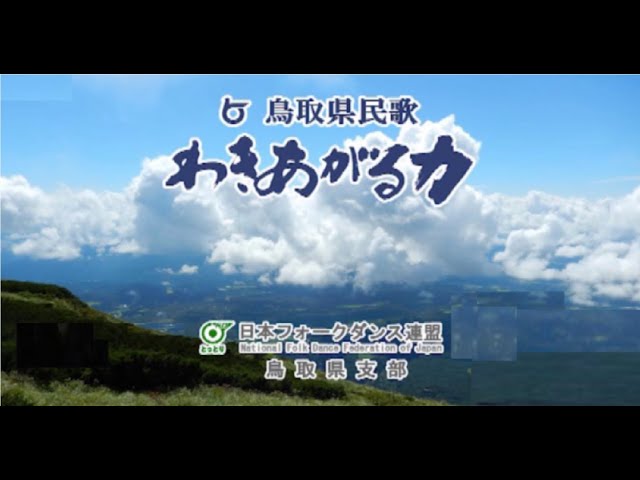
This work was designated as the symbol of Tottori Prefecture in October 1968 as part of the projects commemorating the 100th anniversary of the Meiji era.
The melody, composed by Ikuma Dan, one of Japan’s leading composers, has the bright, powerful resonance of a march.
The lyrics were refined from ideas gathered through a public call for submissions, vividly depicting scenes unique to Tottori: the majestic figure of Mount Daisen, the dunes stretching along the Sea of Japan, and local specialties such as pears and rice ears.
It is truly a hometown anthem filled with the pride of Tottori’s citizens and hope for the future.