

Rainy season trivia roundup: fun facts you'll want to share with someone


The rainy season that visits Japan from June to July.
Many people may not like it because the rain keeps falling.
In this article, we’ll introduce a collection of trivia about the rainy season! In addition to the origin of the name “tsuyu” and the mechanisms behind it, we’ve also picked out trivia about plants and animals during this time of year.
It may be a season that doesn’t lift your spirits, but we hope this article helps you enjoy it even a little.
These are all facts you’ll want to share with someone once you know them, so take this opportunity to learn lots of fun trivia.
- Trivia & fun facts about June
- A quiz of fun trivia: bite-sized knowledge that leads to new insights.
- Learn to Love the Rain! Fun Facts & Trivia Quiz about the Rainy Season for Kids
- [For Kids] Trivia & Fun Facts Quiz About June
- [For Seniors] Trivia Quiz & Fun Facts About the Rainy Season (Tsuyu)
- [Trivia] Did You Know? A Collection of Weather Proverb Quizzes!
- [Interesting] Compilation of Trivia Quiz Questions
- Cucumber trivia quiz. A collection of fun facts about cucumbers.
- Make weather forecasts more fun! Trivia and fun facts about the weather
- Fun facts you’ll want to share! A special feature on November trivia and tidbits
- A collection of trivia and fun facts about August that will warm your heart
- Trivia you think you know but surprisingly don’t? August trivia and fun facts quiz!
- A collection of trivia and fun facts about September as we await autumn
Rainy season trivia roundup: fun facts you'll want to share (1–10)
The origin of the word “kappa” is “capa.”
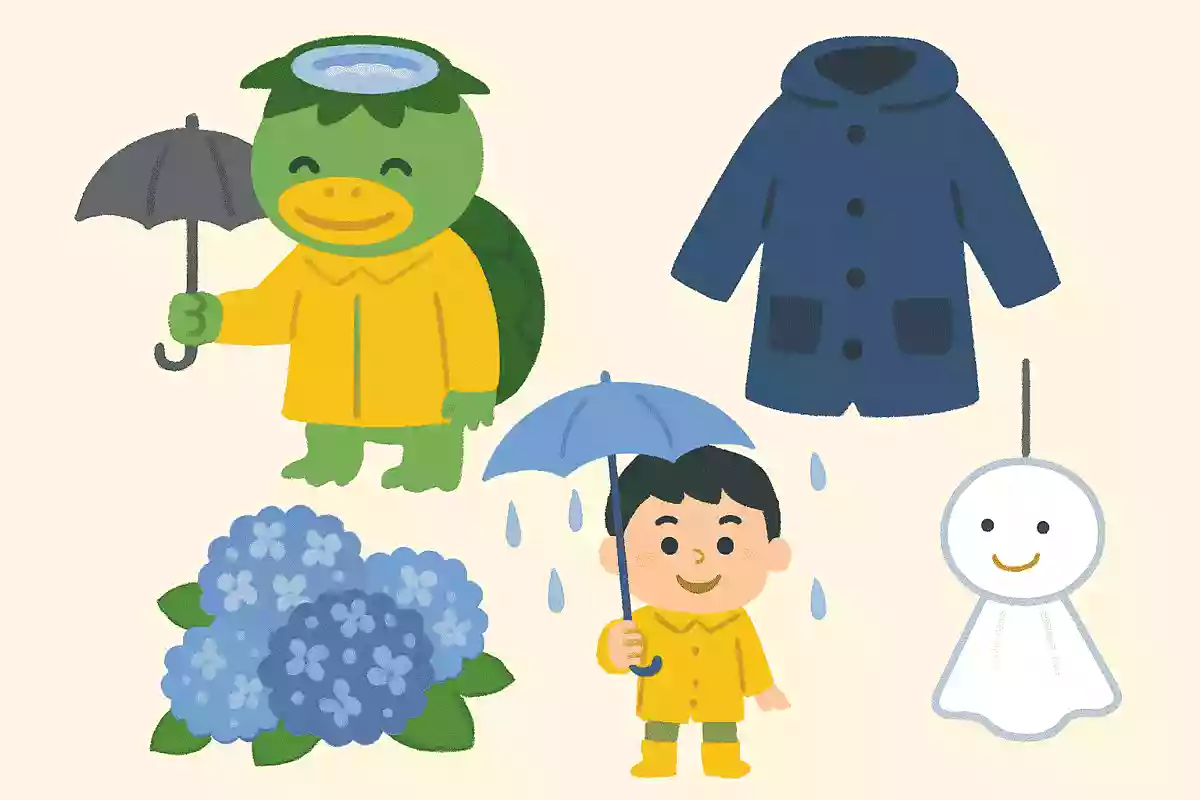
A rain jacket, also known as a raincoat, is one of the well-known types of rain gear.
It’s very handy to have in heavy rain that a mere umbrella can’t keep out, or when you have to ride a bicycle in the rain.
"Kappa" is written in kanji as 「合羽」, and surprisingly, its etymology comes from the Portuguese word "capa"! In Portuguese, "capa" originally means a cloak or outer covering, and the kanji 「合羽」 came to be used inspired by the shape of a cloak.
It’s surprising to learn it didn’t originate in Japanese, isn’t it?

It is said that when thunder rolls, the rainy season ends.
Some of you may have heard the saying, “When thunder rolls, the rainy season ends.” This can be considered both true and not entirely accurate.
To understand why, you need to know how the rainy season (tsuyu) works.
Tsuyu refers to the phenomenon where the Okhotsk Sea high-pressure system and the Pacific high-pressure system collide, bringing rain.
As the rainy season draws to a close, the Pacific high strengthens, which in turn leads to the development of thunderstorms.
However, some say there is often a delay between the occurrence of thunderstorms and the official end of the rainy season.

The rainy season occurs when two high-pressure systems collide.
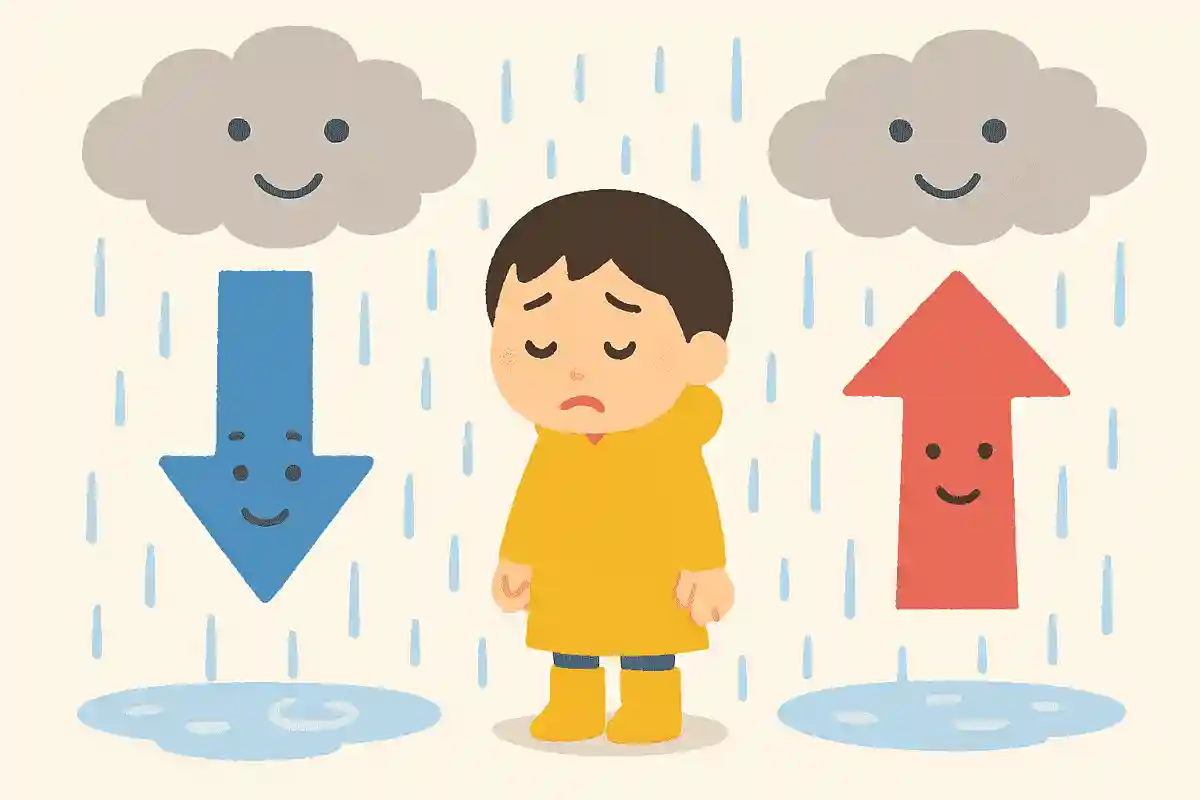
Do you know why the rainy season (tsuyu) occurs? To put it simply, when the Okhotsk Sea high-pressure system and the Pacific high-pressure system collide, upward air currents form and rain clouds develop.
It might be easier to picture it as warm winds from the south and cold winds from the north meeting.
By the way, these two airflows shift and bring rain to different regions, and this is described as the northward movement of the Baiu front (the rainy-season front).
As an extra note, Hokkaido doesn’t really have a rainy season because the Baiu front doesn’t move that far north.
Rainy season trivia roundup: bite-sized facts you’ll want to share (11–20)
The rainy season is also called ‘baiu’ (literally ‘mold rain’).
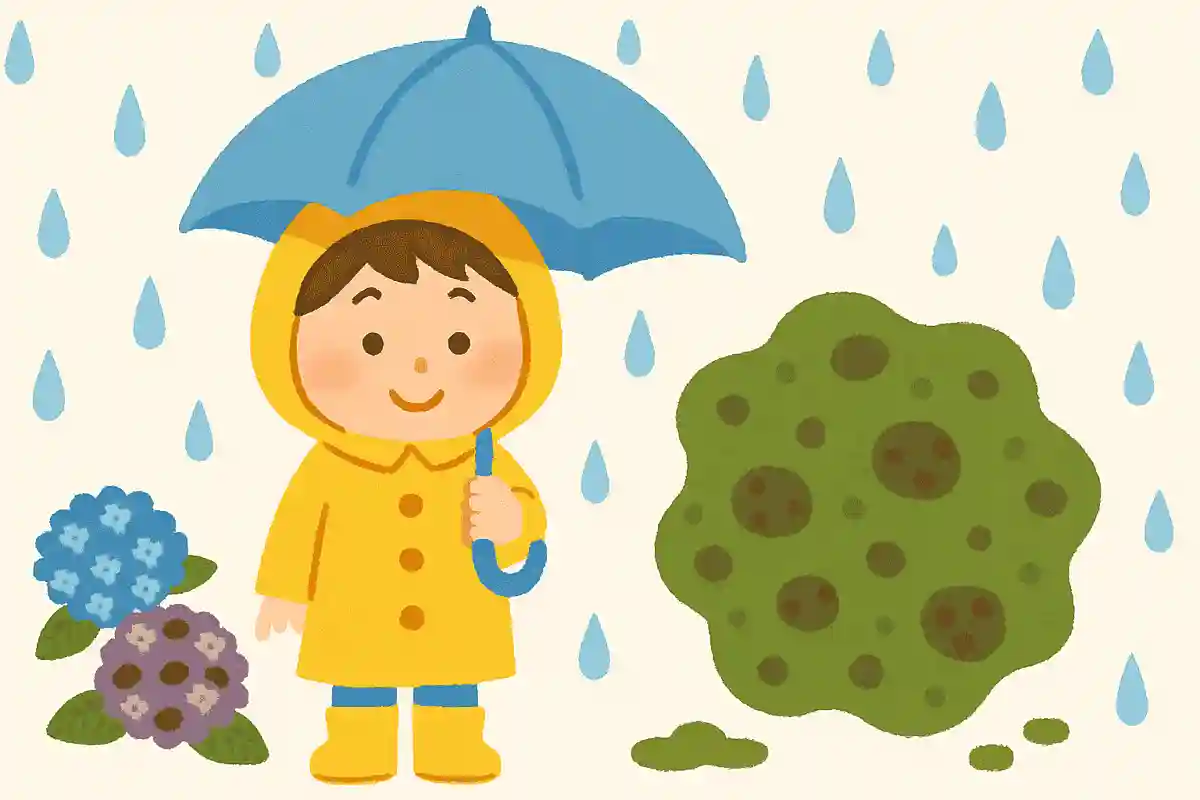
The long rainy period from May to July, when plums ripen, is generally written as “梅雨” (tsuyu), but it can also be written as “黴雨” (baiu), pronounced the same way.
The character “黴” means mold, and because this is a season when mold tends to grow, some say that this “mold rain” is one of the word’s origins.
Both terms appear in Chinese dictionaries as well, giving the impression that they entered the language around the same time.
The fact that the term “tsuyu” (rainy season) is predominantly used also suggests that mold has had a negative image since long ago.

The sound of rain has a relaxing effect.
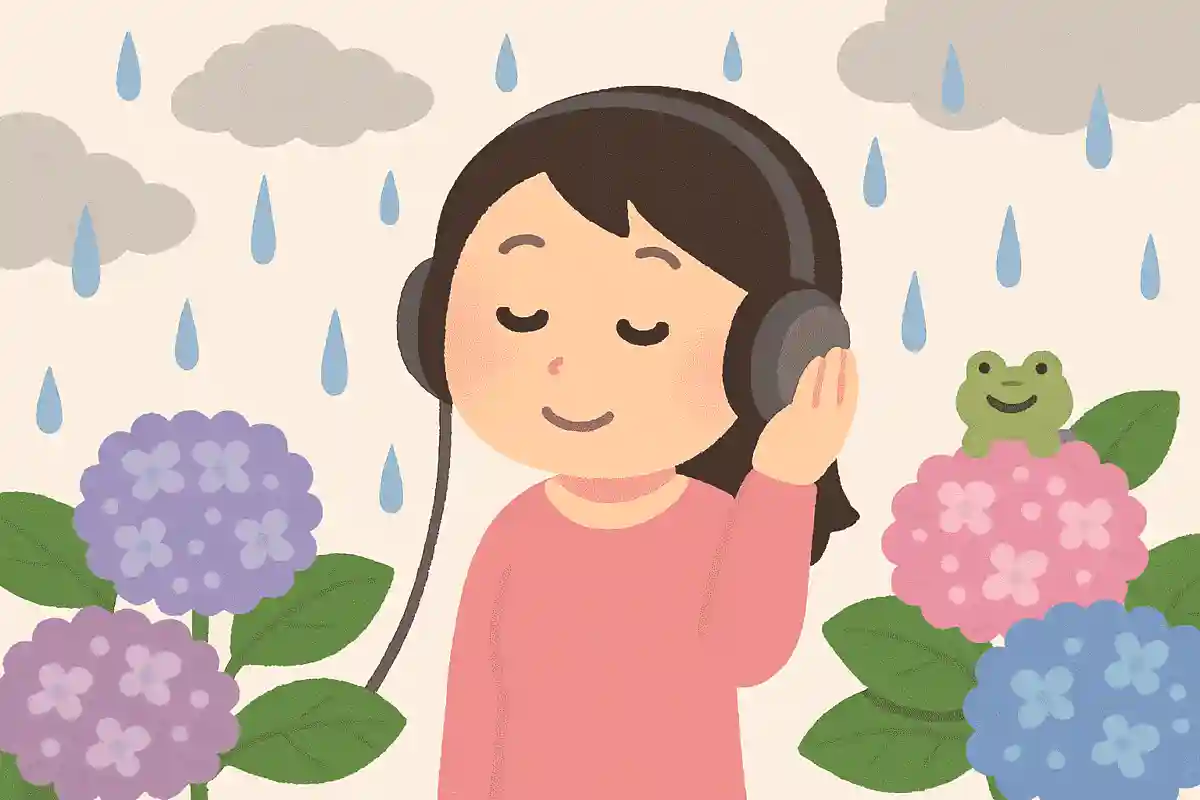
Many people find that rainy days help them feel calm, don’t they? There are lots of sleep and relaxation tracks that feature the sound of rain.
In fact, the sound of rain contains high-frequency components that relax brain waves and has what’s called the “1/f fluctuation,” a quality found in natural sounds.
That seems to be what brings us peace of mind.
June is the rainy season, so there are more rainy days.
It can be a bit inconvenient when commuting or going out, but every once in a while, isn’t it nice to slow down and listen to the sound of the rain?
There is no rainy season in Hokkaido.
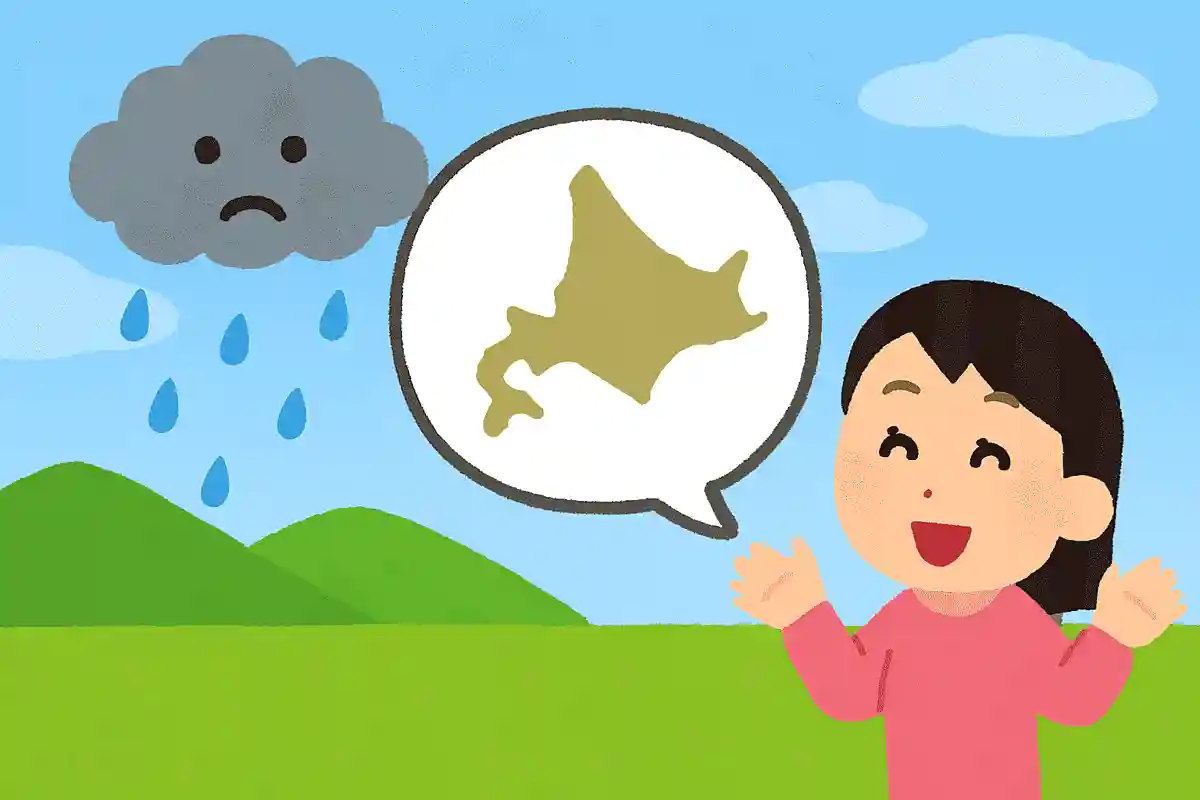
Hokkaido is known for not having a rainy season (tsuyu).
This is because the seasonal rain front doesn’t move far enough north to reach Hokkaido.
However, that doesn’t mean it doesn’t rain there.
During the tsuyu period, Hokkaido is also affected and can see continuous rainfall.
This phenomenon is called “Ezo-tsuyu.” While “tsuyu” and “Ezo-tsuyu” may seem almost the same, because the meteorological observatory excludes Hokkaido from rainy-season observations, it is officially said that “Hokkaido has no rainy season.”
A wagasa has more ribs than a Western-style umbrella.
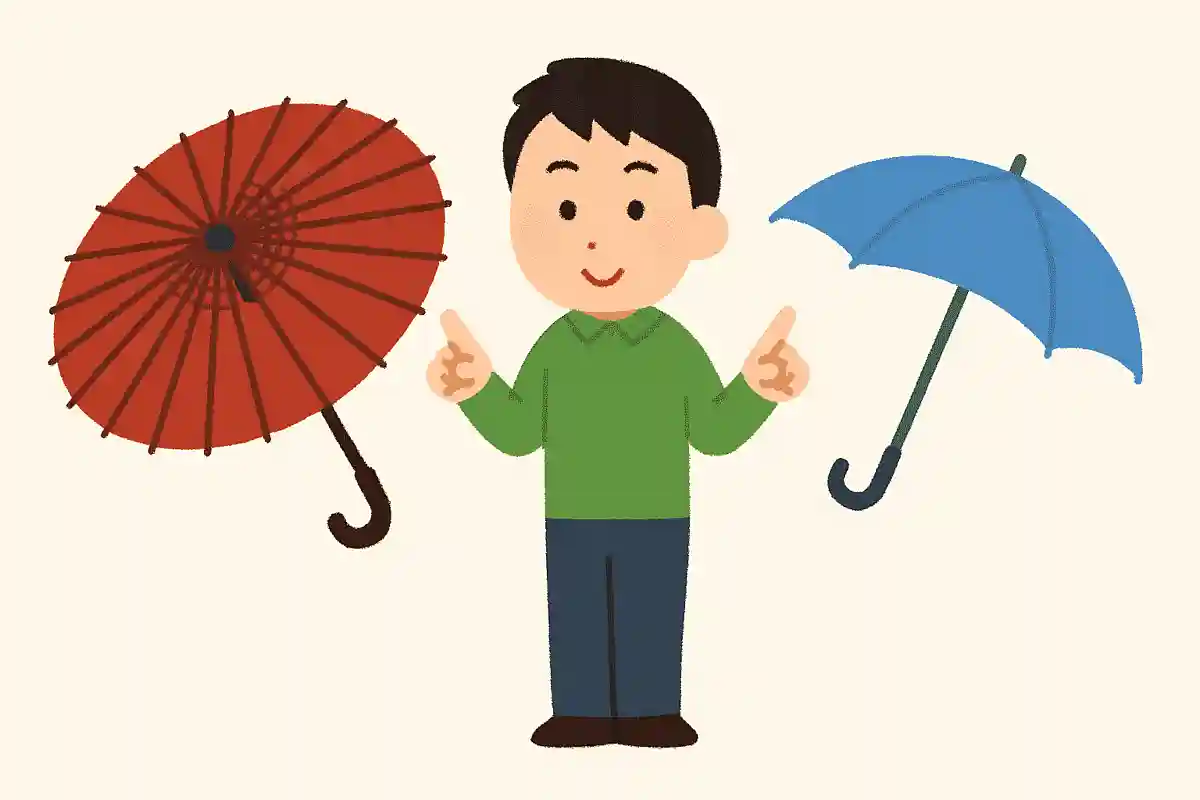
I don’t think many people use traditional Japanese umbrellas (wagasa) today, but I’ve heard they are still used for traditional events.
One well-known type of wagasa is the bangasa, which many of you are probably familiar with.
There are also various other kinds, such as janome-gasa, higasa (sunshades), and mai-gasa (dance umbrellas).
Something they all have in common is the large number of ribs.
While Western umbrellas are typically made with eight ribs, wagasa are made with more than thirty.
Since wagasa are considered beautiful when closed—taking on the appearance of bamboo—they may require those fine, numerous ribs.