

Rainy season trivia roundup: fun facts you'll want to share with someone


The rainy season that visits Japan from June to July.
Many people may not like it because the rain keeps falling.
In this article, we’ll introduce a collection of trivia about the rainy season! In addition to the origin of the name “tsuyu” and the mechanisms behind it, we’ve also picked out trivia about plants and animals during this time of year.
It may be a season that doesn’t lift your spirits, but we hope this article helps you enjoy it even a little.
These are all facts you’ll want to share with someone once you know them, so take this opportunity to learn lots of fun trivia.
- Trivia & fun facts about June
- A quiz of fun trivia: bite-sized knowledge that leads to new insights.
- Learn to Love the Rain! Fun Facts & Trivia Quiz about the Rainy Season for Kids
- [For Kids] Trivia & Fun Facts Quiz About June
- [For Seniors] Trivia Quiz & Fun Facts About the Rainy Season (Tsuyu)
- [Trivia] Did You Know? A Collection of Weather Proverb Quizzes!
- [Interesting] Compilation of Trivia Quiz Questions
- Cucumber trivia quiz. A collection of fun facts about cucumbers.
- Make weather forecasts more fun! Trivia and fun facts about the weather
- Fun facts you’ll want to share! A special feature on November trivia and tidbits
- A collection of trivia and fun facts about August that will warm your heart
- Trivia you think you know but surprisingly don’t? August trivia and fun facts quiz!
- A collection of trivia and fun facts about September as we await autumn
A roundup of rainy season trivia: fun facts you'll want to share (21–30)
The Tibetan Plateau is one of the factors that contribute to the formation of the monsoon.
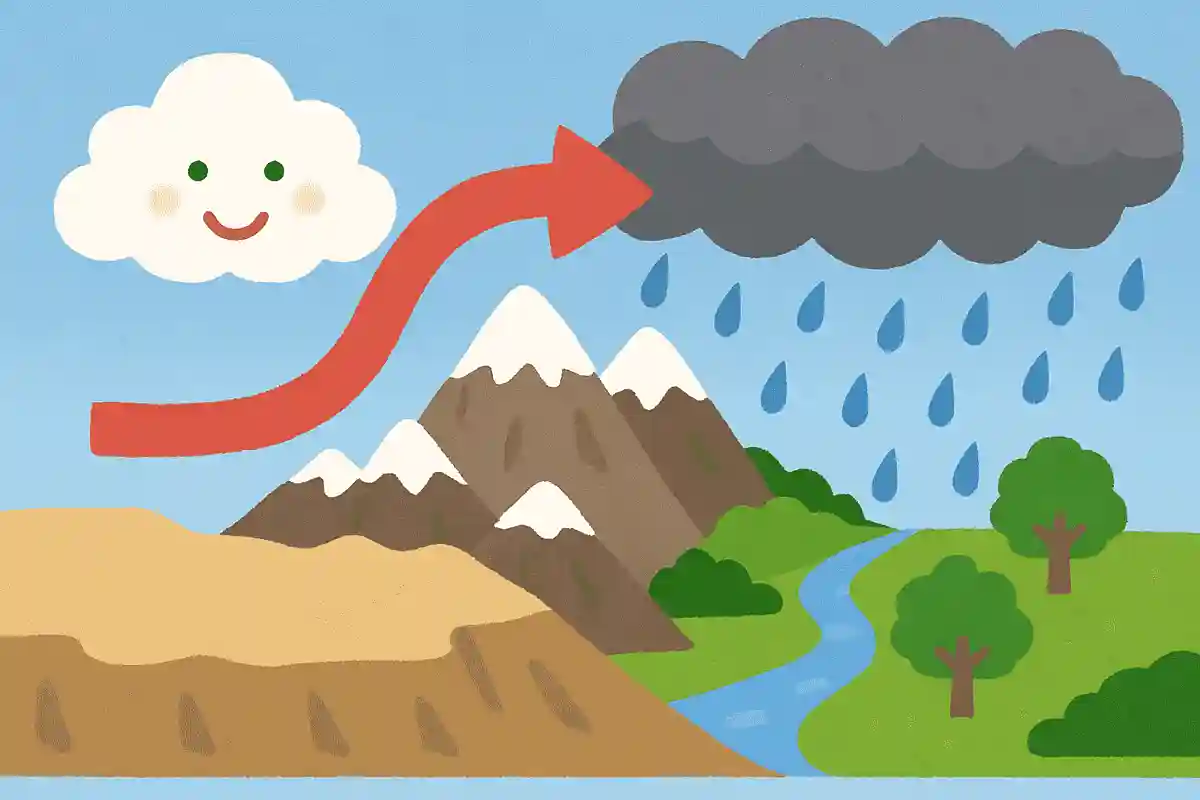
When it comes to what causes rain during the rainy season in Japan, it’s the Baiu (rainy season) front, and this front is said to form due to the Tibetan Plateau.
Since Japan’s climate feels so unique, it’s a bit surprising to hear that a place about 4,000 kilometers away is the cause.
The westerlies blow toward the Tibetan Plateau and split north and south; they then re-converge north of Japan to form the Okhotsk Sea High.
Between that and the Pacific High to the south of Japan, the Baiu front develops.
Paying close attention not only to Japan’s weather but also to winds overseas seems likely to help with future weather forecasting.

We must be careful about heatstroke even during the rainy season.
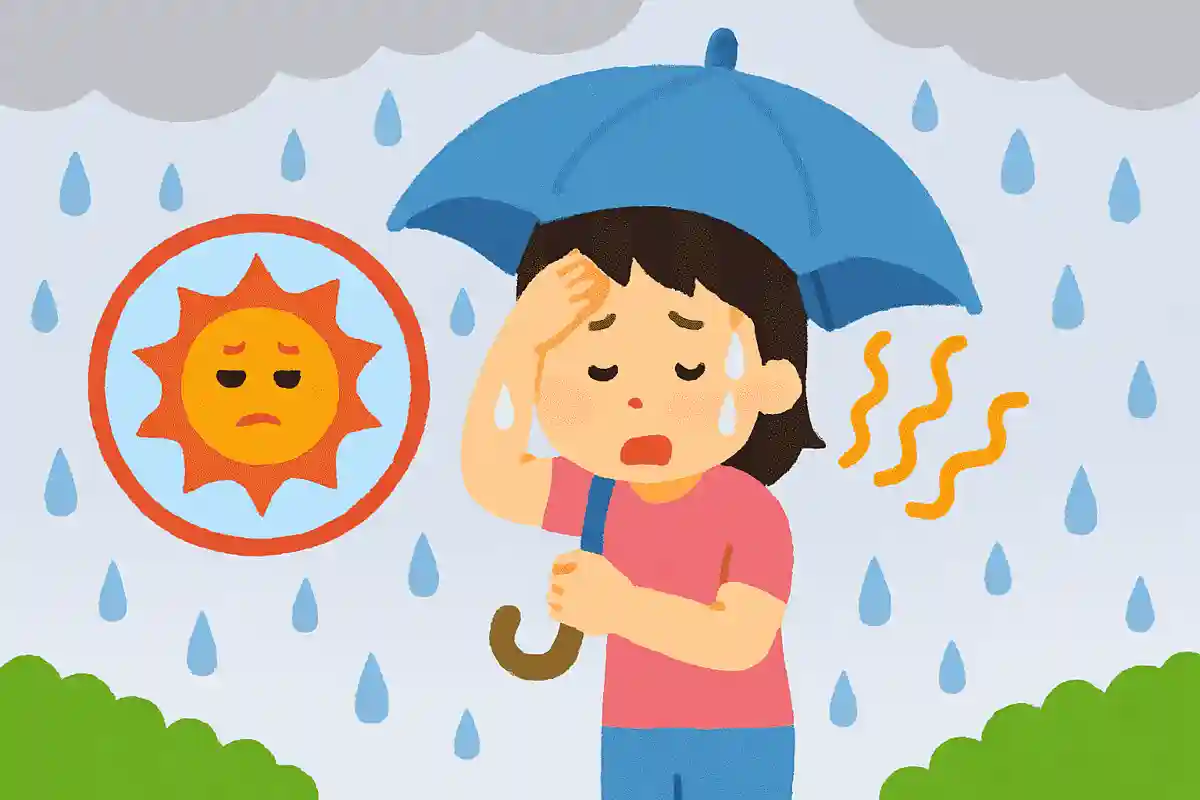
One danger that tends to be overlooked during the rainy season is heatstroke.
During this time, humidity rises, making it harder for you to sweat.
Since sweating helps release heat, if you can’t sweat, heat builds up in your body.
As a result, you can develop heatstroke even when the temperature isn’t very high.
In particular, if you’re wearing clothing that traps heat, be sure to lower your body temperature by drinking fluids frequently.
Exercising to work up a sweat is also considered effective for preventing heatstroke.

A rainy pattern refers to a state where it looks like it’s going to rain but it isn’t actually raining.
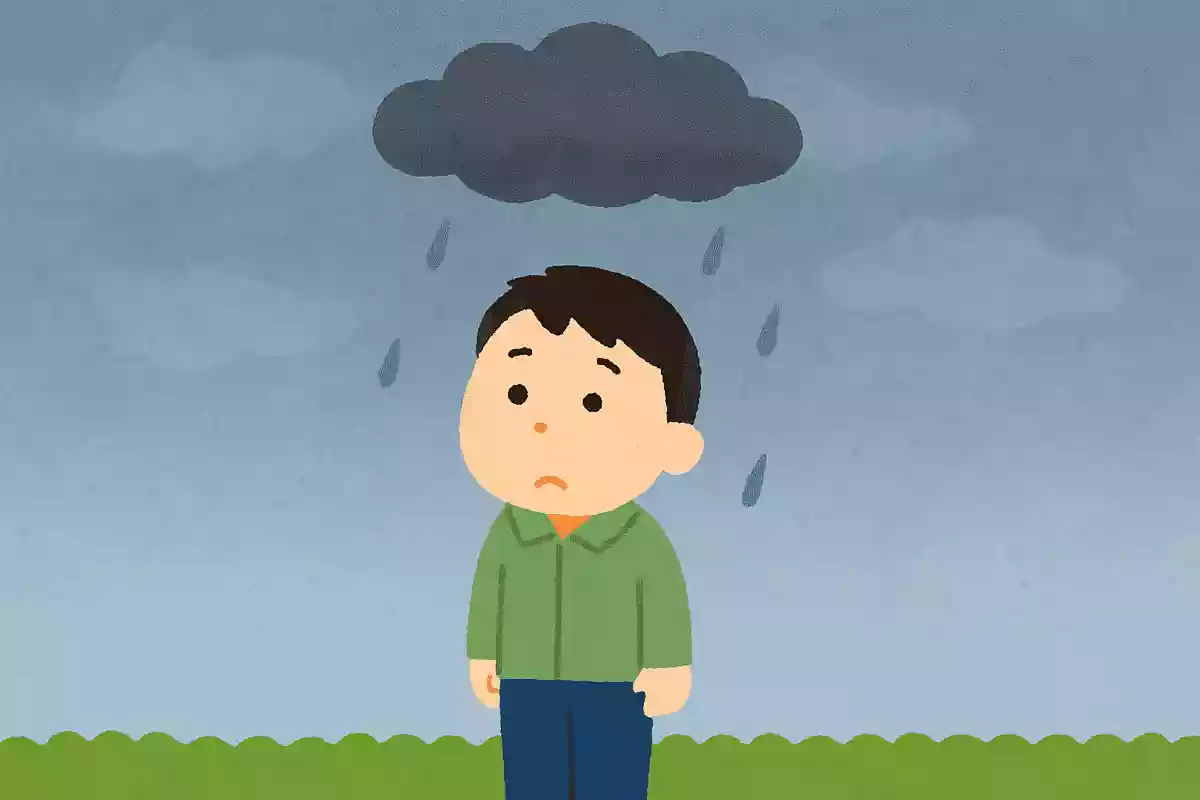
When you hear the word “amemoyō” (rain-like), many people probably picture a scene where it’s actually raining.
In fact, though, amemoyō refers to a state where it looks like it’s going to rain but isn’t raining yet.
That said, these days it’s also used to describe weather where it is raining or where the rain is starting and stopping, so either meaning will generally be understood.
By the way, “yukimoyō” (snow-like) and “aremoyō” (storm-like) are similar: they originally refer to conditions where it hasn’t started snowing yet or the weather hasn’t turned stormy yet.

Samidare refers to the rain that falls during the rainy season (tsuyu).
“Satsuki” refers to the fifth month in the old lunar calendar, which corresponds to around June to July in the modern calendar.
That’s why “samidare” means the long, continuous rains of the rainy season.
The reason the rain persists is that the seasonal rain front stalls.
Prolonged rain can cause various problems—rising river levels, sticky humidity, and event cancellations—but it’s also said that the sound of rain has a relaxing effect.
During the rainy season, why not stay indoors, listen to the rainfall, and spend some time at a slow, comfortable pace?
The “janome” that appears in the children’s song ‘Amefuri’ refers to an umbrella.
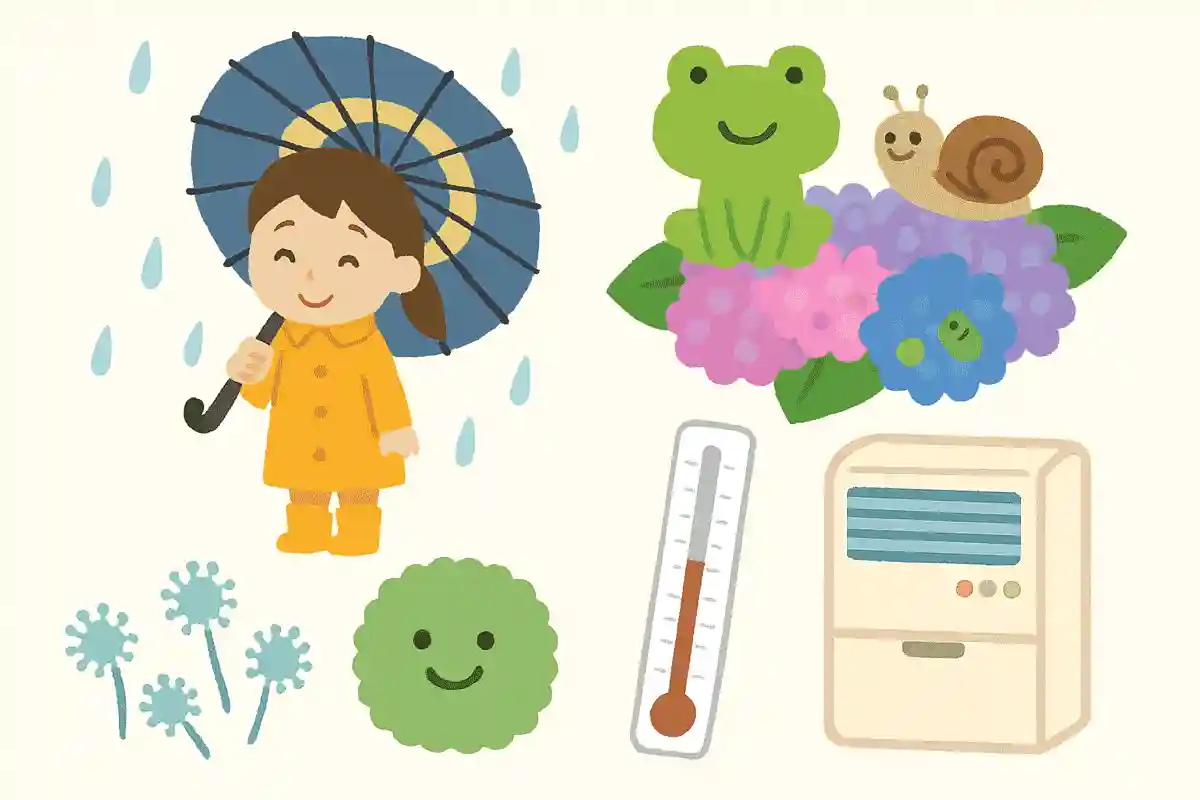
Many people likely sang the children’s song “Amefuri” when they were young.
This tune, which somehow starts playing in our heads when it rains, was written by Hakushu Kitahara and composed by Shinpei Nakayama.
In the song appears the word “janome.” Have you ever wondered what it means? It actually refers to an umbrella.
Written with the kanji 蛇の目, meaning “snake’s eye,” it received this name because the circular pattern visible when a traditional Japanese umbrella is opened resembles a snake’s eye.

In weather forecasts overseas, rain is represented with a rain-cloud icon.
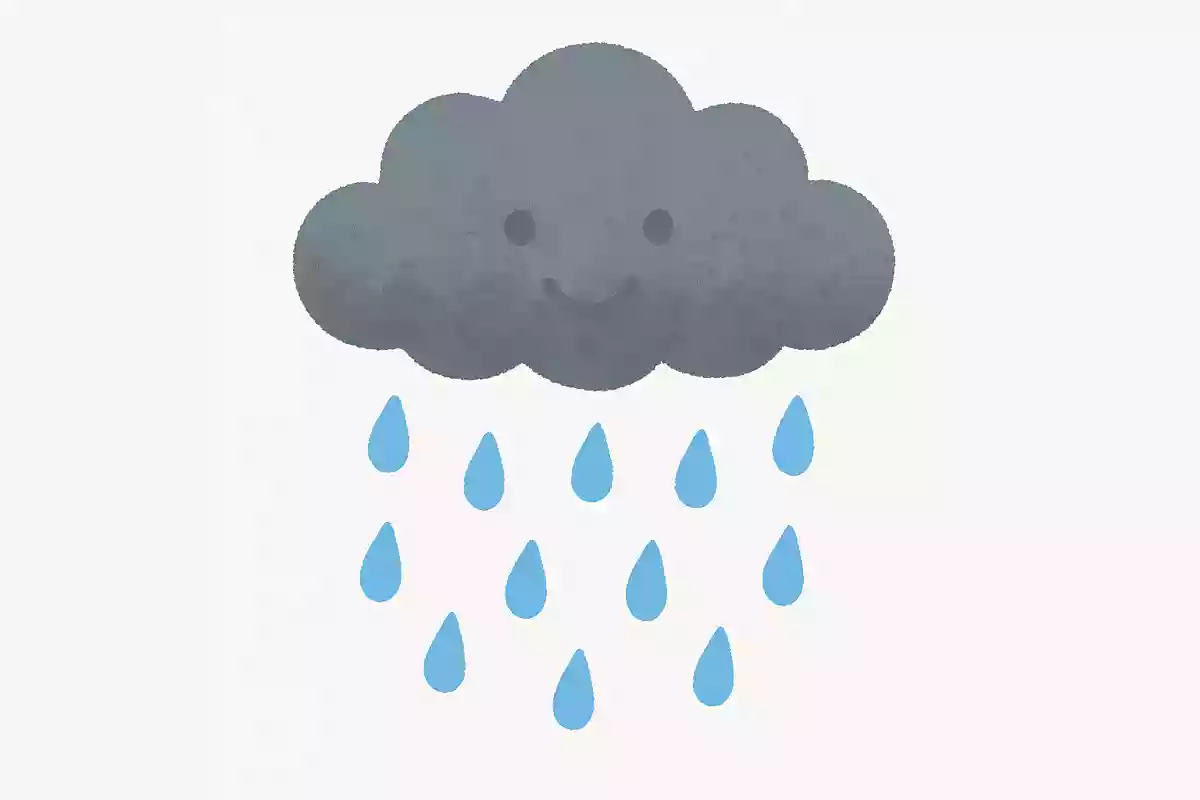
On important days like trips or entrance ceremonies, you probably check the weather forecast.
At those times, you’ve likely seen the “umbrella icon” that indicates rain.
While it’s a standard symbol in Japan, umbrella icons are actually rarely used overseas.
So what icon is used instead? A “rain cloud icon.” The rain cloud icon combines a cloud with raindrops.
In Japan, people typically carry umbrellas on rainy days, but in some countries people don’t carry them even when it rains, which might have something to do with the difference.
It can rain even when the forecast says a 0% chance of precipitation.
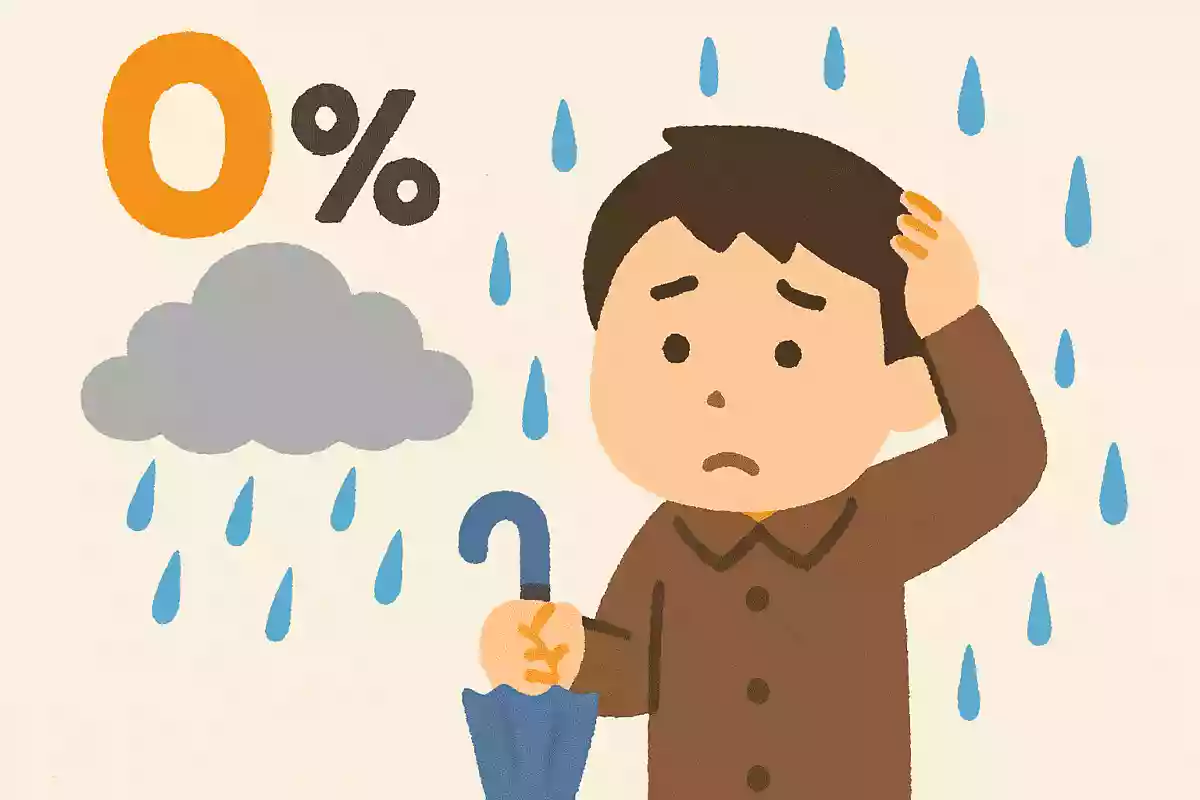
Even when the weather forecast says a 0% chance of precipitation, the sky can suddenly turn ominous and it may rain.
In forecasts, “0% chance of precipitation” doesn’t mean it will never rain; it means the probability is extremely low.
Also, 0% doesn’t literally mean zero—it generally means less than 5%.
In other words, there is still some chance of rain.
To avoid getting caught in a sudden shower, it’s a good idea to carry a foldable umbrella if the weather looks even a little suspicious.
