




The rainy season that visits Japan from June to July.
Many people may not like it because the rain keeps falling.
In this article, we’ll introduce a collection of trivia about the rainy season! In addition to the origin of the name “tsuyu” and the mechanisms behind it, we’ve also picked out trivia about plants and animals during this time of year.
It may be a season that doesn’t lift your spirits, but we hope this article helps you enjoy it even a little.
These are all facts you’ll want to share with someone once you know them, so take this opportunity to learn lots of fun trivia.
- Trivia & fun facts about June
- A quiz of fun trivia: bite-sized knowledge that leads to new insights.
- Learn to Love the Rain! Fun Facts & Trivia Quiz about the Rainy Season for Kids
- [For Kids] Trivia & Fun Facts Quiz About June
- [For Seniors] Trivia Quiz & Fun Facts About the Rainy Season (Tsuyu)
- [Trivia] Did You Know? A Collection of Weather Proverb Quizzes!
- [Interesting] Compilation of Trivia Quiz Questions
- Cucumber trivia quiz. A collection of fun facts about cucumbers.
- Make weather forecasts more fun! Trivia and fun facts about the weather
- Fun facts you’ll want to share! A special feature on November trivia and tidbits
- A collection of trivia and fun facts about August that will warm your heart
- Trivia you think you know but surprisingly don’t? August trivia and fun facts quiz!
- A collection of trivia and fun facts about September as we await autumn
Rainy season trivia roundup: fun facts you'll want to share (1–10)
The smell of rain is called “petrichor.”

You know how there’s a distinctive smell when it rains? I’m sure you’ve all noticed it at least once.
Did you know that smell actually has an official name? It’s called “petrichor.” The word is a neologism combining the Greek “petra,” meaning stone, and “ichor,” meaning the blood of the gods.
In English, it’s written as “petrichor.” The term was coined by mineralogists Isabel Joy Bear and R.
G.
Thomas when they published a paper in Nature.

It came to be called the ‘rainy season’ (tsuyu) because plum fruits ripen at this time of year.
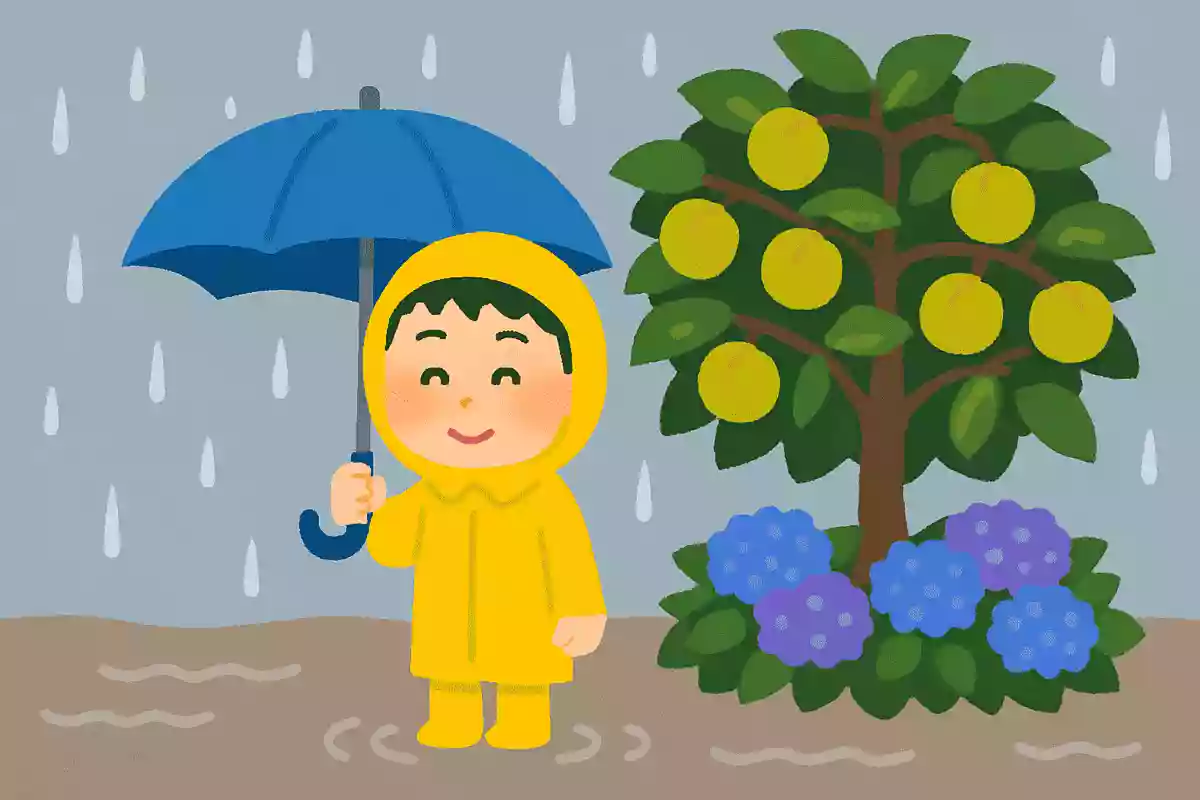
Do you know the origin of the term tsuyu for the rainy season? The word “梅雨” actually came from China, where it was read as baiu and originally meant “the rain that falls when plums ripen.” It was brought to Japan and became established with the reading tsuyu.
一方で、その語源は「黴雨(ばいう)」という言葉、つまり“カビが生えやすい季節の雨”に由来するという説もあります。ただ、「梅雨」のほうがどこか上品で詩的に感じられますよね。どちらの説も有力とされているので、あわせて覚えておくとよいでしょう。

When it rains, I get a headache because histamine secretion increases.
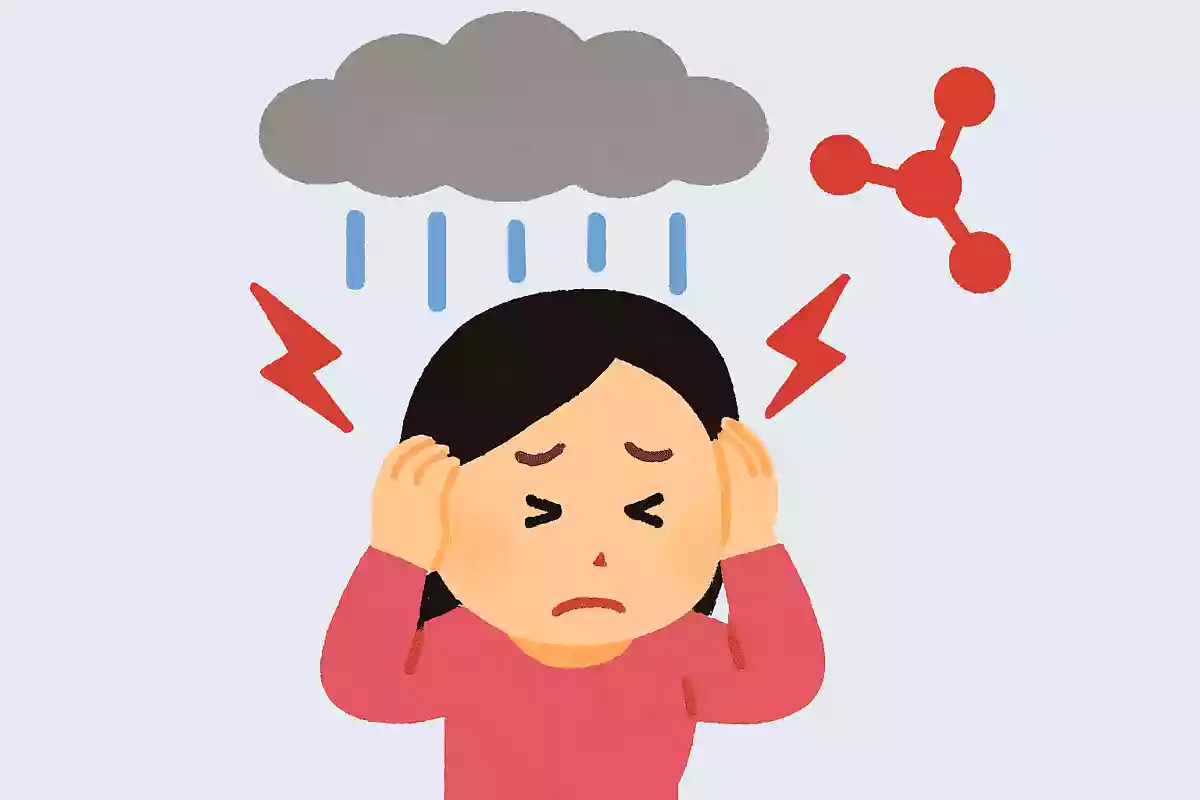
When the rainy season arrives, many people don’t feel well.
This is related to changes in atmospheric pressure.
First, when the pressure changes, it affects the water in our bodies.
Since about 70% of the human body is water, you can imagine how significant the impact can be.
As a result, the blood vessels in the head and throat dilate, causing various discomforts.
It’s also said that on days with low atmospheric pressure, the secretion of histamine—which triggers inflammation—increases, and that contributes as well.
The rainy season exists overseas, too.

The rainy season doesn’t occur only in Japan.
If we define “the rainy season” as regions affected by the Baiu (Meiyu) front, then it also occurs in South Korea and Taiwan.
Moreover, although it isn’t called tsuyu there, a rainy season exists in the United States and in Central and South America as well.
So Japan isn’t the only place troubled by a rainy season.
Incidentally, it’s said that Europe doesn’t have a distinct rainy season, but in exchange it can feel like a tsuyu-like state persists throughout the year.
It’s hard to say which climate is easier to live with.
There are positive and negative aspects to the rainy season
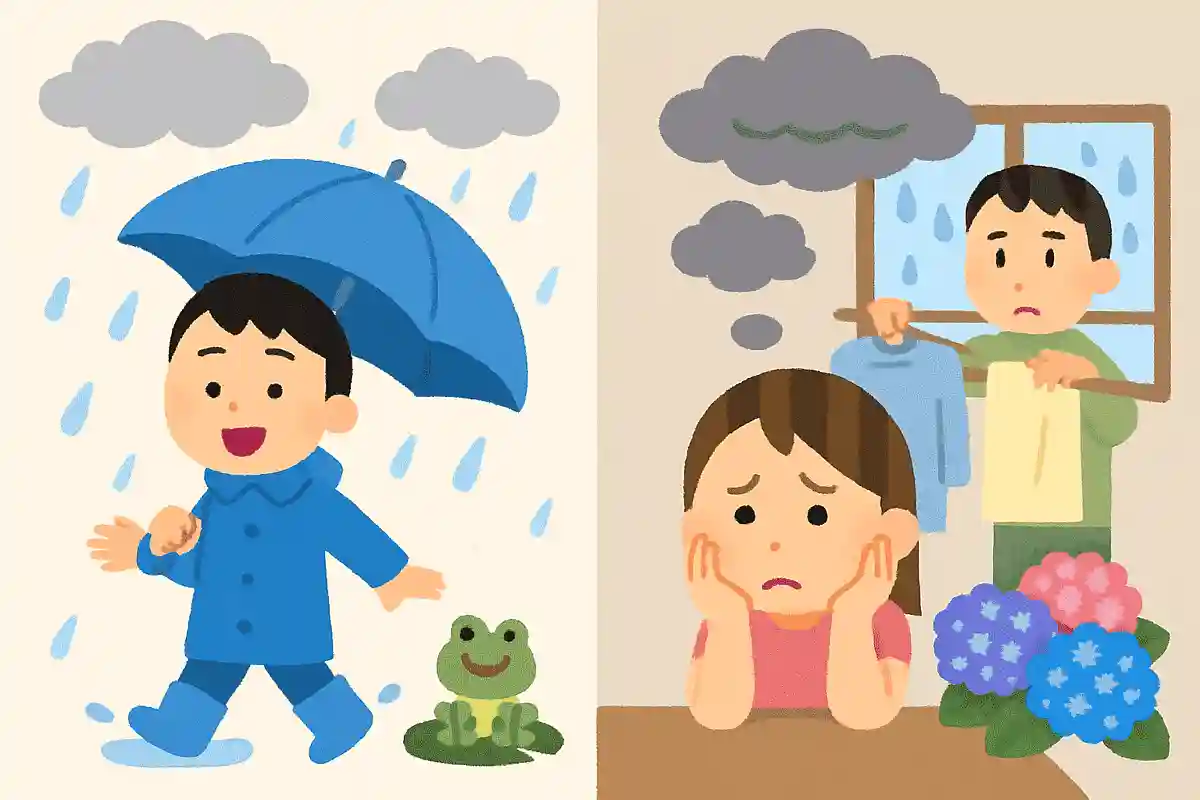
We usually lump everything together as “tsuyu,” the rainy season, but in fact there are two types.
One occurs in northern regions and is a yin-type rainy season; the other occurs in southern regions and is a yang-type rainy season.
The yin type brings long periods of damp, persistent rain.
In contrast, the yang type brings intense, thunderous downpours.
This might be a good chance to check whether the rainy season where you live is yin or yang.
Incidentally, it’s said that temperatures tend to be higher during the yin rainy season and lower during the yang rainy season.
There is a flower that is used as a marker for the start and end of the rainy season.

One flower closely associated with the rainy season is the hollyhock.
It has long been cherished for its medicinal uses, and it’s known for blooming around the start of the rainy season and finishing right as the season ends.
Because of this, it’s also called “tsuyu-aoi” (rainy-season hollyhock).
Its vivid appearance can brighten the damp, gloomy mood if you plant it at home.
Varieties in red, white, pink, yellow, and more are available, so choose the ones you like.
Raindrops aren’t shaped like teardrops.

When we depict rain, many of us probably imagine drop shapes, right? But it turns out real raindrops aren’t actually droplet-shaped.
Small raindrops are spherical, and large ones are said to resemble a bun shape.
The reason is that small drops are shaped by surface tension, while larger ones take on that bun-like form due to air resistance.
Come to think of it, it is a bit odd to imagine them as droplet-shaped when they’re falling from high up.
Still, the droplet shape has become fixed in our minds, and many people find it cute and prefer it.