

Ludwig van Beethoven Popular Songs Ranking [2026]

The great master Beethoven, who is even rumored to have led a sad life.For many people, when you think of classical music, you think of Beethoven.We’ve compiled a ranking of his quintessential pieces.As you go through it, you might also catch a glimpse of changes in his mental state through the shifts in his musical style.
- Pick up Beethoven’s famous and representative works!
- Johannes Brahms Popular Songs Ranking [2026]
- Frederic Chopin Popular Songs Ranking [2026]
- Gustav Mahler Popular Songs Ranking [2026]
- J.S. Bach Popular Songs Ranking [2026]
- Franz Liszt Popular Song Ranking [2026]
- [Masterpiece Classics] A special showcase of gem-like masterpieces so beautiful they’ll move you to tears
- Leonard Bernstein Popular Song Rankings [2026]
- Wolfgang Amadeus Mozart Popular Song Rankings [2026]
- Anton Bruckner Popular Songs Ranking [2026]
- Franz Schubert Popular Songs Ranking [2026]
- Franz Joseph Haydn Popular Song Rankings [2026]
- Giuseppe Verdi Popular Songs Ranking [2026]
Ludwig van Beethoven Popular Song Rankings [2026] (81–90)
Symphony No. 9Ludwig van Beethoven85rank/position

A commercial featuring Mio Imada opens with the striking line, “Come on, let’s get messy!” Imada takes dance lessons, eats yakiniku, and gets caught in the rain—activities that make you sweat and pick up odors.
Yet she doesn’t seem to mind at all, fully enjoying each moment.
The ad explains that she isn’t worried about dirt or smells because she can reset her hair with Pantene Micellar.
The tune she hums as the BGM is Beethoven’s Symphony No.
9.
Also known as the Ninth, this piece is beloved as a year-end concert classic.

Symphony No. 9 in D minor, Op. 125 “Choral”Ludwig van Beethoven86rank/position
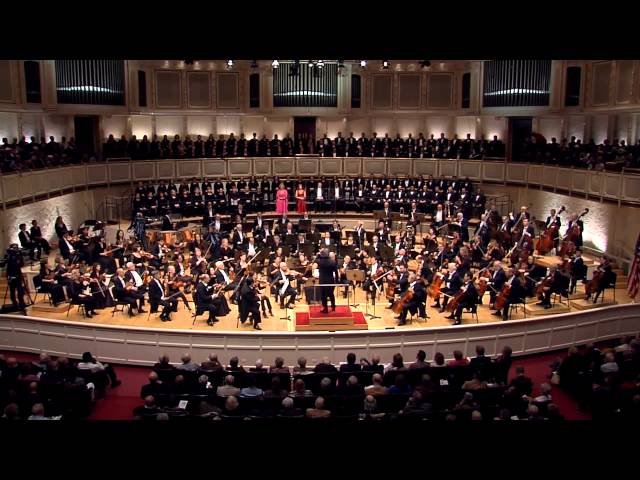
Beethoven’s Symphony No.
9, composed in his later years, is one of the most famous works in the history of music.
It is widely known as the “Ninth.” Among its four movements, the “Ode to Joy” sung in the fourth movement is truly overwhelming.
Many people may have heard just this choral section.
Based on a poem by Schiller, the lyrics carry a universal message that celebrates human love and harmony, continuing to move people’s hearts to this day.
By the time of its premiere in Vienna in May 1824, Beethoven had already lost his hearing.
Even so, his passion for music never waned, and he created this masterpiece, which remains beloved to this day.
Symphony No. 9, Fourth Movement “Ode to Joy”Ludwig van Beethoven87rank/position

This is a commercial for Big Boy, a family restaurant known for its signature hamburg steaks and steaks.
It highlights their commitment to enhancing flavor by cooking the meat over an open flame.
The sizzling visuals and sounds are incredibly appetizing.
Coupled with the “Ode to Joy” playing in the background, the spot feels both grand and luxurious.
From Symphony No. 9 in D minor, Op. 125 — Fourth Movement “Ode to Joy”Ludwig van Beethoven88rank/position

In Japan, it is affectionately known as “the Ninth,” and as the year draws to a close, performances of the Ninth are held all over the country.
The lyrics of this piece are based on Schiller’s poem “Ode to Joy,” and in Japan the choral section is also called the “Song of Joy.” While there had been symphonic works that used voices before, this is considered the first work to employ vocal parts effectively.
In addition to voices, it also uses percussion instruments—such as cymbals and triangle—that had rarely been used in symphonies up to that point.

Symphony No. 9 “With Chorus”Ludwig van Beethoven89rank/position

Affectionately known in Japan by the abbreviation “Daiku” (The Ninth), this piece is so beloved that events where everyone sings the Ninth together are held across the country at year’s end.
Symphony No.
9 is the ninth and final symphony Beethoven composed.
Because he included four vocal soloists and a mixed chorus in the final fourth movement, it is also called the “Choral” symphony.
The text uses Schiller’s poem “An die Freude” (Ode to Joy), and its main theme is widely known as the “Ode to Joy.” It premiered in 1824, though Beethoven is said to have aspired since around 1792 to set Schiller’s poem to his own music someday.

Symphony No. 5, First Movement “Fate”Ludwig van Beethoven90rank/position
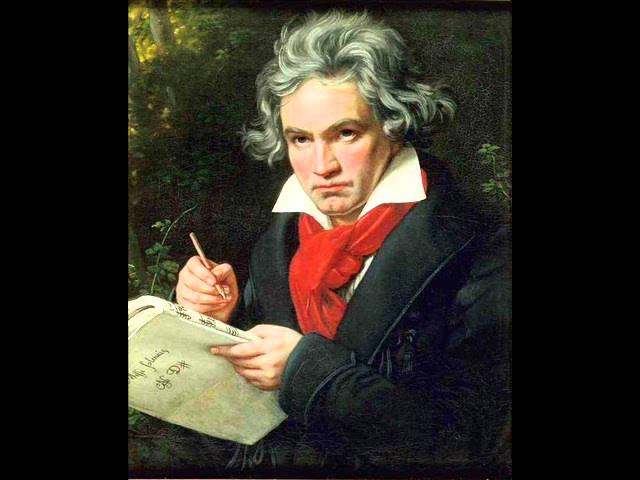
This piece is Beethoven’s Fifth Symphony, affectionately known in Japan as “Fate.” Listening as you follow the ingenious structure—from the striking opening, through the depths of darkness, step by step into a brighter world—is truly thrilling.
It feels almost like riding a roller coaster.
Even within the first movement there’s a shift from darkness to light, and across movements I through IV the music grows progressively brighter, so I recommend listening to all the movements straight through.
Ludwig van Beethoven Popular Song Rankings [2026] (91–100)
Symphony No. 6 “Pastoral”Ludwig van Beethoven91rank/position

Known as the “Pastoral,” Symphony No.
6 is one of Beethoven’s most celebrated works, rivaling the fame of Symphony No.
5, the “Fate.” It is also a very rare example of a piece to which Beethoven himself gave programmatic titles.
Characterized by a gentle, expansive development that seems to convey the calm atmosphere of abundant nature, it offers a different side of Beethoven in contrast to the impassioned “Fate.” The composer himself stated that it is not a depiction of rural scenery, but rather an expression of the joyful feelings of people in the countryside.
In any case, let us immerse ourselves in the world of the “Pastoral” and savor the bountiful autumn.
