

Ludwig van Beethoven Popular Songs Ranking [2026]

The great master Beethoven, who is even rumored to have led a sad life.For many people, when you think of classical music, you think of Beethoven.We’ve compiled a ranking of his quintessential pieces.As you go through it, you might also catch a glimpse of changes in his mental state through the shifts in his musical style.
- Pick up Beethoven’s famous and representative works!
- Johannes Brahms Popular Songs Ranking [2026]
- Frederic Chopin Popular Songs Ranking [2026]
- Gustav Mahler Popular Songs Ranking [2026]
- J.S. Bach Popular Songs Ranking [2026]
- Franz Liszt Popular Song Ranking [2026]
- [Masterpiece Classics] A special showcase of gem-like masterpieces so beautiful they’ll move you to tears
- Leonard Bernstein Popular Song Rankings [2026]
- Wolfgang Amadeus Mozart Popular Song Rankings [2026]
- Anton Bruckner Popular Songs Ranking [2026]
- Franz Schubert Popular Songs Ranking [2026]
- Franz Joseph Haydn Popular Song Rankings [2026]
- Giuseppe Verdi Popular Songs Ranking [2026]
Ludwig van Beethoven Popular Song Rankings [2026] (41–50)
Piano Sonata No. 14 in C-sharp minor “Moonlight”Ludwig van Beethoven50rank/position
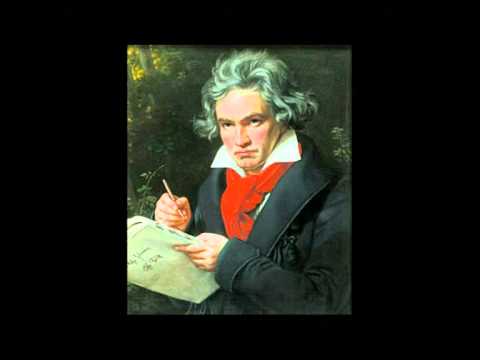
The first movement of Ludwig van Beethoven’s Piano Sonata No.
14, completed in 1801, is characterized by a dreamlike atmosphere that evokes moonlight reflected on a tranquil lake.
Its dreamy triplet accompaniment and profoundly expressive melody captivate listeners and will not let them go.
It is said that the work reflects Beethoven’s worsening hearing at the time and the pain of unrequited love.
Featured in many works such as the films Love Story and Interview with the Vampire, its allure continues to move people across generations.
It’s also recommended to listen to it alone on a quiet night when the moon is visible.
Ludwig van Beethoven Popular Songs Ranking [2026] (51–60)
Piano Sonata No. 24 in F-sharp major, Op. 78 “Therese”Ludwig van Beethoven51rank/position

Ludwig van Beethoven’s Piano Sonata No.
24, dedicated to a woman he admired, consists of two movements and is characterized by a delicate, graceful sonority that seems to express his romantic feelings through music.
Dedicated to his piano pupil, Countess Thérèse von Brunsvik, it is also known by the nickname “Thérèse.” The first movement is notable for its warm introduction and leisurely main theme, while the second movement has a light, lively atmosphere.
Composed in 1809, it is said to have been one of Beethoven’s own favorites.
Why not immerse yourself in a romantic mood, carried by the tones of the piano?
Piano Sonata No. 8, Op. 13 “Pathétique,” Second MovementLudwig van Beethoven52rank/position

The masterpiece that has etched its name in music history, Ludwig van Beethoven’s Piano Sonata No.
8 in C minor, Op.
13 “Pathétique,” Second Movement.
Alongside the “Moonlight” Sonata, it is a popular choice for recitals.
Because the first movement and the finale are technically demanding, performing the entire sonata is quite challenging; however, the second movement is relatively accessible, so focusing on this movement alone is also recommended.
Practice triplets, the balance between accompaniment and melody, and pedaling with care to achieve a polished, high-quality performance.

Piano Sonata No. 23 “Appassionata”Ludwig van Beethoven53rank/position

Among his many piano works, the Appassionata is considered one of the most intense.
Beethoven, who was teaching piano to Josephine, the sister of his friend Count Brunsvik, master of a palace, fell in love with her.
However, they could not overcome the divide between commoner and aristocrat, and in the end the two were never united.
It is said that the Appassionata was written amid the anguish of this unfulfilled love.
Its boldly and rapidly shifting dynamics and the powerful chords that seem to shatter the melody convey the fierce emotions Beethoven kept hidden in his heart.

Piano Sonata “Tempest” No. 17 in D minor, Op. 31 No. 2Ludwig van Beethoven54rank/position
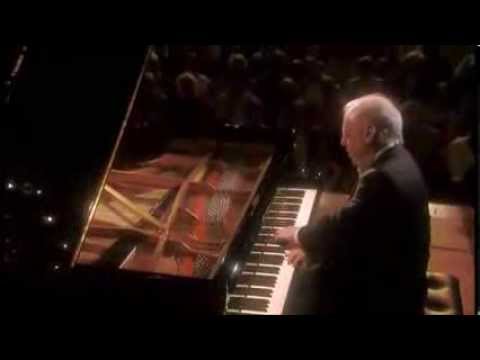
Composed in 1802, this piano sonata became an innovative work that signaled a new direction in his creative output.
Consisting of three movements, it moves from a quiet introduction to an eruption of intense emotion in the first movement, expresses deep sorrow and introspection in the second, and brims with vitality in the third, powerfully stirring the listener’s heart.
The piece seems to reflect Beethoven’s deteriorating hearing and his conflicts with those around him.
It is a work that captures the forces of nature and the depths of human emotion—truly deserving to be called one of his masterpieces.
Piano Sonata No. 29 in B-flat major, Op. 106 “Hammerklavier”Ludwig van Beethoven55rank/position

Beethoven’s late masterpiece, the Piano Sonata “Hammerklavier,” is a landmark work that dramatically expanded the possibilities of piano music.
Comprising four movements, it is renowned for its formidable technical demands and profound musical depth.
The third movement in particular paints a meditative world that reflects Beethoven’s inner turmoil and sense of isolation.
Completed in 1818, the sonata pursues distinct timbres and expressions in each movement, reflecting the piano’s evolution at the time.
It’s a piece I highly recommend to anyone who wants to savor piano music on a deeper level.
Piano Sonata No. 8 in C minor, Op. 13 ‘Pathétique’Ludwig van Beethoven56rank/position

The title “Pathétique” was given by Beethoven himself.
As the title suggests, the piece has a solemn, tragic tone.
It is one of Beethoven’s three great piano sonatas, and the second movement—renowned for its particularly beautiful melody—is used in many contexts and is very famous.