

Ludwig van Beethoven Popular Songs Ranking [2026]

The great master Beethoven, who is even rumored to have led a sad life.For many people, when you think of classical music, you think of Beethoven.We’ve compiled a ranking of his quintessential pieces.As you go through it, you might also catch a glimpse of changes in his mental state through the shifts in his musical style.
- Pick up Beethoven’s famous and representative works!
- Johannes Brahms Popular Songs Ranking [2026]
- Frederic Chopin Popular Songs Ranking [2026]
- Gustav Mahler Popular Songs Ranking [2026]
- J.S. Bach Popular Songs Ranking [2026]
- Franz Liszt Popular Song Ranking [2026]
- [Masterpiece Classics] A special showcase of gem-like masterpieces so beautiful they’ll move you to tears
- Leonard Bernstein Popular Song Rankings [2026]
- Wolfgang Amadeus Mozart Popular Song Rankings [2026]
- Anton Bruckner Popular Songs Ranking [2026]
- Franz Schubert Popular Songs Ranking [2026]
- Franz Joseph Haydn Popular Song Rankings [2026]
- Giuseppe Verdi Popular Songs Ranking [2026]
Ludwig van Beethoven Popular Songs Ranking [2026] (21–30)
Song of JoyLudwig van Beethoven22rank/position

The piece “Ode to Joy,” included in Ludwig van Beethoven’s masterpiece Symphony No.
9, is also known in Japan as “Yorokobi no Uta” (Song of Joy).
Many arrangements for beginner pianists have been published, and it’s a popular choice for recital pieces.
For beginners, coordinating different movements with both hands is extremely challenging.
This work is arranged with an accompaniment that even beginners can play easily.
In a format like the one shown in the video, even children can perform it with ease, so be sure to check it out.

Violin Sonata No. 9 “Kreutzer”Ludwig van Beethoven23rank/position
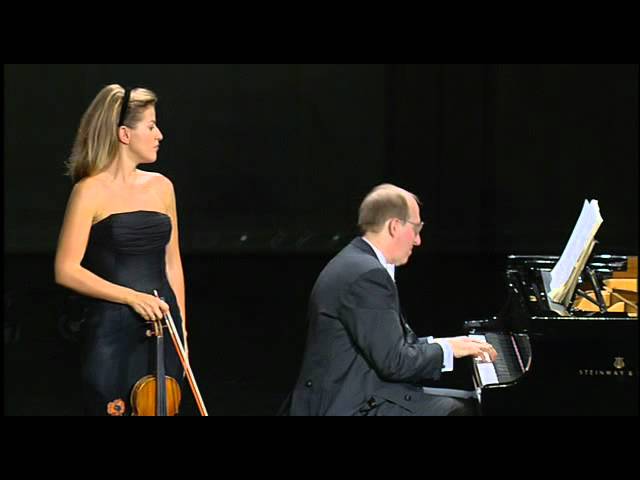
A passionate piece by Ludwig van Beethoven in which the piano and violin spar as if striking sparks.
Composed during the period when Beethoven’s style was shifting into his so-called “heroic” middle phase, it is distinguished by an energy that powerfully stirs the listener’s soul.
Its overwhelming drama inspired the great writer Tolstoy and is known for having given rise to a novel of the same name.
Since its score was published in 1805, numerous recordings have been made, including the album “Beethoven Violin Concerto & Violin Sonata No.
9 ‘Kreutzer.’” When you want to push your concentration to the limit or need a catalyst for creative work, there may be no piece more fitting than this.
Six Ecossaises, WoO 83Ludwig van Beethoven24rank/position

Beethoven’s masterpiece “Six Ecossaises, WoO 83,” which incorporates the Scottish dance ecossaise.
Known as a beginner-friendly work, it’s one that many novices tackle after “Für Elise” and the first movement of the “Moonlight” Sonata.
The key to this piece lies in its light, buoyant rhythm.
Without solid fundamentals, the sound can become unbalanced, so pay close attention to the tempo markings and dynamics.
Adding expressive nuance will instantly elevate the performance, so give it a try.
7 Ländler WoO 11 No. 7Ludwig van Beethoven25rank/position

A piece in D major distinguished by a lively 3/4 rhythm and a friendly, memorable melody.
Despite its simple structure, it overflows with the elegant atmosphere beloved at Viennese balls.
Composed in 1799, this gem was written by Ludwig van Beethoven in response to requests from high society.
Elements of folk dance are skillfully woven into the flowing melody, beautifully balancing the dignity of classical music with a rustic charm.
It’s an ideal introductory piece for those just beginning piano lessons—fun to practice and highly useful for learning the fundamentals of music.
Farewell, pianoLudwig van Beethoven26rank/position

Among Ludwig van Beethoven’s piano works, this piece is well loved as an entry-level selection.
Its gentle melody is memorable, making it a great recommendation for those just starting the piano.
The left hand’s arpeggios provide a flowing accompaniment.
The modulation to A-flat major is especially beautiful, leaving an impression of wistful melancholy.
It’s a work that fully showcases the piano’s charm, making it perfect for recital performances.
Practice the relaxed, elegant melody with care, and aim for a performance that warmly envelops the hearts of your listeners.
Ecosés WoO 23Ludwig van Beethoven27rank/position

This is a charming miniature by Ludwig van Beethoven, with a bright, bouncy rhythm.
Written in G major and in duple meter, it features a lively melody, packing the Classical era’s characteristic stability into short phrases.
It originally had a tie-in background as occasional music for contemporary social dances or military bands, and the widely known version today is the piano arrangement in which his pupil Carl Czerny is said to have been involved around July 1834.
It’s perfect for practicing a bright, crisp tone, and it will show plenty of endearing appeal on stage as well.
With the roles of the right and left hands clearly defined, this piece is recommended for older children who want to refine their sense of rhythm and their staccato.
Be sure to check it out.
Ecossaises in E-flat major, WoO 86Ludwig van Beethoven28rank/position

This is a lively piece inspired by Scottish folk dance.
Included in the November 1825 album “Ernst und Tändeley,” it is a short, charming dance written in E-flat major.
Despite its simple two-part form, it features a friendly melody and a pleasant rhythm.
The work gained popularity as a salon piece and for ballroom use, exuding an elegant and cheerful atmosphere.
It is perfect for those who want to enjoy practicing the piano or experience a sense of fulfillment in a short performance time.
With its approachable structure and appealing melody, it serves as a good step in piano study.