

Ludwig van Beethoven Popular Songs Ranking [2026]

The great master Beethoven, who is even rumored to have led a sad life.For many people, when you think of classical music, you think of Beethoven.We’ve compiled a ranking of his quintessential pieces.As you go through it, you might also catch a glimpse of changes in his mental state through the shifts in his musical style.
- Pick up Beethoven’s famous and representative works!
- Johannes Brahms Popular Songs Ranking [2026]
- Frederic Chopin Popular Songs Ranking [2026]
- Gustav Mahler Popular Songs Ranking [2026]
- J.S. Bach Popular Songs Ranking [2026]
- Franz Liszt Popular Song Ranking [2026]
- [Masterpiece Classics] A special showcase of gem-like masterpieces so beautiful they’ll move you to tears
- Leonard Bernstein Popular Song Rankings [2026]
- Wolfgang Amadeus Mozart Popular Song Rankings [2026]
- Anton Bruckner Popular Songs Ranking [2026]
- Franz Schubert Popular Songs Ranking [2026]
- Franz Joseph Haydn Popular Song Rankings [2026]
- Giuseppe Verdi Popular Songs Ranking [2026]
Ludwig van Beethoven Popular Song Rankings [2026] (41–50)
Sonatina No. 5, 1st MovementLudwig van Beethoven43rank/position

Sonatina No.
5, composed by Beethoven between 1796 and 1798.
The first movement, written in sonata form in C minor, contrasts forceful phrases with quiet ones and is built on distinctive rhythms and melodies.
The juxtaposition of short, fragmentary motifs with long, lyrical lines heightens its dynamic, impulsive effect.
This work is one of the representative pieces of Beethoven’s early period and an energetic composition that foreshadows his later Pathetique Sonata and Fifth Symphony.
It is known as an important part of the piano learner’s repertoire, so consider taking it on for competitions.
Cello Sonata No. 3 in A major, Op. 69Ludwig van Beethoven44rank/position
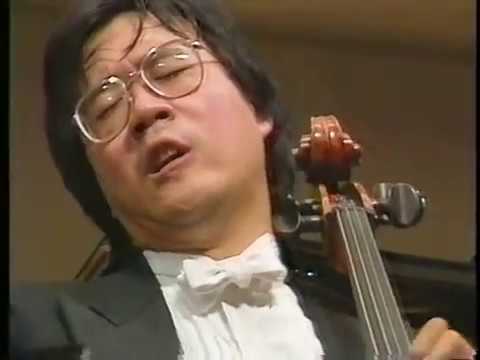
Cello Sonata No.
3, Op.
69 from the collection of cello sonatas composed by Ludwig van Beethoven.
The set consists of Sonatas Nos.
1 through 5, and this third sonata is the most famous.
Hailed as a masterpiece often called the “New Testament of the cello,” it is considered an essential repertoire piece for many cellists.
Diabelli VariationsLudwig van Beethoven45rank/position

It is a piece consisting of 33 variations, called “33 Variations on a Waltz by Diabelli.” As Beethoven’s final set of piano variations, it is a monumental work that can be considered the culmination of his variation techniques to date.
It contains 33 entirely distinct and richly diverse variations.
Turkish March, The Ruins of Athens – No. 4Ludwig van Beethoven46rank/position

Turkish March by Ludwig van Beethoven vividly conjures the image of soldiers marching in lockstep.
It’s a piece that children who are beginning piano often dream of playing at least once, and it’s also known as a staple for recitals.
Within its bright, peaceful atmosphere, there’s a sense of strength, making it a perfect piece for boys who want to perform something cool.
Keep a crisp, steady tempo with the left hand, and play accurately with the right hand so the notes don’t tumble, aiming to express the dignified spirit of the soldiers’ march.

Minuet in CLudwig van Beethoven47rank/position

A piece everyone has heard at least once: “Minuet in G.” While the melody is famous, the title isn’t widely known by the general public.
Written in 3/4 time, it has no specific tempo marking, but it’s commonly performed at a lively pace.
It follows an A-A-B-A form, so once you can play the A section, you’ve essentially mastered half the piece.
Since the B section differs greatly in character from the A section, aim for a natural transition when moving between them.

Violin Sonata No. 5 “Spring”Ludwig van Beethoven48rank/position
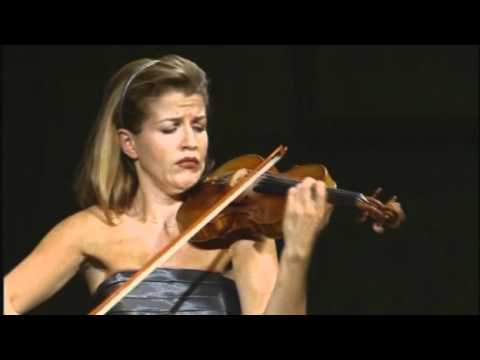
Next, let me introduce a famous violin masterpiece by the “Saint of Music,” Beethoven.
Even those not very familiar with classical music may have heard this violin sonata somewhere at least once.
It remains beloved today and is performed as one of the greatest masterpieces for violin.
Violin Concerto in D major, Op. 61Ludwig van Beethoven49rank/position

Ludwig van Beethoven, a German composer known as one of the most important musicians in history.
He is extremely famous in Japan as well.
While the fact that he was deaf often draws attention, Beethoven’s true appeal lies above all in his flawless compositions, which can be called the culmination of Classical-era music.
His Violin Concerto is one of his most popular works for the instrument and has been performed by many renowned violinists up to the present day.