

Maurice Ravel Popular Songs Ranking [2026]

He was a French composer born on March 7, 1875.
He is well known for composing the ballet music Boléro and for orchestrating Pictures at an Exhibition.
We’ve compiled a ranking of his popular pieces.
Whether you’re a longtime fan or just discovering him, be sure to check it out.
- Introducing Maurice Ravel’s Famous and Representative Works
- Jules Massenet Popular Song Rankings [2026]
- Jean-Philippe Rameau Popular Songs Ranking [2026]
- Claude Debussy Popular Songs Ranking [2026]
- Gabriel Fauré Popular Songs Ranking [2026]
- Igor Stravinsky Popular Songs Ranking [2026]
- Camille Saint-Saëns Popular Songs Ranking [2026]
- Modest Mussorgsky Popular Song Rankings [2026]
- Erik Satie Popular Songs Ranking [2026]
- Emmanuel Chabrier Popular Song Rankings [2026]
- Sergei Rachmaninov Popular Songs Ranking [2026]
- Déodat de Séverac Popular Song Rankings [2026]
- Manuel de Falla Popular Song Rankings [2026]
Maurice Ravel Popular Songs Ranking [2026] (11–20)
From the suite ‘Ma mère l’Oye’: No. 1 Pavane of the Sleeping BeautyMaurice Ravel15rank/position

An elegant piano duet inspired by the fairy tale Sleeping Beauty.
Written for two children, it is considerate in its technical demands and not overly difficult.
Its gentle melody in A minor conveys a dreamlike sense of comfort.
Although it lasts only about a minute and a half, it unfolds a delicate world built on the classical pavane dance form.
The layered chords and richly colored sonorities produced by four hands offer a depth of musical experience unattainable in a solo performance.
Composed in 1908, it was later arranged for orchestra and ballet.
This piece is recommended for those who wish to leave a dazzling impression at recitals or concerts.
ParadeMaurice Ravel16rank/position
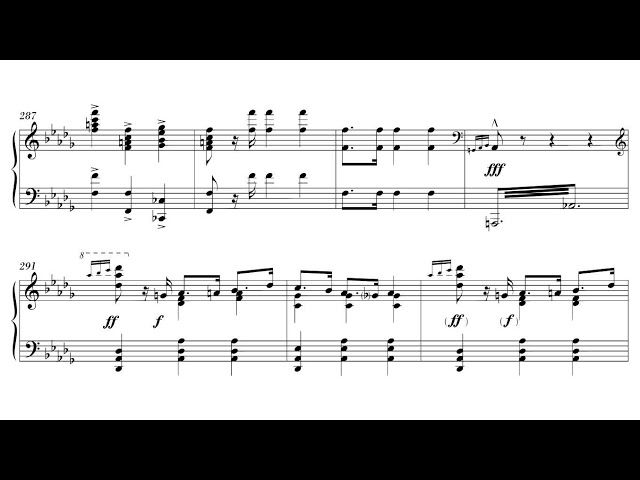
A piece whose powerful, dramatic sound stirs the listener’s heart, as if heralding the beginning of a grand tale.
It is a work by Toshio Horiuchi, who teaches in Hiroshima Prefecture and has composed numerous band pieces.
From the delicate interplay of sounds in the quiet sections to the breathtaking build toward a climax where the full ensemble charges forward as one, the piece offers a deeply immersive experience—like living through the prologue of a legend in music.
Composed in 2006 as a set piece for the All Japan Band Competition, it is featured in the album “Reference Performances of Set Pieces for the All Japan Band Competition 2005‑2008.” Demanding not only individual technique but the expressive power of the entire band, this masterpiece is one you’ll want to perform when you and your ensemble wish to weave a single, sweeping story together.
La ValseMaurice Ravel17rank/position

Maurice Ravel, a great composer who produced numerous masterpieces with his avant-garde musicality.
Among his works, La Valse is a particularly beloved piece for piano four hands.
Although it is considered an advanced-level work, it is actually more approachable to perform than its impression suggests.
The sections written on three staves and the coda are the main challenges; in the three-stave section, rapid passages appear one after another.
While there are passages that are physically unplayable in a solo version, the difficulty drops considerably in the four-hand arrangement, making it accessible even for performers just entering the advanced level.

Pavane for a Dead Princess in G majorMaurice Ravel18rank/position

Maurice Ravel, a composer whose highly original style influenced many artists, is also very popular in Japan.
Among Ravel’s works, a piece I especially recommend is the Pavane for a Dead Princess in G major.
Written in G major, in 4/4 time and in rondo form, it features a relaxed rhythm and a main theme with an exotic atmosphere.
When it comes to beautiful melodies, many people would probably name this piece.
A noble and sentimental waltzMaurice Ravel19rank/position

Maurice Ravel was a French composer of Swiss-Basque descent.
A leading figure of Impressionism, his music is marked by artisanal precision and formal perfection.
Composed in 1911 as a suite for piano, Valses nobles et sentimentales was named as an homage to Schubert’s Valses nobles and Valses sentimentales.
Consisting of eight waltzes and an epilogue, the work is distinguished by sonorities that depart from traditional tonality.
In particular, the fifth waltz expresses deep inner emotions through delicate chromatic shifts, and Ravel himself pointed to the seventh waltz as a distinctive number.
Freely moving between atonality and tonality while displaying a wide range of musical expression, this work can be seen as emblematic of Ravel’s musical explorations.
Piano Concerto in D major for the Left HandMaurice Ravel20rank/position

Maurice Ravel made major contributions to the world of French classical music.
His Concerto for the Left Hand in D major was composed in 1929 at the request of Austrian pianist Paul Wittgenstein, who had lost his right arm in World War I.
Ravel succeeded in creating a rich sonority that, though playable with the left hand alone, sounds as if it were performed with both hands.
In Samson François’s performance, the work’s dark and impassioned world is brilliantly conveyed.
The jazz elements incorporated into the second movement evoke not only playfulness but also a sense of urgency.
This is a definitive performance that every music lover seeking the innovative spirit of classical music should hear at least once.
Maurice Ravel Popular Songs Ranking [2026] (21–30)
Noble and Sentimental Waltzes: Waltz No. 2, Assez lent (fairly slow), G minorMaurice Ravel21rank/position

A work with an introspective atmosphere that feels like peering into the depths of the heart, it is included in Maurice Ravel’s suite Valses nobles et sentimentales.
There’s an anecdote that it was performed at a private concert in 1911 with the composer’s identity kept secret.
Within the gently flowing time, noble yet sentimental melodies emerge, as if quietly staying close to the listener’s heart.
The traditional waltz rhythm hides some unexpectedly piquant sonorities that seem to express unspoken, complex emotions.
It’s a perfect piece for those who want to learn about subtle changes in tone color and long-breathed phrasing.
The key is to play as if breathing, imbuing each note with intention so as not to break the work’s mysterious atmosphere.