

Maurice Ravel Popular Songs Ranking [2026]

He was a French composer born on March 7, 1875.
He is well known for composing the ballet music Boléro and for orchestrating Pictures at an Exhibition.
We’ve compiled a ranking of his popular pieces.
Whether you’re a longtime fan or just discovering him, be sure to check it out.
- Introducing Maurice Ravel’s Famous and Representative Works
- Jules Massenet Popular Song Rankings [2026]
- Jean-Philippe Rameau Popular Songs Ranking [2026]
- Claude Debussy Popular Songs Ranking [2026]
- Gabriel Fauré Popular Songs Ranking [2026]
- Igor Stravinsky Popular Songs Ranking [2026]
- Camille Saint-Saëns Popular Songs Ranking [2026]
- Modest Mussorgsky Popular Song Rankings [2026]
- Erik Satie Popular Songs Ranking [2026]
- Emmanuel Chabrier Popular Song Rankings [2026]
- Sergei Rachmaninov Popular Songs Ranking [2026]
- Déodat de Séverac Popular Song Rankings [2026]
- Manuel de Falla Popular Song Rankings [2026]
Maurice Ravel Popular Songs Ranking [2026] (21–30)
Ma mère l’OyeMaurice Ravel22rank/position

How about this piece, which draws you into a world of musical storytelling as if speaking to you, as BGM for work or study? It’s a suite composed by Maurice Ravel in 1908, consisting of five movements inspired by fairy tales and created as music for children.
Characterized by elegant, dreamlike sonorities, it showcases Ravel’s delicate musicality to the fullest.
First presented for piano four hands, it was orchestrated in 1911, adding even richer colors to its expression.
Each movement vividly portrays scenes from various stories—such as Sleeping Beauty and the Queen of the Pagodas—through music.
It’s also recommended for those who want to become familiar with a work that invites you into a fairy-tale world.
It’s a great idea to add both the orchestral and piano versions to your playlist and let them play on repeat!
Minuet in C-sharp minorMaurice Ravel23rank/position

This is a very short piece, about one minute long, said to have been written around 1904 as a practice assignment for a close composer friend.
Within the classical minuet form, it carries Ravel’s characteristic refined sonorities and a subtly introspective mood.
Rather than dazzling display, the piece conveys restrained elegance—melancholy and beautiful, as if translating delicate, hidden emotions directly into sound.
It’s perfect for anyone who wants an easy introduction to Ravel’s unique aesthetic sensibility.
Because its structure is concise and free of unnecessary ornamentation, the key is to play each note with care while picturing the steps of an elegant dance.
Aim to express the nuances of the heart within its soft, subdued atmosphere.
Suite ‘Miroirs’ No. 4 – Alborada del graciosoMaurice Ravel24rank/position
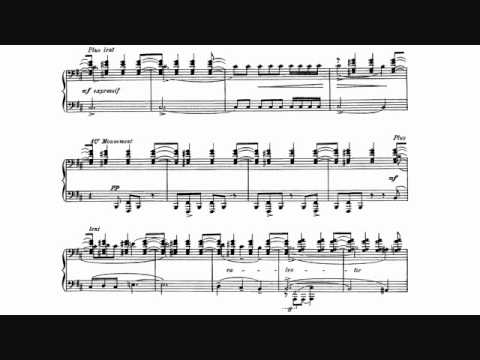
The suite Miroirs, dedicated to the members of the artist group Les Apaches.
Its fourth piece is set in a Spanish morning, a varied work that conjures the image of a jester.
Dry, guitar-like rhythms intersect with passionate melodies, brilliantly portraying the jester’s cheerfulness and the melancholy hidden beneath it.
The piece was later orchestrated and reportedly used in a ballet staged in London in 1919.
Though by no means easy, it is dotted with moments where lyrical singing emerges amid virtuosic passages.
It’s perfect for those who wish to immerse themselves in the richly expressive world of Spanish music or broaden their expressive range through technique.
Emphasize the contrast between the fiery sections and the plaintive middle part, and perform as if telling a story.
Le Tombeau de Couperin, No. 3: ForlaneMaurice Ravel25rank/position

The third piece from Maurice Ravel’s Le Tombeau de Couperin, composed as a memorial to friends who died in World War I.
Each of the six movements was written in memory of a different person, and this third movement is dedicated to a lieutenant who was a Basque painter.
“Forlane” is a classical dance of North Italian origin, marked “somewhat lively” in tempo, yet the music exudes an elegant atmosphere.
Aim for a spirited performance by clearly articulating the dotted rhythms and grace notes that evoke the character of a dance.

In the style of ChabrierMaurice Ravel26rank/position

Maurice Ravel composed two pieces titled “in the style of”: À la manière de Borodine (In the Style of Borodin) and this À la manière de Chabrier (In the Style of Chabrier).
Both were written at the request of his friend Alfredo Casella.
Emmanuel Chabrier was a French composer known for his España (Spanish Rhapsody).
While À la manière de Chabrier may not display the same liveliness as España, it conveys Chabrier’s characteristic brightness.
Try to play it so that each note sparkles while making effective use of the pedal!
Sonatina Op. 40, Movement II: MinuetMaurice Ravel27rank/position

Sonatine M.40 was written for a composition competition hosted by a certain magazine.
The work was later dedicated to a pair of Polish brothers whom Maurice Ravel was fond of.
Following the first movement, composed in sonatina form, the second movement is a beautiful piece whose delicate, faintly colored melodies evoke a range of emotions—yearning, loneliness, joy, and more.
The key to performance is to play with ease while avoiding brusqueness, paying close attention to the score’s subtle expressive markings.
Berceuse on the Name of FauréMaurice Ravel28rank/position

Composed as a homage to Ravel’s esteemed senior colleague, Gabriel Fauré, this is an elegant piece of chamber music.
Premiered in Milan in October 1922, the work is a short piece for violin and piano.
Drawing cleverly on pitch material derived from Fauré’s full name, it shapes a gentle, lullaby-like melody.
The music unfolds a beautiful sound world where Ravel’s characteristic delicacy of technique fuses with profound respect for Fauré.
You may find it even more captivating if you listen to a few of Fauré’s works beforehand.
Please do give it a listen.