

Maurice Ravel Popular Songs Ranking [2026]

He was a French composer born on March 7, 1875.
He is well known for composing the ballet music Boléro and for orchestrating Pictures at an Exhibition.
We’ve compiled a ranking of his popular pieces.
Whether you’re a longtime fan or just discovering him, be sure to check it out.
- Introducing Maurice Ravel’s Famous and Representative Works
- Jules Massenet Popular Song Rankings [2026]
- Jean-Philippe Rameau Popular Songs Ranking [2026]
- Claude Debussy Popular Songs Ranking [2026]
- Gabriel Fauré Popular Songs Ranking [2026]
- Igor Stravinsky Popular Songs Ranking [2026]
- Camille Saint-Saëns Popular Songs Ranking [2026]
- Modest Mussorgsky Popular Song Rankings [2026]
- Erik Satie Popular Songs Ranking [2026]
- Emmanuel Chabrier Popular Song Rankings [2026]
- Sergei Rachmaninov Popular Songs Ranking [2026]
- Déodat de Séverac Popular Song Rankings [2026]
- Manuel de Falla Popular Song Rankings [2026]
Maurice Ravel Popular Songs Ranking [2026] (51–60)
Vocalise in Habanera FormMaurice Ravel57rank/position
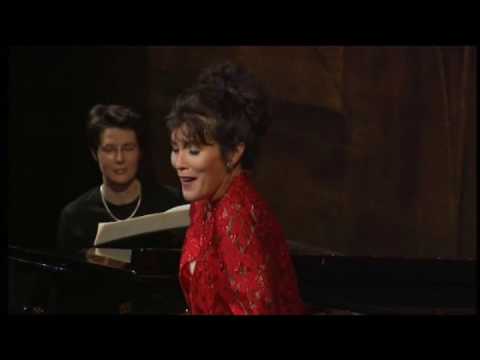
A vocal piece by Ravel.
It prominently features the habanera rhythm, deeply influenced by Spain, creating a sensuous atmosphere.
Written in the “vocalise” style—sung on vowels alone—it has no lyrics, which all the more highlights the beauty of its melody.
Ravel’s delicate harmonies and smooth voice-leading captivate listeners and won’t let go.
Although composed for voice, it has been arranged for various instruments and is still widely performed today.
Combining exotic allure with technical intrigue, this song is well worth a listen.
Ballet music “Daphnis and Chloé” Suite No. 2Maurice Ravel58rank/position

Ballet music composed by the French composer Ravel.
It was written based on the pastoral novel Daphnis and Chloe by the ancient Greek writer Longus, dating from around the 2nd–3rd century.
The novel is set on the island of Lesbos and tells the story of the shepherd boy Daphnis and his beloved, Chloe.
Please enjoy Ravel’s fantastical and beautiful world!

From the ballet music Ma mère l’Oye: 5. The Fairy GardenMaurice Ravel59rank/position

Maurice Ravel, one of France’s foremost composers, excelled at expressing in music the world of fairy tales that stirs childhood memories and the imagination.
In particular, his piano four-hands suite Ma mère l’Oye, composed between 1908 and 1910 and inspired by works such as Charles Perrault’s Tales of Mother Goose, is a characteristically delicate and richly colored creation.
The fifth movement, The Fairy Garden, is marked by a beautiful melody befitting the suite’s finale.
The sensuous timbre of the violin evokes the story’s climax, drawing listeners into a fairy-tale realm.
Suggestive of a scene from Sleeping Beauty, this movement radiates a brilliant, fantastical glow worthy of a finale, making it an ideal recommendation even for those new to Ravel’s music.
piano trioMaurice Ravel60rank/position

Composed in 1914, it consists of four distinctive movements.
The first movement, Modéré, evokes dance music from the Basque region, where the composer’s mother was from.
The second movement, Pantoum, is inspired by a Malaysian poetic form.
The third movement, Passacaille, opens with writing reminiscent of Baroque music.
In the fourth movement, Finale, orchestral effects are called for, and the parts for all three players are highly demanding.
Maurice Ravel Popular Songs Ranking [2026] (61–70)
Piano Concerto in G majorMaurice Ravel61rank/position

Completed in 1931, this work is known as one of his late masterpieces.
It strongly reflects his encounters with jazz during a concert tour in America and the influence of Basque folk music from his mother’s homeland.
Structured in three movements, the first has a bright, playful character; the second is a lyrical sarabande-like movement; and the third unfolds with the bustling energy reminiscent of a circus or parade—resulting in a richly varied and captivating musical trajectory.
While evoking a return to Ravel’s musical roots, it also expands upon his unique sound world.
Ravel wrote only two piano concertos; this is one of them.
Be sure to give it a listen.
Song of the People of MadagascarMaurice Ravel62rank/position
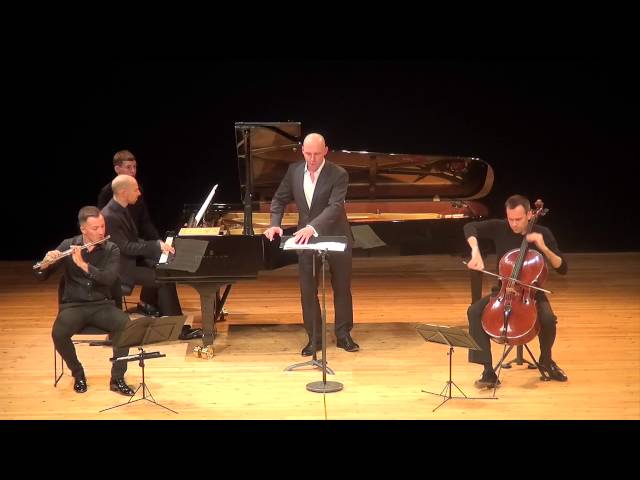
Composed in 1925–26.
At the request of Mrs.
Coolidge, an American who commissioned the work, Ravel accepted the specified instrumentation, resulting in a vocal piece accompanied by piano, flute, and cello.
He himself selected poems by Evariste Parny, an 18th-century poet born in the colonies, and set them to music.
The work consists of “N’Zang (Nandoav),” “Aoua! (Hey!),” and “Il est doux, il est bon (Rest—How Sweet It Is).” The poems, while exhibiting an exotic flavor, also embody sentiments opposed to colonial rule.
Sonata for Violin and CelloMaurice Ravel63rank/position

Composed between 1920 and 1922.
It consists of four movements: Allegro, Very Fast, Slow, and Vivo con spirito.
The first and fourth movements also incorporate a Hungarian flavor.
Only the Allegro had already been published in 1920, as a contribution to a project commemorating Debussy, who died in 1918.
The remaining movements were later completed, forming a four-movement sonata.