

Franz Schubert Popular Songs Ranking [2026]

His majestic music is so highly regarded in German Lieder that he is often called the King of Song.
The expansive, soothingly beautiful melodies he created are ones everyone has surely heard at least once.
We’ve compiled a ranking of Schubert’s pieces by popularity.
Please enjoy a graceful time!
- Masterpieces by Franz Schubert: Sparkling classical works left by the King of Song. Recommended classical music.
- Robert Schumann Popular Song Ranking [2026]
- Ludwig van Beethoven Popular Songs Ranking [2026]
- Franz Liszt Popular Song Ranking [2026]
- [Masterpiece Classics] A special showcase of gem-like masterpieces so beautiful they’ll move you to tears
- Johannes Brahms Popular Songs Ranking [2026]
- Robert Schumann | Introduction to his famous and representative works
- For Advanced Players: Showstopping Classics to Play at a Piano Recital
- Bedřich Smetana Popular Songs Ranking [2026]
- Frederic Chopin Popular Songs Ranking [2026]
- Johann Burgmüller Popular Song Rankings [2026]
- Antonín Dvořák Popular Songs Ranking [2026]
- What songs are popular among elementary schoolers? Well-known and sing-along favorites! [2026]
Franz Schubert Popular Song Ranking [2026] (71–80)
Piano Sonata No. 19 in C Minor, D 958Franz Schubert71rank/position

Franz Schubert, famed as the “king of song,” also left many masterpieces of piano sonatas.
One of them is the Piano Sonata No.
19 in C minor, D 958, composed in 1828, the final year of his life.
The piano sonatas from this period were written with a strong consciousness of Ludwig van Beethoven—the revered master known as the composer of the “Ninth” and the Symphony No.
5 “Fate.” Despite his failing health, Schubert poured his full strength into these large-scale works.
Of the four movements, only the second is in A-flat major and thus in a major key; the other three movements are all in C minor.
Whether he was aware of his impending death is unknown, but these late works remain highly popular today.
Regarding the Piano Sonata No.
18, Robert Schumann—renowned also as a critic—lavishly praised it as “perfect both in form and spirit,” and No.
19 stands alongside Nos.
18 and 20 as one of the most beloved works in Schubert’s output.
Piano Sonata No. 20 in A major, D. 959Franz Schubert72rank/position

Following Nos.
18 and 19, this is one of the most popular of Austrian composer Franz Schubert’s piano sonatas.
Composed in 1828, during Schubert’s brief 31-year life, it is the second of the three piano sonatas he wrote in a single burst just two months before his death, despite his declining health.
Written in A major, it conveys a singing brightness.
Only the second movement is in a minor key—specifically F-sharp minor—beginning with a simple, desolate character.
However, partway through it expands into a fierce, wide-ranging development that provides striking contrast.
Though a beautiful piano sonata, it also contains numerous intense passages that seem to reflect an awareness of approaching death; this balance has made it a favored repertoire piece among pianists to this day.
It is a Schubert piano sonata you will want to listen to through to the end.
Piano Trio No. 2 in E-flat major, Op. 100, D 929Franz Schubert73rank/position

It is a piano trio composed in 1827.
Of its four movements, all but the second are written in a major key.
However, Schubert was in poor health at the time, composing while battling headaches and dizziness.
Following the expansive first movement, the second movement, Andante con moto, is written in C minor and possesses a distinctive sense of desolation.
Piano Quintet in A major, Op. 114, D. 667 “Trout”Franz Schubert74rank/position

It carries the subtitle “The Trout.” This stems from the fourth movement being a set of variations on Schubert’s song “Die Forelle” (The Trout).
While the usual instrumentation for a piano quintet is piano, two violins, viola, and cello, Schubert’s scoring is different: piano, violin (one), viola, cello, and double bass.
All five movements are written in major keys.
Piano Quintet “The Trout”Franz Schubert75rank/position

Composed in 1819 when Schubert was 22, this work was published posthumously in 1829.
In the summer of 1819, during a visit to Austria, Schubert met the amateur musician and mining entrepreneur Sylvester Paumgartner.
Paumgartner requested that Schubert write a quintet based on his favorite song, “Die Forelle” (The Trout), and Schubert composed this piece in response.
Piano Quintet “The Trout,” Movement 4Franz Schubert76rank/position

This refreshing masterpiece of chamber music was composed in the summer of 1819 by Franz Schubert, known as the King of Song.
It is based on a song that depicts fish darting across the river’s surface on the piano, and unfolds in the form of variations.
The conversation woven by five instruments, including the double bass, is bright and full of happiness, sure to lift the listener’s spirits.
The work was published posthumously in 1829.
Thanks to its familiarity, it has been used as background music in many films and videos.
It’s recommended for starting a fresh morning or for working in a relaxed mood.
Its pleasant rhythm will naturally help boost your efficiency in studying or desk work.
Symphony No. 3 in D major, D 200Franz Schubert77rank/position
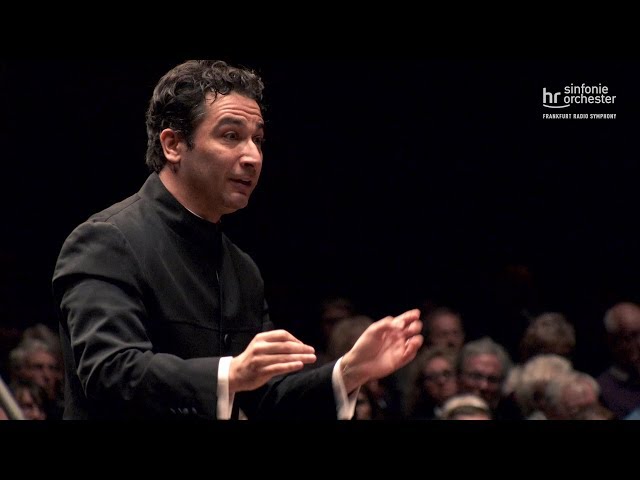
Composed in 1815, it is a symphony in D major.
It consists of four movements, all written in a major key.
As it is still an early symphony, there are many passages reminiscent of Haydn; nevertheless, Schubert’s individuality is beginning to emerge, and it is said that the Allegretto of the second movement uses the 14th-century German folk song “Maria’s Lullaby” as its theme.