

Franz Schubert Popular Songs Ranking [2026]

His majestic music is so highly regarded in German Lieder that he is often called the King of Song.
The expansive, soothingly beautiful melodies he created are ones everyone has surely heard at least once.
We’ve compiled a ranking of Schubert’s pieces by popularity.
Please enjoy a graceful time!
- Masterpieces by Franz Schubert: Sparkling classical works left by the King of Song. Recommended classical music.
- Robert Schumann Popular Song Ranking [2026]
- Ludwig van Beethoven Popular Songs Ranking [2026]
- Franz Liszt Popular Song Ranking [2026]
- [Masterpiece Classics] A special showcase of gem-like masterpieces so beautiful they’ll move you to tears
- Johannes Brahms Popular Songs Ranking [2026]
- Robert Schumann | Introduction to his famous and representative works
- For Advanced Players: Showstopping Classics to Play at a Piano Recital
- Bedřich Smetana Popular Songs Ranking [2026]
- Frederic Chopin Popular Songs Ranking [2026]
- Johann Burgmüller Popular Song Rankings [2026]
- Antonín Dvořák Popular Songs Ranking [2026]
- What songs are popular among elementary schoolers? Well-known and sing-along favorites! [2026]
Franz Schubert Popular Song Ranking [2026] (41–50)
Trout (arranged by Liszt)Franz Schubert43rank/position

This piece is a piano solo arrangement of a song by Franz Schubert, made by Franz Liszt.
Through the story of a trout swimming in a clear stream and the fisherman who aims to catch it, it conveys a lesson about life.
Liszt adds brilliant, piano-specific virtuosity without diminishing the original’s beauty.
Arpeggios and ornaments that evoke the flow of the river and the movements of the trout are used effectively, rendering visual scenes through sound.
It is recommended for those interested in the beauty of nature and the morals of human society, as well as for listeners who enjoy technically dazzling piano performances.
Three Piano PiecesFranz Schubert44rank/position

Franz Schubert, the Austrian composer known as the “king of song,” wrote several piano pieces in his later years.
While many retain a classical style, an increasing number display romantic, emotive character, influencing later composers.
This set of solo piano pieces was composed in 1828, but it was neither published immediately nor widely remembered.
Johannes Brahms, the German composer who admired Schubert’s piano sonatas, highly valued the works and edited them anonymously; they were published in 1868.
The first piece is a fierce tarantella in the rare key of E-flat minor.
The third piece is marked by distinctive syncopation and a vibrant energy.
Notably, it was also Brahms who gave the collection the title by which it is known today: “Three Piano Pieces.”
Three Piano Pieces (Impromptus), No. 2 in E-flat major, D 946Franz Schubert45rank/position

Composed in May 1828 by Franz Schubert, a leading Romantic composer of late-19th-century America, this piece is a late masterpiece written about six months before Schubert’s death and is structured in rondo form.
The main theme has a lyrical, calm character, and the piece is notable for a structure interwoven with two episodes.
Showcasing Schubert’s rich melodic sensibility and distinctive harmonic progressions, it is also recommended for beginner pianists.
With the left hand clearly accompanying and the right hand carrying the melody, you can gradually immerse yourself in Schubert’s musical world by practicing the more difficult middle section slowly.
If you’re interested in classical music, why not take this opportunity to give it a try?
Three Military Marches, Op. 51, D.733 No. 1 in D majorFranz Schubert46rank/position

This is a collection of pieces composed in 1818, when Franz Schubert—often called the King of Song—was 21 years old.
He wrote it while working as a tutor for a count’s daughter.
Although today it is often performed in versions for orchestra, wind ensemble, or solo piano, it was originally written for piano four hands.
The piece is also famous as the background music for Hudson’s popular video game “Challenger,” with an unforgettable intro that sticks after just one listen.
It’s a well-known tune among retro game fans as well.
Impromptus, D 935 Op. 142 No. 2Franz Schubert47rank/position

When it comes to Schubert’s piano works, many people might think of the Four Impromptus, D 935, Op.
142.
Compared to music like jazz, where improvisation is essentially the core of the art, classical music is often associated with playing exactly what’s written on the score—so for those unfamiliar, the term “impromptu” might come as a surprise.
True to the title, these pieces were composed in Schubert’s later years with a free, unconfined spirit, yet they are often regarded as a de facto piano sonata, and nowadays the four are frequently performed together as a single work.
Technically, they require an upper-intermediate to advanced level of skill, but among the set, No.
2 is relatively less difficult compared to the other three.
If you’re eager to try playing Schubert’s impromptus, starting with No.
2 could be a good choice.
It has a minuet-like character; practice repeatedly so you can firmly feel the 3/4 meter and gracefully execute the light, flowing triplet arpeggios in the middle section.

Four Impromptus, Op. 142, D. 935 No. 1 in F minorFranz Schubert48rank/position

Schubert’s late solo piano work, Four Impromptus Op.
142.
No.
1 is cast in sonata form without a development section.
The opening, in a minor key and beginning with a sudden descending figure, conveys the piece’s unease and darkness.
However, the middle section modulates to the major and drastically changes the mood, creating a dreamlike atmosphere as if a single ray of light were pouring into the darkness.
The anxious main theme from the opening then returns, and the piece ultimately sinks back into sadness, yet overall it remains a calm and beautiful work.

Four Impromptus, Op. 90, D. 899 No. 1 in C minorFranz Schubert49rank/position
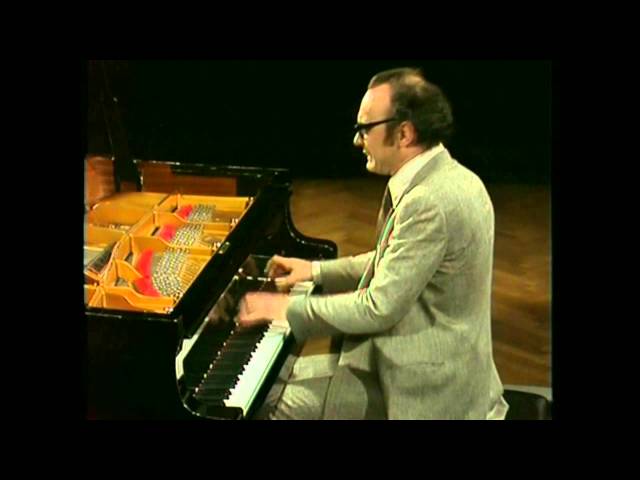
Composed in 1827 by Franz Schubert, a Viennese-born Austrian composer, this work is distinguished by its profound emotional expression and meticulous structure.
It possesses a majestic yet introspective atmosphere, with resonant, weighty harmonies and strikingly beautiful melodies.
Richly imbued with Schubert’s characteristic lyricism, it serves as an important bridge between the Classical and Romantic eras and remains beloved by many pianists today.
It’s a highly recommended piece not only for those interested in classical music, but also for any music fan seeking a beautiful, heart-stirring melody.