

Introducing Maurice Ravel’s Famous and Representative Works

Maurice Ravel, one of the most important figures in Impressionist music.
His works are meticulously crafted down to the finest details, grounded firmly in classical forms while blending in Impressionist expression.
As a result, his music has a uniquely singular character that only he could create.
He also arranged works by other composers for orchestra, and his outstanding orchestration earned him the nicknames “genius of orchestration” and “magician of the orchestra.”
In this article, we introduce Ravel’s masterpieces and signature works.
Even if you’re not familiar with classical music, there are pieces you have probably heard somewhere at least once.
Enjoy the many wonderful masterpieces of Ravel!
- Masterpieces of the bolero. Recommended popular pieces in bolero form and outstanding performances.
- [Masterpiece Classics] A special showcase of gem-like masterpieces so beautiful they’ll move you to tears
- Debussy’s masterpiece. Popular classical music.
- Timelessly beautiful classical masterpieces. Recommended classical music.
- Gabriel Fauré | Introduction to His Famous and Representative Works
- [Orchestra] Introducing famous and popular pieces
- Masterpieces of Ballet Music: Introducing Classic Favorites
- Impressionist Music: A Comprehensive Introduction to Masterpieces of the Impressionist Movement That Enliven Classical Music History
- [François Couperin] Introducing famous and popular pieces by the composer who loved the harpsichord
- Mendelssohn’s Masterpieces | Popular Classical Music
- [For Advanced Players] A Curated Selection of Classical Masterpieces to Tackle at Piano Recitals
- Rachmaninoff’s masterpieces. Recommended pieces by Rachmaninoff.
- [Impressionist Music] A Selection of Classical Works That Evoke the Japanese Spirit
[Maurice Ravel] Introducing Famous and Representative Works (81–90)
Piano Concerto in D major for the Left HandMaurice Ravel


Maurice Ravel, the French composer who brought the world numerous masterpieces such as Pavane for a Dead Princess, Jeux d’eau, and Rapsodie espagnole.
The work he wrote for Paul Wittgenstein, an Austrian-born pianist who lost his right arm in the war, is this Concerto for the Left Hand.
Many later pianists who perform with the left hand alone have also embraced this piece, and it is known as a work that holds a highly important place among piano compositions for left hand only.
The mere fact that he composed a piano concerto in the early 1930s that incorporates influences from jazz and blues is remarkable, but one cannot help but marvel at how freely and dramatically the music expresses itself through a wide array of techniques using only the left hand.
As the piece drives toward its climax, the melody sounds almost impossible to believe is played with just the left hand.
It’s a work that cannot be performed without considerable skill, so if you’re an advanced player looking to push the expressive power of your left hand to its absolute limits, by all means give it a try.

String Quartet in F Major, Second MovementMaurice Ravel

Ravel, the French composer famous for works such as Daphnis et Chloé and Boléro, was a composer of Impressionist music, one of the classical music movements that emerged in early 20th-century France.
It was born from applying the new technique of “Impressionism,” widely used at the time by painters like Monet, Renoir, and Cézanne in the French art world, to the realm of music.
This piece makes a striking impression by beginning with pizzicato, a technique in which all four instruments pluck the strings, and as the piece unfolds, the mood shifts rapidly, conjuring up a variety of scenes in the listener’s mind.

BoleroMaurice Ravel
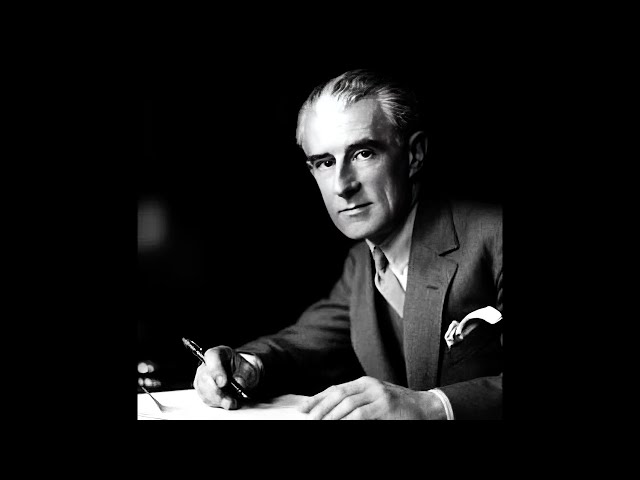
Maurice Ravel, a French composer who had a profound impact on the music world with his original structures.
He achieved success with works in various forms, and he also left masterpieces in the realm of ballet music.
Among them, one of his most famous works is Boléro.
In Japan it is known by the same title, “Bolero,” and it continues to be popular today as a standalone musical piece that transcends the framework of ballet.
The work features a highly distinctive structure in which two melodies are repeated, and by focusing on that aspect as you listen, you can appreciate the high level of craftsmanship in the piece.

The Fairy Garden, No. 5 from the suite “Ma mère l’Oye”Maurice Ravel

The world of timbres woven by four hands shines even more beautifully in Maurice Ravel’s works for piano four hands.
Premiered in Paris in April 1910, this fairy-tale-themed suite was written for children yet conceals profound musicality.
Its graceful triple-meter waltz unfolds a fantastical atmosphere, captivating listeners with the rich sonority and expressive power unique to piano duet.
Amid the majestic and beautiful melodies, passages evoke the delicate colors of harp and celesta, offering the sensation of being led into a dreamlike realm.
While synchronizing breath and timing with a duet partner can be challenging, the joy of achieving a unified performance is unparalleled.
This is a highly recommended piece for those who wish to fully savor the essence of piano four-hand playing.
Pavane for a Dead QueenMaurice Ravel

When people are asked about masterpieces of piano music, many probably think of Pavane for a Dead Princess.
This work is a masterpiece by Maurice Ravel, a composer whose avant-garde musical language had a profound influence on contemporary music.
While Ravel did not state his evaluation of the piece during his lifetime, in his later years he expressed a special sentiment toward it.
Knowing this background can make the work even more moving, so be sure to check it out.