

Four-character idioms that help elementary schoolers not give up: words that spark the power to keep trying

To children who strive with a spirit of never giving up, we want to convey important messages through four-character idioms.
Many teachers and parents may feel the same way.
In this article, we introduce four-character idioms that are easy for elementary school students to understand and perfect for fostering motivation and a positive mindset.
These expressions can be used in a variety of situations—daily life, study, club activities, and more—so please find the words that will resonate with elementary school children according to their environment!
- Easy for elementary school students to remember! A four-character idiom that expresses the feeling of trying your best
- Easy-to-remember, positive four-character idioms for elementary school kids! Words that brighten the heart
- Strive toward your goals! Four-character idiom ideas that resonate with elementary school students
- [For Elementary School Students] Four-character idioms you can use in sports! Words that are helpful for cheering and goal setting
- Learn the meanings too! Cool four-character idioms that elementary school students will want to remember
- Recommended for elementary school class goals! A collection of impactful ideas using four-character idioms
- Four-character idioms that express an indomitable spirit! Words to know when facing difficulties
- Perfect for elementary school slogans! A collection of four-character idiom ideas you'll want to use
- [For Elementary School Students] Inspiring Four-Character Idioms for Shaping the Future at a Glance! Words that Spark Courage
- For Elementary School Students: Four-Character Idioms You Can Use for New Year’s Resolutions — How to Set Cool Goals!
- [Elementary School Students] Perfect for Kakizome! A Collection of Four-Character Idiom Ideas
- Popular even among elementary school students! Stylish and easy-to-remember four-character idioms
- Interesting four-character idioms for elementary schoolers! Words you'll want to use once you understand their meanings
Four-character idioms that encourage elementary school kids not to give up! Words that spark the power to persevere (21–30)
Late bloomer
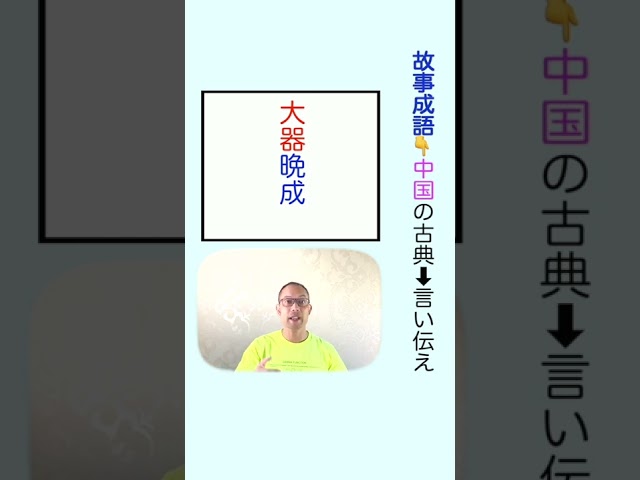
Taiki bansei, read as “taiki bansei,” combines “taiki,” which can mean a large vessel or a person of exceptional talent and capacity, and “bansei,” which refers to maturing more slowly than usual.
Not every great or famous person succeeded right away; many blossomed only after enduring hardships.
When a child feels down, saying, “I’m trying hard but not seeing results,” it can help to share a message that includes this four-character idiom.
It might become a source of motivation to keep putting in the effort.
fiery and high-spirited; brimming with passionate enthusiasm
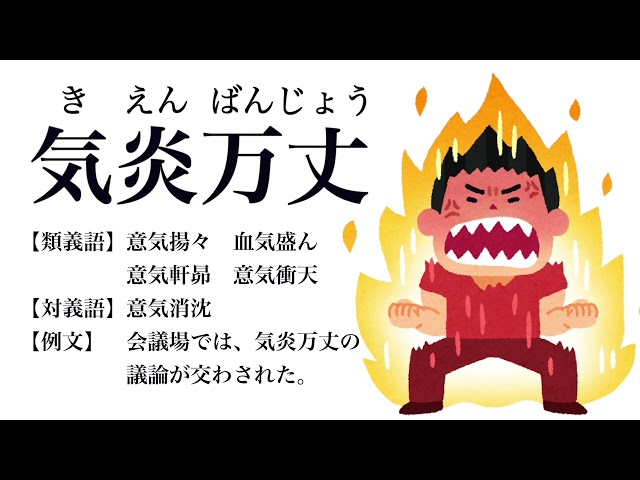
It’s a word that describes a state where strong spirit and momentum flare up like a rising flame.
In sports, it’s perfect for the moment when you’re full of motivation and ready to give it your all.
If you say it before a match, both you and your teammates will feel fired up and get off to a great start.
Used during cheering, it conveys the desire to get everyone hyped, spreading energy throughout the team.
Especially in adversity, it reminds you not to give up and stirs the strength to see things through to the end.
When striving toward a goal, it becomes a powerful ally that rallies your resolve.

One day, one lifetime

Ichinichi isshō (One day, one lifetime) means treating each day with such care and intention that it becomes as meaningful as a whole life.
It encourages valuing your daily school life, playtime, studying, and lessons.
By keeping this in mind when you wake up in the morning or take on something new, you cultivate the drive to work positively toward your goals.
Including it in your New Year’s resolutions helps you adopt a mindset that makes each day fulfilling rather than wasted—an actionable and cool four-character idiom.
ingenuity and creativity

We live in a world where most questions can be answered by searching online.
Still, thinking and acting for yourself is an irreplaceable experience and a valuable asset for anyone.
There are many easy and convenient paths, but if you want to grow in the new year, try embracing ingenuity and creativity.
The time you spend thinking with your own mind and encountering new discoveries and possibilities will surely be enjoyable and fulfilling.
Even if the answer you reach is wrong, don’t worry—consider failure the foundation of success, broaden your perspective, and keep exploring original ideas and flashes of inspiration.

every move; every action

“Ikkyō-ichidō” (literally, “every single move”) is a four-character idiom that means paying attention to one’s actions and taking responsibility for them.
By being mindful even of small behaviors—such as how you speak and act at school or at home, and how you interact with friends—you can deepen trust with those around you.
In studying or sports, focusing carefully on each individual movement also makes it easier to achieve results.
Another appeal is that by being conscious of the small actions you take every day, you can build good habits and feel your own growth.
Keeping this phrase in mind helps cultivate the ability to live a careful and fulfilling life.
flexible; adaptable; responding appropriately to the situation

If you only ever do things in the one way you think is right, it becomes hard to choose a different path when something happens.
At times like this, it’s important to flexibly reconsider your course.
“Rinki-ōhen” (being flexible) means taking actions suited to the situation.
Acting with flexibility can be difficult, too.
By developing your ability to apply what you know, you’ll become better at adapting, so it’s a good idea to put that resolve into your first calligraphy of the year.
The first half, “臨機,” has many intricate components, so take care not to let the characters lose their form when you write them.

A fresh start

You couldn’t study hard last year, you didn’t perform well in sports, and you kept getting into fights with your friends.
If that sounds like your child, write this four-character idiom and make a fresh start—reset your mindset! It’s a waste of time to keep regretting what you couldn’t do in the past.
If studying, sports, and relationships with friends didn’t go well, just work hard from the new year! As a declaration of your determination to do your best in the year ahead, try writing these characters.
Note that the characters “機” and “転” contain small components and require fine spacing, so be careful when doing your first calligraphy of the year.