

Four-character idioms that help elementary schoolers not give up: words that spark the power to keep trying

To children who strive with a spirit of never giving up, we want to convey important messages through four-character idioms.
Many teachers and parents may feel the same way.
In this article, we introduce four-character idioms that are easy for elementary school students to understand and perfect for fostering motivation and a positive mindset.
These expressions can be used in a variety of situations—daily life, study, club activities, and more—so please find the words that will resonate with elementary school children according to their environment!
- Easy for elementary school students to remember! A four-character idiom that expresses the feeling of trying your best
- Easy-to-remember, positive four-character idioms for elementary school kids! Words that brighten the heart
- Strive toward your goals! Four-character idiom ideas that resonate with elementary school students
- [For Elementary School Students] Four-character idioms you can use in sports! Words that are helpful for cheering and goal setting
- Learn the meanings too! Cool four-character idioms that elementary school students will want to remember
- Recommended for elementary school class goals! A collection of impactful ideas using four-character idioms
- Four-character idioms that express an indomitable spirit! Words to know when facing difficulties
- Perfect for elementary school slogans! A collection of four-character idiom ideas you'll want to use
- [For Elementary School Students] Inspiring Four-Character Idioms for Shaping the Future at a Glance! Words that Spark Courage
- For Elementary School Students: Four-Character Idioms You Can Use for New Year’s Resolutions — How to Set Cool Goals!
- [Elementary School Students] Perfect for Kakizome! A Collection of Four-Character Idiom Ideas
- Popular even among elementary school students! Stylish and easy-to-remember four-character idioms
- Interesting four-character idioms for elementary schoolers! Words you'll want to use once you understand their meanings
Four-character idioms that support elementary schoolers' hearts and encourage perseverance! Words that spark the power to keep trying (41–50)
a miraculous comeback

It’s a four-character idiom that expresses rebuilding from a hopeless state or bringing something on the verge of death back to life.
In the sense of overcoming a crisis, the word conveys the strength of steadily piling up effort and breaking through obstacles.
Both “kishi” and “kaisei” trace their origins to Chinese anecdotes and poetry, and the phrase has long been passed down as a familiar expression.
Since the characters for life and death are included, it also highlights the sense of giving one’s all.

Four-character idioms that support elementary schoolers’ hearts and never give up! Words that inspire the power to try (51–60)
with all one’s might4
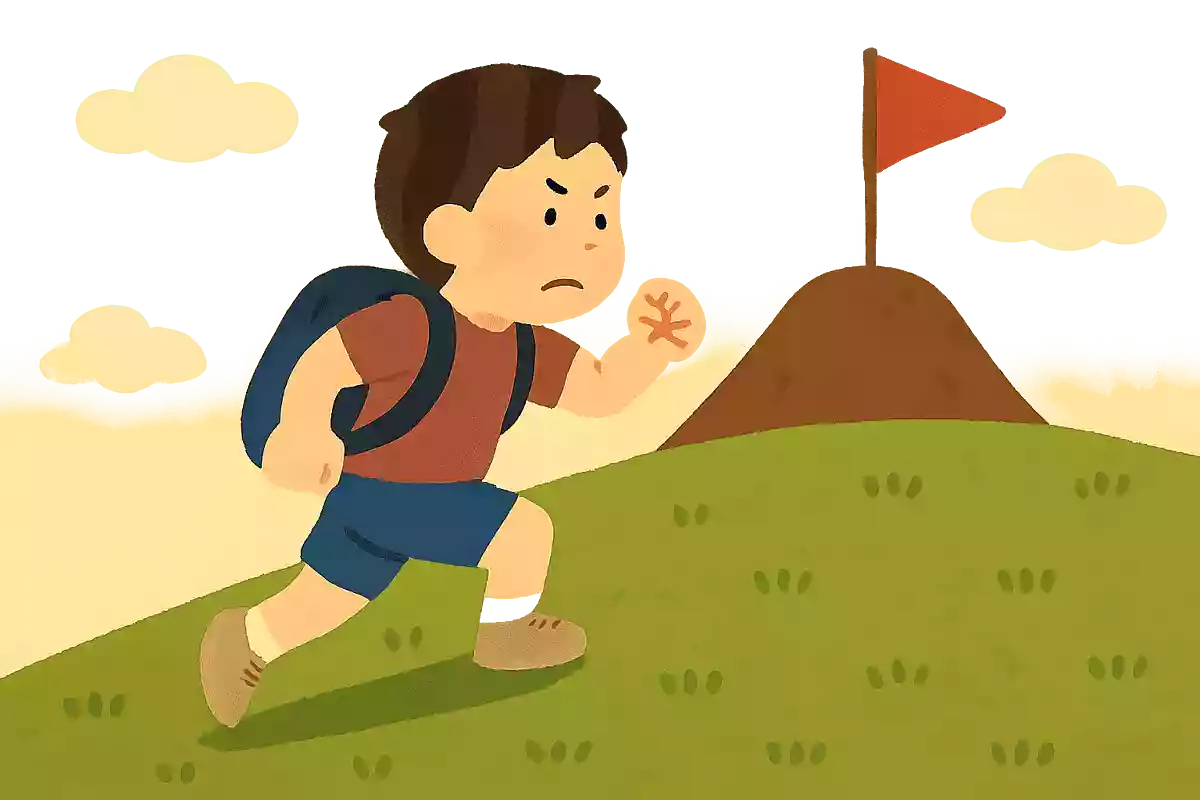
This is a four-character idiom you often hear in various contexts, expressing an attitude of tackling things with full effort.
Its origin is said to be “issho-kenmei,” which described the stance of medieval samurai; from the idea of defending a single place with all one’s might, the meaning evolved into “isshō-kenmei,” devoting one’s whole life.
The key to this word is the passion of being willing to stake one’s very life; if you show that you understand and use it with that meaning, you can demonstrate your determination as well.
It’s a phrase that reminds us that what matters first is to engage so earnestly that you can truly say you’re giving it your all.
The benevolent person has no enemies.4

This is a four-character idiom meaning that a person endowed with virtue has no enemies.
It teaches that by loving others and treating them with compassion, one earns genuine trust from everyone, leaving no one to oppose them.
The phrase originates from the words of Mencius, a thinker active during China’s Warring States period, and is said to appear in the chapter “Liang Hui Wang I” of the Mencius.
Although it expresses the stance a king should take toward his people, it also prompts us to reflect on how we treat others and to reconsider the way we interact with people going forward.
Say what you mean, do what you say.4

It’s a phrase often used to boost motivation by declaring your goals, with the idea that you absolutely follow through on what you say you’ll do.
It’s a playful twist on the original expression “fugen jikkō” (silent execution), which means to act without saying anything, and it is said to have become widely known through Hiromitsu Ochiai’s use of it.
It conveys the importance of putting goals into words and how doing so solidifies your resolve to push forward.
By clearly expressing your goals in words, you may also start to see the path for how to move ahead.
a serious match4
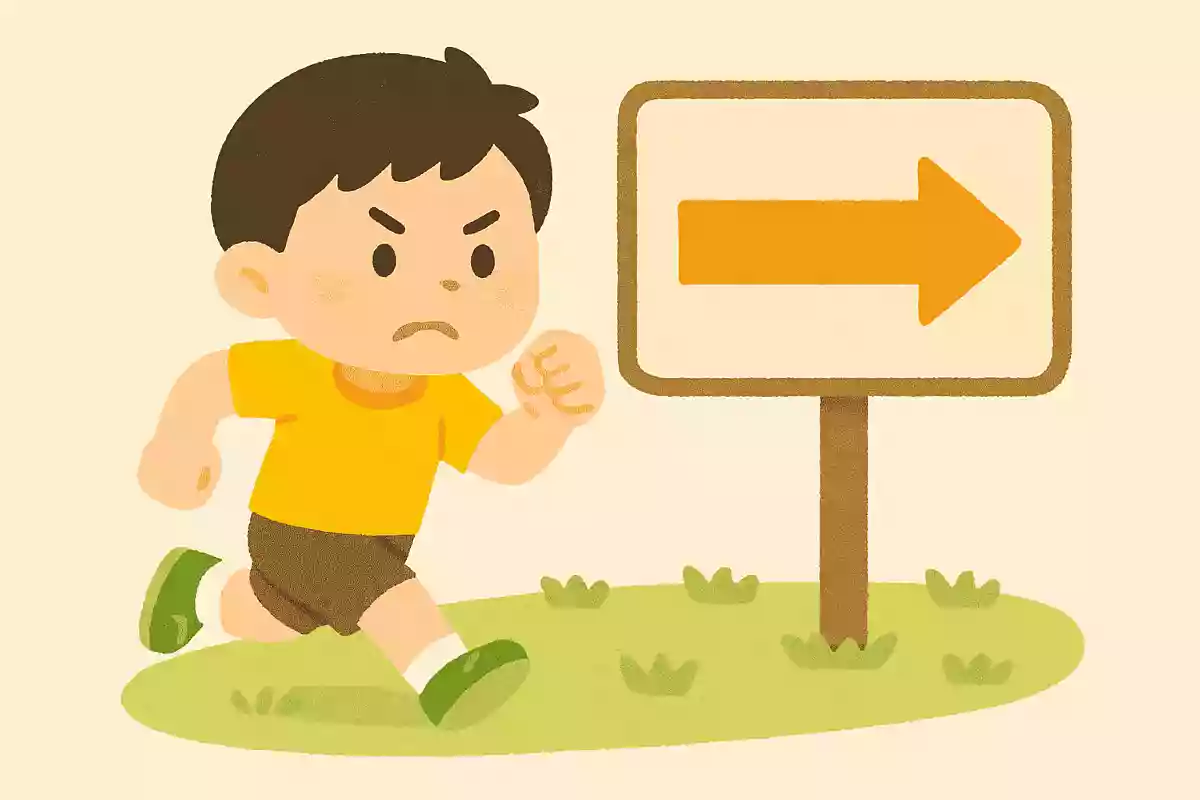
This four-character idiom expresses giving something your all and tackling it with true seriousness; it conveys the determination to seize your goal.
Originally, it referred to fighting with real swords and risking one’s life, but from the sense of “a life-or-death exchange,” it came to be used as a phrase that expresses moving forward with firm resolve.
Because it involves a contest with real swords, one might picture interactions between people, but it’s used for all kinds of goals.
Rather than meaning to defeat a goal, it reads more as an expression of one’s stance—of setting one’s own resolve.
Independence and self-reliance4

It’s a phrase that expresses the stance of acting on your own judgment and strength without interference from others or outside forces, and taking responsibility for it.
It strongly conveys the idea of holding firmly to yourself and pushing forward.
It also expresses the strength to carry things out by your own power rather than relying on those around you, in order to stick to your own way of thinking.
It feels like words that teach you what’s necessary to live true to yourself, carrying a strong, determined will.
cooperation in unity5
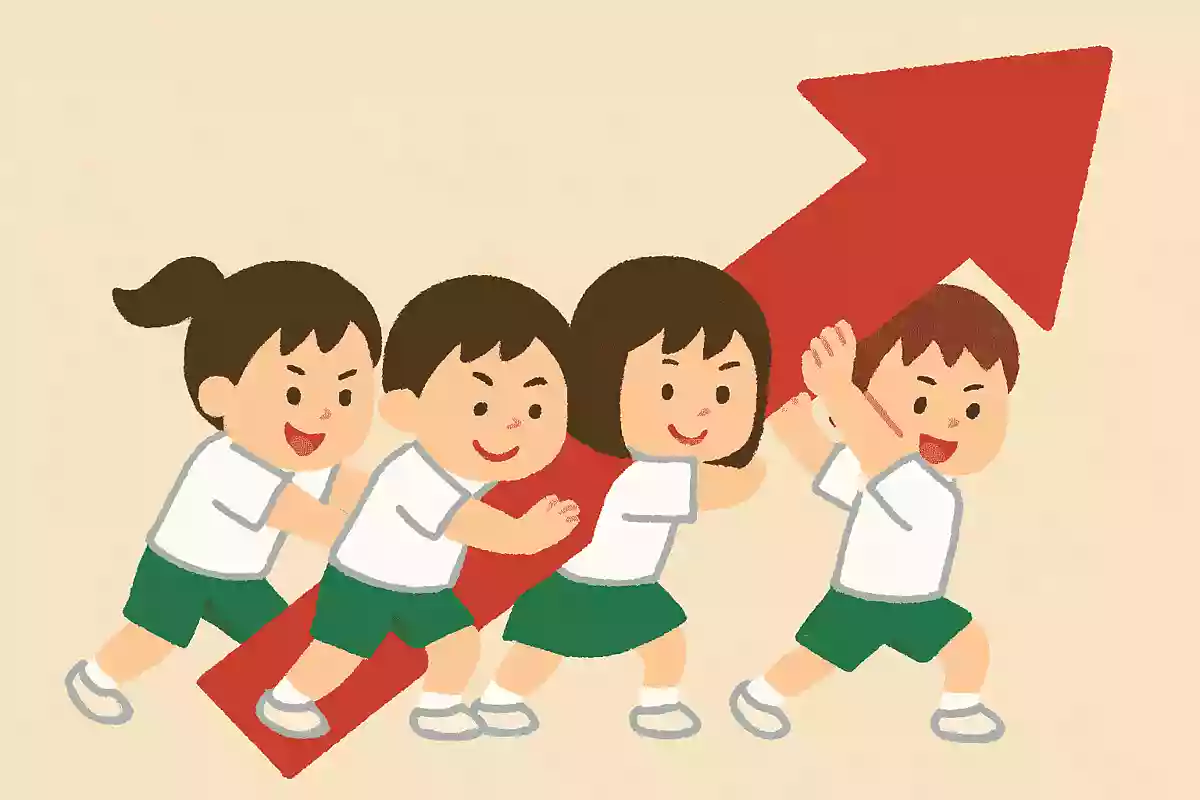
It’s a four-character idiom that expresses uniting hearts and joining forces, embodying a spirit of compromise and a drive to push forward.
When there are multiple people, differences of opinion can arise, but it conveys the idea of overcoming them and moving toward a shared goal.
It suggests an ideal in which exchanging views, setting a single objective, and advancing toward it unleashes great strength.
Rather than a phrase that simply seeks friendliness, it conveys a forward-driving attitude of mutually elevating one another and pressing ahead.