

Japanese karaoke songs that are easy for men in their 60s to sing

This time, we checked out Japanese songs that are easy for men in their 60s to sing at karaoke! They’re known for being generally easy to sing, with comfortable pitch, tempo, and volume.
They could make a great addition to your repertoire.
Take this opportunity to use it as a reference!
- [Men in their 60s] Even if you're not good at singing, it's okay! Easy-to-sing songs for karaoke
- [For People in Their 60s] Karaoke Songs That Get the Crowd Going: Ranking [2026]
- [For People in Their 60s] Ranking of Easy-to-Sing Karaoke Songs [2026]
- Karaoke songs that are sure to get a 60-something man fired up
- Recommended Japanese karaoke songs for men in their 60s
- Popular Japanese songs among men in their 60s: recommended masterpieces and classic tracks
- Good songs recommended for people in their 60s: classic and popular Japanese tracks
- Songs Women Want Men to Sing: Popular Karaoke Picks Chosen by Girls
- For Men in Their 50s: No Worries If You’re Tone-Deaf! A Curated Selection of Easy-to-Sing Karaoke Songs
- Karaoke songs where even men with low voices can aim for high scores
- A love song that makes a man in his sixties relive his youth. Timeless classics that rekindle the romances of those days.
- [60s] Karaoke Popularity Rankings by Generation [2026]
- [2026 Edition] Songs Loved by People in Their 60s: Classic Hits from Their Youth
Karaoke songs in Japanese that are easy for men in their 60s to sing (31–40)
Lingering Snowiruka

This song was originally written and composed by Shozo Ise and released by Kaguyahime in 1974, but Iruka’s version became the bigger hit, so many people think of it as her song.
It’s still sung today and is known across a wide range of age groups, so it’s likely to be well-received no matter the audience.
Besides karaoke, it might be nice to try performing it as a solo with guitar, too.

For me to be myselfOzaki Yutaka

It’s a song that conveys a powerful determination to live true to oneself and to keep moving forward.
Included on the 1983 album “Seventeen’s Map,” it has remained beloved over the years, even being chosen as the theme song for the 1997 drama “Boku ga Boku de Aru Tame ni.” The refreshing sound paired with the passionate vocals is striking, evoking positive feelings about the future.
While the emotional delivery in the chorus may seem challenging, the melody is fundamentally straightforward, so once you get a solid grasp of the rhythm, it should be quite singable.

Goodbye to sorrowanzenchitai

Anzen Chitai is a band that has built an era with a uniquely Japanese sound brimming with originality, fusing kayōkyoku, pop music, and rock.
They have so many hit songs that whatever you sing will likely get the crowd going, but this time I’d like to introduce “Kanashimi ni Sayonara,” which is especially easy to sing among their repertoire.
This work is a major-key ballad that, despite its sorrowful lyrics, somehow retains a refreshing tone.
The vocal range is quite narrow at mid1B to mid2F#, so if you adjust it to your optimal key, you should be able to sing it without difficulty.

Eris with Azure Eyesanzenchitai

The band Anzen Chitai has produced numerous hit numbers.
From ballads to rock-flavored pop, they’ve turned all kinds of works into popular songs.
The one I’d like to recommend this time is Aoi Hitomi no Erisu (Eris with Azure Eyes).
It’s a gentle ballad, yet it also has well-placed moments of lift.
Rather than a big, explosive build, it’s the kind of song that gives you chills and goosebumps.
Its vocal range is quite narrow at mid1 C to mid2 D#, and the melodic movement is smooth, making it exceptionally easy to sing.
Wine Red Heartanzenchitai

This song is the fourth single by Anzen Chitai and was released in 1983.
It was used as a theme song for an alcohol commercial and as the ending theme of a TV drama, so many people may have sung it at karaoke back then.
The difficulty might be a bit high, but it’s a timeless classic that has been covered by various artists.
Karaoke songs in Japanese that are easy for men in their 60s to sing (41–50)
unconsciously / without realizing itUzaki Ryūdō
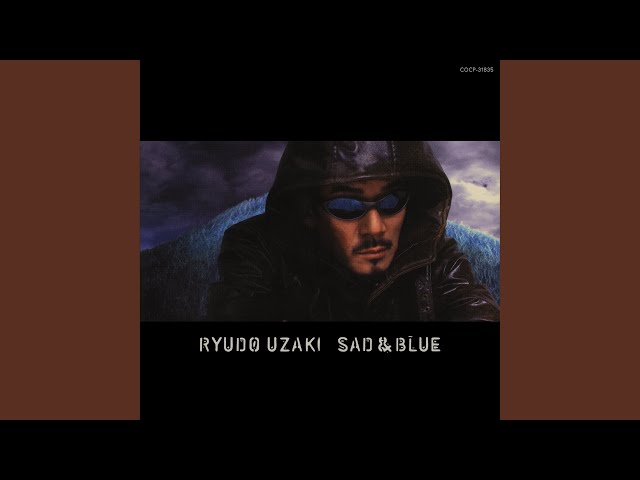
For men in their 60s, when it comes to no-nonsense male singer-songwriters, Ryudo Uzaki is likely the first name that comes to mind.
He has many classic songs, but the one I especially recommend for aiming for a high score is Shira zu Shira zu no Uchi ni.
This piece is set within a relatively narrow range of mid1 B to mid2 C#, and the vocal line maintains a gentle, even contour.
However, because it calls for expressive elements like shouts and breath control, if you want to show appeal beyond just scoring points, I recommend mastering overtones that are effective in the low to low-mid range.
First loveMurashita Kōzō

Kozo Murashita was a singer-songwriter who gained popularity for his highly original musical style that mixed New Music and folk songs.
Many men in their 60s were likely captivated by his melodic sensibility, which conveyed smoothness even within a kayōkyoku-like flow.
His song “Hatsukoi” is his biggest hit number.
Although its range is narrow, from mid1 F to mid2 G#, the chorus requires singing the high notes on the “tsu” consonant, so lowering the key by one step from your optimal key will likely give you the most stable pitch.