

Recommended for elementary school students! Science fair topics & craft ideas


Speaking of summer vacation, choosing a topic for the independent research project can often be tough.
Science experiments and crafts are both fun! If your child is good at crafts, we recommend crafts because they can enjoy the process as they go.
When they get absorbed in it, they might even finish in just a few days.
Here, we’ll introduce a variety of ideas for independent research and crafts! If you’re struggling to pick a theme, please use these as a reference.
To create fun summer memories, make a one-of-a-kind project of your own!
- For summer vacation homework! Simple and amazing crafts for elementary school students that you’ll want to make after seeing them
- Simple yet amazing crafts: craft ideas that elementary school students will want to make
- Elementary School Students: Simple One-Day Science Project and Craft Ideas
- DIY science projects that elementary school boys will love: ideas you can make with everyday materials
- [For Upper Elementary Students] Simple but Awesome! A Collection of Summer Vacation Craft Ideas
- For upper-grade boys! Simple yet awesome craft project [Don’t call it lazy]
- Fun crafts using straws
- Recommended for lower elementary school students! A collection of plastic bottle craft ideas made with everyday materials.
- Simple and cute summer project crafts! A collection of ideas for girls that will make you want to create
- [Middle School Students] Easy One-Day Science Projects and Crafts Ideas
- Toys you can make from cardboard crafts! Authentic ideas you can build and play with
- Simple but awesome! Craft ideas for upper-grade girls
- Crafts parents and kids can enjoy together. Recommended craft ideas to keep children entertained.
For upper grades (161–170)
A flying octopus? Tako-copter
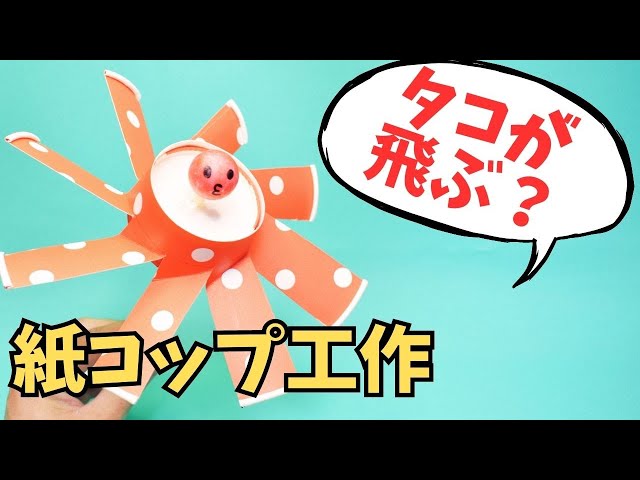
It’s a toy that combines paper cups and a round chopstick to spin like a bamboo-copter and soar into the sky.
By spreading “wings” that catch the wind and coloring it mainly red, it takes on a curious form—a flying octopus.
You’ll use two paper cups and a round chopstick: attach the chopstick and the octopus’s facial parts to a paper cup with only the bottom left to create a launcher.
Then cut slits into the other paper cup, spread it out to form propeller-like blades, and attach it to the launcher to finish.
Fine-tune the propeller angles to make your octopus fly even higher.

spray art

In recent years, spray art has been attracting worldwide attention as a new form of art.
Overseas, many artists make a living by painting as street performers and selling their work.
From highly realistic pieces to pop-style works and even fantastical creations, the methods of expression are countless.
Artists have devised many unique techniques, such as using bowls to draw circles or spraying paint upside down.
Create original works with your own one-of-a-kind techniques! But don’t paint on people’s home walls!

How to make strawberry jam
@n.annlee321 Strawberry jam 🍓ParentingChildcareChildcare#HandmadeToys#100-yen-shop#100-yen shop DIY
♬ Pokopoko cute game style BGM(1527385) – sanusagi
One charm of strawberry jam is its vivid red color and distinctive translucence; it even seems like its appearance enhances its deliciousness.
This project focuses on that colorful aspect of strawberry jam and aims to cutely recreate the look of jam in a small jar.
Use a tiny jar—like the kind that once held craft parts—and pack it with pieces of clear plastic sheet painted red to resemble strawberry jam.
By decorating the inside of the jar, you can convincingly replicate that unique translucence and shine.
It’s also a great idea to plan jar decorations that highlight the contents inside.
Strawberry roll cake squishy
@nadf11 Whipped cream deco for handmade squishies 🍰#HandmadeSqueeze#Whip Deco#SweetsDecoSilicone whip#Making Squeeze Toys
Merry Go Nyand – mg ⧓
A cute-looking strawberry roll cake squishy that’s perfect for a school science project.
Start by making the roll cake, then decorate it adorably with pink silicone whip! Experiment with color choices that make it look real and explore differences in texture as your theme.
It’s not only cute to look at, but also super squishy and soothing to the touch.
To make it even cuter, try adding strawberries, cookies, and pink pearls.
Displaying photos or the actual piece will surely convey the fun to anyone who sees it.

Ghibli food and toys
@n.annlee321 Realistic using 100-yen shop materials 🤭✨#100-yen-shop#100-yen shop DIY#Kindergarten#KindergartenMomtranslation#ElementarySchoolMom#HandmadeToysTranslation#GhibliFood# Laputa Bread
♬ Athletic Meet “Heaven and Hell” (No Introduction) – Shinonome
Studio Ghibli’s works are captivating not only for their profound storytelling but also for their meticulous visual expression—especially the way food is depicted so enticingly.
This piece is about recreating the look of the foods that appear in Ghibli films and making beautiful mascots using simple materials.
You’ll experiment with details, like kneading adhesive into shape and using paint to create gradients for a realistic finish.
Since achieving a food-like appearance hinges on material choices, it’s crucial to be particular from the very stage of selecting your materials.
How to make a watermelon bar squishy

Looks just like a real ice pop!? Juicy to the eye and satisfyingly squishy to the touch, the “Watermelon Bar Squishy” is an adorable handmade craft perfect for summer.
It’s an easy yet highly polished project, especially recommended for upper-grade girls.
Start with a sponge from the 100-yen shop and cut it into the shape of a watermelon ice bar.
Carefully paint a red–green–white gradient with acrylic paints.
Recreate the seeds realistically using black paint or clay.
A wooden stick works perfectly for the ice pop handle.
People are sure to say, “That looks delicious!” It’s cute to look at and fun to touch—give this delightful summer science/craft project a try!
How to make a Disney kids’ lunch (bento)

A full-on adorable independent study on “How to Make a Disney Kids’ Lunch.” Think up and create your own Disney-style kids’ lunch that looks cute and exciting—like Mickey-shaped chicken rice, an omelet, fried shrimp, a hamburger patty, potato salad, and more! It’s an edible work of art, perfect for people who love cooking and design.
You can make everything with paper clay, so it’s super easy.
Even if you can’t easily go to Tokyo Disneyland, making this craft will let you feel like you’ve enjoyed a kids’ lunch there.