

Recommended for elementary school students! Science fair topics & craft ideas


Speaking of summer vacation, choosing a topic for the independent research project can often be tough.
Science experiments and crafts are both fun! If your child is good at crafts, we recommend crafts because they can enjoy the process as they go.
When they get absorbed in it, they might even finish in just a few days.
Here, we’ll introduce a variety of ideas for independent research and crafts! If you’re struggling to pick a theme, please use these as a reference.
To create fun summer memories, make a one-of-a-kind project of your own!
- For summer vacation homework! Simple and amazing crafts for elementary school students that you’ll want to make after seeing them
- Simple yet amazing crafts: craft ideas that elementary school students will want to make
- Elementary School Students: Simple One-Day Science Project and Craft Ideas
- DIY science projects that elementary school boys will love: ideas you can make with everyday materials
- [For Upper Elementary Students] Simple but Awesome! A Collection of Summer Vacation Craft Ideas
- For upper-grade boys! Simple yet awesome craft project [Don’t call it lazy]
- Fun crafts using straws
- Recommended for lower elementary school students! A collection of plastic bottle craft ideas made with everyday materials.
- Simple and cute summer project crafts! A collection of ideas for girls that will make you want to create
- [Middle School Students] Easy One-Day Science Projects and Crafts Ideas
- Toys you can make from cardboard crafts! Authentic ideas you can build and play with
- Simple but awesome! Craft ideas for upper-grade girls
- Crafts parents and kids can enjoy together. Recommended craft ideas to keep children entertained.
For upper grades (251–260)
wooden clock

Elementary and junior high school students who are busy with studying and club activities probably check the time many times a day.
Whether it’s in the living room, the entryway, or even the bathroom, you can never have too many clocks when you’re busy.
So how about making a wooden clock for your independent research project? The wooden frame can be made from pieces you picked up at the beach during a seaside trip, or from materials collected in the mountains on a camping trip.
For the numbers on the clock, using a soldering iron to burn them in black looks pretty cool.
You could even make it with tree branches.
For the clock mechanism itself, try combining parts you can buy at a 100-yen shop.
Sea Puppy Coin Bank

How about making a piggy bank by crafting the body with kraft tape and using resin on top to create an ocean scene? Kraft tape has become popular among craft lovers recently and can be found at 100-yen shops.
Weave it into a cute dog shape, cut a plastic sheet to match the diameter, and then use resin on the plastic to depict the sea.
The body of the piggy bank doesn’t have to be a dog—you can weave any animal or shape you like.
When working with resin, be sure to ventilate well and wear gloves.

milk carton chair

How about surprising everyone by making a small chair to go beside a side table—out of milk cartons? You’ll need a lot of cartons, so plan ahead for summer vacation and drink plenty of milk.
The basic step is to open each milk carton once, then fold it again to make a regular triangular tube.
Stuff the inside with old newspapers to increase strength.
If you want a lighter chair, use less newspaper.
Combine about 20 triangular tubes and shape them however you like.
If you’re not particular about the shape, a hexagonal chair is recommended! Attach a cute fabric cover to the shaped chair and you’re done.
It takes time, so spread the work over several days.
Diatomaceous earth coaster

When you leave a glass filled with a cold drink on the table, condensation forms and makes the surface wet.
Let’s try making your own diatomaceous earth coasters that absorb those droplets.
Because it’s closely related to staying hydrated, it’s also perfect as a summer science project.
The steps are simple: put water in a paper cup, add diatomaceous earth powder and stir, pour it into a mold, and let it dry—that’s it.
The key is to mix so there’s no unevenness and to remove air bubbles thoroughly; keep this in mind to make a sturdy coaster that won’t crack.
If you use waterproof paint at the water-mixing stage, you can color the entire piece as well.

Investigate the conditions required for seed germination

In fifth grade, students also learn about seed germination.
So let’s investigate, through experiments, the conditions necessary for seeds to germinate.
When examining which conditions are needed, you must conduct a controlled experiment: keep all other conditions the same and change only one condition for comparison.
Try various conditions to confirm what leads to germination.
You may have already learned about the conditions for germination in class; if so, this experiment would be a good way to review what you learned.

DIY speakers

How about making a speaker that you can plug your smartphone or portable music player into? Building a speaker might sound difficult, but to put it simply, all you need to do is make a hole for your phone—it’s that easy! Use an empty cylindrical container, like one from a snack.
Cut a hole with a utility knife big enough to fit your phone, and loosely stuff some toilet paper inside—then you’re done.
You can add a base so it stands firmly, and decorate the tube to create a cool, one-of-a-kind speaker!
Make an electromagnet and investigate its properties
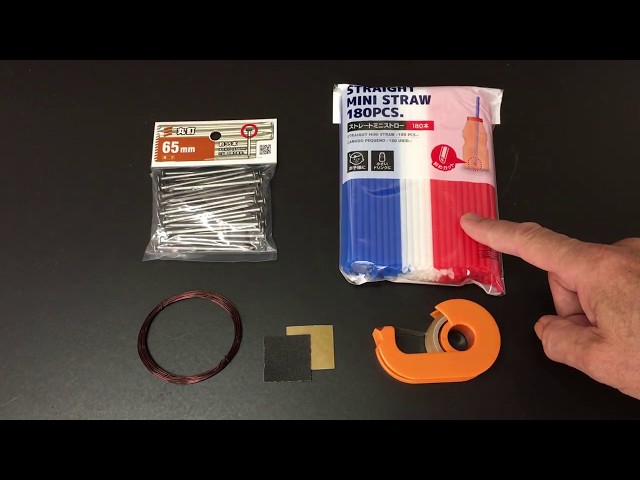
In 5th grade, you’ll likely learn about electromagnets at school.
For your summer break independent project, try making an electromagnet yourself and use it to investigate its properties.
An electromagnet works by making a coil with enameled wire and running an electric current through it to generate magnetic force.
It would be good to test various conditions—such as the number of turns in the coil, what you place as the core inside the coil, increasing the number of batteries or changing how they are connected—and compile a report on how the magnetic strength changes.