

Recommended for elementary school students! Science fair topics & craft ideas


Speaking of summer vacation, choosing a topic for the independent research project can often be tough.
Science experiments and crafts are both fun! If your child is good at crafts, we recommend crafts because they can enjoy the process as they go.
When they get absorbed in it, they might even finish in just a few days.
Here, we’ll introduce a variety of ideas for independent research and crafts! If you’re struggling to pick a theme, please use these as a reference.
To create fun summer memories, make a one-of-a-kind project of your own!
- For summer vacation homework! Simple and amazing crafts for elementary school students that you’ll want to make after seeing them
- Simple yet amazing crafts: craft ideas that elementary school students will want to make
- Elementary School Students: Simple One-Day Science Project and Craft Ideas
- DIY science projects that elementary school boys will love: ideas you can make with everyday materials
- [For Upper Elementary Students] Simple but Awesome! A Collection of Summer Vacation Craft Ideas
- For upper-grade boys! Simple yet awesome craft project [Don’t call it lazy]
- Fun crafts using straws
- Recommended for lower elementary school students! A collection of plastic bottle craft ideas made with everyday materials.
- Simple and cute summer project crafts! A collection of ideas for girls that will make you want to create
- [Middle School Students] Easy One-Day Science Projects and Crafts Ideas
- Toys you can make from cardboard crafts! Authentic ideas you can build and play with
- Simple but awesome! Craft ideas for upper-grade girls
- Crafts parents and kids can enjoy together. Recommended craft ideas to keep children entertained.
For upper grades (251–260)
Check food labeling

In fifth grade, students learn about food labeling in home economics.
Food labeling refers to the information on the packaging of commercially sold foods, such as ingredients, best-before dates, use-by dates, and nutrition facts.
Observe the labels on foods around you and list what information is provided.
Then, put together a report on various aspects of food labeling, such as whether there are differences between labels on fresh foods and processed foods, what the difference is between best-before and use-by dates, and what kinds of food additives and allergen information are listed.

For upper grades (261–270)
plastic bottle rocket

Going to planets beyond Earth by rocket is something all of humanity dreams of! Just hearing the word “rocket” makes me excited.
If you’re an upper-grader with plenty of time, try building a rocket out of a plastic bottle! The principle where compressed air inside the bottle propels it forward at high speed uses the same idea as real rockets, even though the materials are different.
Don’t just make one—change the size and thickness and research it like a real experiment.
If your teacher allows it, it’s great to team up with your friends and work together!
Manicure art
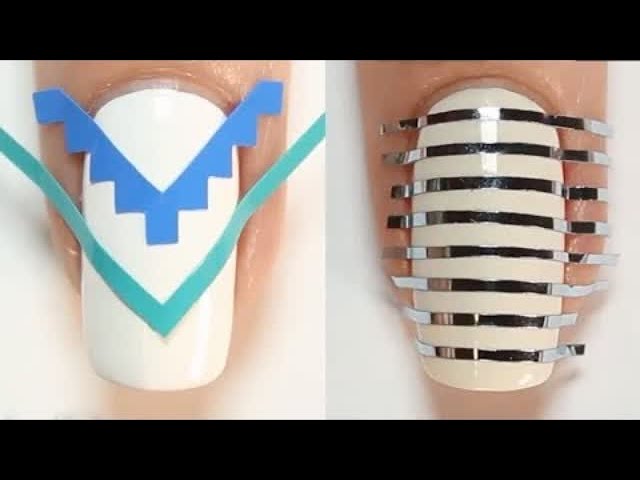
Here’s another art project that stylish girls are sure to love, using nail polish.
All you need are nail polish, a glass, and a deep container—everything you can find at a 100-yen shop.
It’s fun to gather a variety of polishes and pick your favorite colors yourself.
Fill the container with water and add a few drops each of about three nail polishes you like.
Then dip the glass into the water and—like magic—the polish clings to the surface.
The result is a marbled, colorful glass that you can use as your very own, one-of-a-kind piece—two birds with one stone!

Reborn Vegetable

Let’s try regrowing vegetables hydroponically from kitchen scraps! First, cut off the root end of pea shoots (toumyou), the top of a carrot, and the root end of green onions.
Fill containers with water and place each scrap—the pea shoot roots, the carrot top, and the green onion roots—in separate containers, submerging the bottoms in water.
Pea shoots will be ready to harvest in about 12 days, and carrots and green onions in about 16 days.
Be sure to take photos of the growth process and keep an observation journal.
Cook and taste your harvest, and if you add notes comparing the flavor to the previous batch and describing the cooking steps, it will make an excellent independent research project!

Sashiko

How about trying your hand at a sashiko project? People often think sashiko and embroidery are the same, but embroidery is primarily decorative, while sashiko was originally devised to reinforce fabric—everyday items like dishcloths.
Today, however, it’s also valued as decoration and passed down as a traditional Japanese craft.
It might be a good idea to research that background thoroughly and submit your findings along with your piece.
From small accessories to large works, stitch away as much as time allows.
Once you try it, you might find yourself completely hooked!

Let’s look into the origins of kanji.

This is research that aims to uncover the original forms and phenomena behind the kanji we casually use in daily life.
The structure and formation of kanji are classified into four categories: pictographs, indicatives, compound ideographs, and phono-semantic compounds.
First, we’d like to identify which category each character belongs to.
In particular, for pictographs created from the shapes of objects, it’s interesting to consider how the original form transformed into the kanji.
If you include both the original form and the stages of change in drawings, it would likely make the research easier to understand.

Stringraphy Production

Here’s an introduction to a unique instrument called the Stringraphy.
All you need are paper cups, thread, buttons to secure the thread, and rosin.
It’s perfect if you also have a frame, like a window sash or some wood.
When you rub the thread with something like work gloves, it produces sounds like a string instrument, and you can get percussive sounds by striking the thread or the cups.
Traditionally, it’s a large instrument with threads stretched from wall to wall, but you can make one about 50 cm wide and 100 cm tall.
If you’re just going to play simple children’s songs like “Tulips,” you might be able to make it even smaller.