

[Violin] A curated selection of beloved classic masterpieces and popular pieces that continue to be cherished across eras


The violin, an instrument beloved since the Baroque era—the very roots of classical music.
At times graceful, at times passionately expressive, the violin’s richly nuanced tone continues to soothe our hearts.
In this article, we introduce classical masterpieces that let you fully enjoy the charm of the violin, adored both as a solo instrument and as the star of orchestras and ensembles.
We’ll also share tidbits about the historical context of their composition and the composers themselves, so even newcomers to classical music can enjoy with ease!
- [Masterpiece Classics] A special showcase of gem-like masterpieces so beautiful they’ll move you to tears
- Cool classical masterpieces. Recommended classical music.
- Timelessly beautiful classical masterpieces. Recommended classical music.
- [Quartet] Masterpieces and Popular Pieces for String Quartet
- A poignant classic masterpiece. Recommended classical music.
- Classical Masterpieces: Recommended Works You Should Hear at Least Once
- Masterpieces of Ballet Music: Introducing Classic Favorites
- [Orchestra] Introducing famous and popular pieces
- Mendelssohn’s Masterpieces | Popular Classical Music
- Brahms's masterpieces. Popular classical music.
- Taro Hakase’s famous and popular songs
- Cello Masterpieces: A comprehensive introduction to exquisite classical works that let you savor its profound timbre
- Today's Classics: Recommended classical music and great performances to listen to today
[Violin] Carefully Selected Timeless and Beloved Classical Masterpieces and Popular Pieces (61–70)
Barcarolle from The Tales of HoffmannJacques Offenbach

The only operatic work left by the French composer Jacques Offenbach.
After his death in 1880, before the work was completed, it was supplemented by Ernest Guiraud and premiered in 1881.
The lyrics, which praise the beauty of the night and the joy of lovers, depict a charming Venetian evening scene.
Its romantic melody, carried by a gentle rhythm, evokes gondolas gliding through the city of water.
The expressive world woven by the violin’s timbre is perfect for those who wish to savor the depth of classical music.
With elegance and passion in exquisite balance, this piece is sure to move the heart.
ChaconneTomaso Antonio Vitali

Tommaso Antonio Vitali was an Italian composer active from the 1700s to the mid-1740s.
He was known for a musical style influenced by his father, Giovanni Battista Vitali, and by Arcangelo Corelli, and he was also highly regarded as a violinist.
His renowned masterpiece, the Chaconne, is a virtuosic work for violin, and many famous violinists have left celebrated performances of it.

Violin Partita No. 3 in E major, BWV 1006: III. Gavotte en RondeauJ.S.Bach

Among Bach’s unaccompanied violin works, the third movement of Partita No.
3 is especially famous.
It’s often used in commercials and TV shows—you’ve probably heard it at least once.
While solo violin pieces, played on a single violin without accompaniment, are captivating for their austere elegance and grandeur, this piece, being a gavotte dance song, has a bright and brilliant character.

12 FantasiesGeorg Philipp Telemann

Georg Philipp Telemann, the most popular composer of the German Baroque era.
His Twelve Fantasias for Unaccompanied Violin thoroughly employ a wide range of violin techniques, presenting twelve fantasias in four-movement structures that interweave slow and fast sections.
Each piece is fashioned into a captivating work rich in invention and variety.
It highlights the beauty of Baroque music, leaving a refreshing impression while allowing performers to fully display their technical prowess.

Zigeunerweisen, Op. 20Pablo de Sarasate

When you think of Sarasate, you think of this piece; when you think of the violin, you think of this piece! The ultra-famous Zigeunerweisen.
Combining dramatic flair with a sense of melancholy, it’s a parade of virtuoso techniques—pizzicato, glissando, double stops in high positions, and more.
It’s a masterpiece among masterpieces that lets you revel in the violin to the fullest.
Violin Sonata No. 2 in A Minor, for Solo (Unaccompanied)Eugene Ysaye
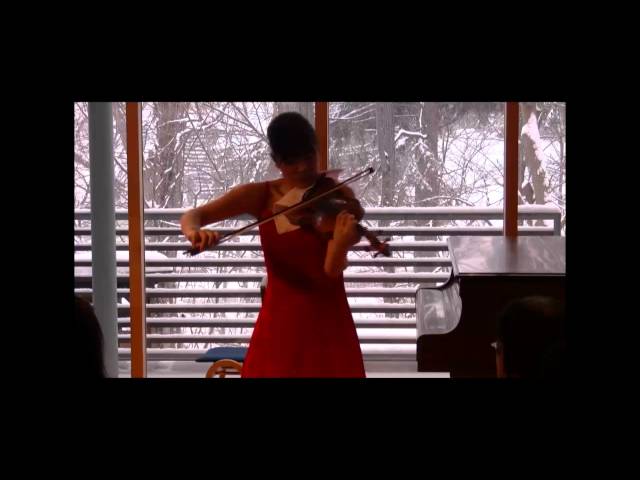
There’s an indescribable fascination to it: phrases from Bach’s unaccompanied Partitas appear here and there, while the piece moves with the irregularity of contemporary music.
Also, the third movement is subtitled “Dance of the Ghosts,” and the fourth “Avenging Goddess,” so if you listen while imagining those titles, I think you might find yourself surprisingly drawn in.
Violin Concerto No. 1 in C majorFranz Joseph Haydn

Haydn, who served as a court musician, seems to have conceived his violin concertos with court performance in mind, and they are crafted so they can be readily presented by orchestras of compact size.
At first glance the musical texture appears simple, yet the solo violin repeatedly includes subtly virtuosic passages.