

[Violin] A curated selection of beloved classic masterpieces and popular pieces that continue to be cherished across eras


The violin, an instrument beloved since the Baroque era—the very roots of classical music.
At times graceful, at times passionately expressive, the violin’s richly nuanced tone continues to soothe our hearts.
In this article, we introduce classical masterpieces that let you fully enjoy the charm of the violin, adored both as a solo instrument and as the star of orchestras and ensembles.
We’ll also share tidbits about the historical context of their composition and the composers themselves, so even newcomers to classical music can enjoy with ease!
- [Masterpiece Classics] A special showcase of gem-like masterpieces so beautiful they’ll move you to tears
- Cool classical masterpieces. Recommended classical music.
- Timelessly beautiful classical masterpieces. Recommended classical music.
- [Quartet] Masterpieces and Popular Pieces for String Quartet
- A poignant classic masterpiece. Recommended classical music.
- Classical Masterpieces: Recommended Works You Should Hear at Least Once
- Masterpieces of Ballet Music: Introducing Classic Favorites
- [Orchestra] Introducing famous and popular pieces
- Mendelssohn’s Masterpieces | Popular Classical Music
- Brahms's masterpieces. Popular classical music.
- Taro Hakase’s famous and popular songs
- Cello Masterpieces: A comprehensive introduction to exquisite classical works that let you savor its profound timbre
- Elgar’s masterpiece. Popular classical music.
[Violin] Carefully Selected Timeless and Beloved Classical Masterpieces and Popular Pieces (81–90)
Joy of LoveFritz Kreisler

Fritz Kreisler, the world-renowned violinist from Austria, reigned as a top-tier performer until Jascha Heifetz appeared.
In addition to his activities as a virtuoso, he also left behind numerous masterpieces as a composer.
Among them, Liebesfreud (Joy of Love) is one of his most popular works, featuring an approachable melody imbued with elements of the Viennese waltz.
Be sure to give it a listen.

Violin Concerto No. 22Tomaso Antonio Vitali

This concerto is what you might call a student-oriented concerto, and it’s often chosen as a set piece for junior competitions and music high school entrance exams.
Although it’s aimed at students, it’s not to be underestimated: it surprisingly demands advanced techniques such as rapid trills, sophisticated shifting, and scales in thirds.
The Maiden with Flaxen HairClaude Debussy

Claude Debussy was a composer who won worldwide acclaim for his free, unbound approach to composition that defied conventional ideas.
Although his music is often labeled “Impressionist,” he himself rejected the term, and his texts and themes tend to evoke Symbolism.
One of his representative works, The Girl with the Flaxen Hair, is the eighth piece in Book I of the Préludes and is crafted with a melody firmly set in G-flat major.
This time, we’re featuring a performance by Jascha Heifetz, the greatest violinist in history, whose unmatched skill captivated audiences on a whole different level.
Violin Concerto in D major, Op. 61: Rondo – AllegroLudwig van Beethoven

The only completed violin concerto written by Beethoven.
It is one of the works from Beethoven’s middle period, which produced numerous masterpieces and is often called his “heroic” or “masterwork” period.
The third movement is in rondo form: after the violin presents the main theme as a solo, the orchestra repeats it to begin.
The violin then plays a secondary theme followed by rapid passages, and returns to the main theme, which the orchestra again repeats—a typical rondo structure.
After the solo violin sings a beautiful cadenza, it heads toward the climax together with the orchestra.

Duo No. 2 for Two ViolinsLouis Spohr

An ensemble piece composed by Spohr, who had a close friendship with Schumann.
It opens boldly in unison, and the two violins take turns exchanging the melody, making it a highly stimulating and compelling listen.
There is no piano accompaniment, so you can fully savor the sonority of the two violins on their own.
Italian SuiteIgor Stravinsky

Although it is a piece from the modern era, it is composed based on a Baroque-style idiom.
It selects several memorable numbers from the ballet Pulcinella, and it is also performed on instruments like the cello.
As it progresses toward the latter half, harmonies characteristic of contemporary music appear more frequently, as if the composer’s true nature gradually emerges.
[Violin] Carefully Selected Timeless and Beloved Classical Masterpieces and Popular Pieces (91–100)
Concerto for Violin in minor and minor, Major RV 269 “La Primavera”: II. LargoAntonio Vivaldi
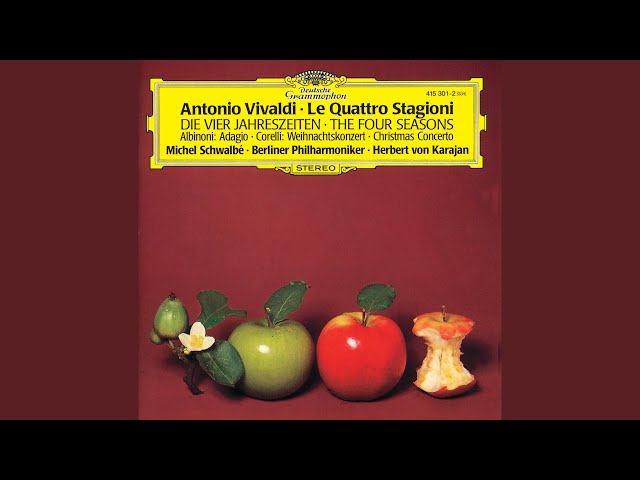
The second movement, Largo, from Spring in Vivaldi’s The Four Seasons.
You’ve probably heard of The Four Seasons; it’s the collective name for violin concertos No.
1 through No.
4.
In this second movement, it depicts flowers blooming across a meadow, the rustling sound of leaves on branches reaching toward the sky, and the barking of hunting dogs.
Over the quiet lines of the strings, the solo violin plays a tranquil, pastoral melody.
