

Take on the world’s hardest tongue twisters! A roundup of ultra-tough prompts that’ll tie your tongue

Have you ever tried the “world’s hardest tongue twister”? Even well-known ones like “Tōkyō Tokkyo Kyoka-kyoku” and “Kaeru pyoko-pyoko” are tough enough, but there’s always something harder.
From fiendish Japanese challenges that cleverly use palatalized and geminate sounds to English tongue twisters recognized by Guinness, there are plenty of ultra-difficult lines guaranteed to tie your tongue.
In this article, we introduce the world’s hardest tongue twisters that you’ll want to try again and again.
Give them a go with your family and friends!
- Challenging tongue twisters: Introducing high-difficulty phrases and sentences!
- Perfect for pronunciation practice! A collection of English tongue twisters.
- Get hyped! Tongue twisters that sound cool if you can say them—wordplay that makes you want to take on the challenge
- [Recreation] Challenge! A roundup of tongue twisters recommended for elementary school students
- [Diction Training] A Collection of Tongue Twisters to Improve Articulation
- A collection of long tongue twisters. Also recommended for practicing announcements and narration.
- Tongue Twisters So Fun and Cute You’ll Want to Say Them Out Loud!
- Tongue twisters that will make you laugh out loud! Super funny
- Kenta Otani’s original tongue twisters: a collection that’ll have you tripping over words and bursting into laughter
- Chinese tongue twisters: A collection of rao kou ling helpful for learning Chinese
- Irresistibly tempting to try! Have fun practicing pronunciation with Korean tongue twisters
- Nagoya dialect tongue twisters are exquisite! A fun collection where your tongue gets tied in knots with regional dialects
- Bursting into laughter! A roundup of Hakata dialect tongue twisters
Challenge the world's hardest tongue twisters! A roundup of insanely tough prompts that’ll tie your tongue (11–20)
Frogs hop-hoppity, three hop-hoppity; together hop-hoppity, six hop-hoppity.
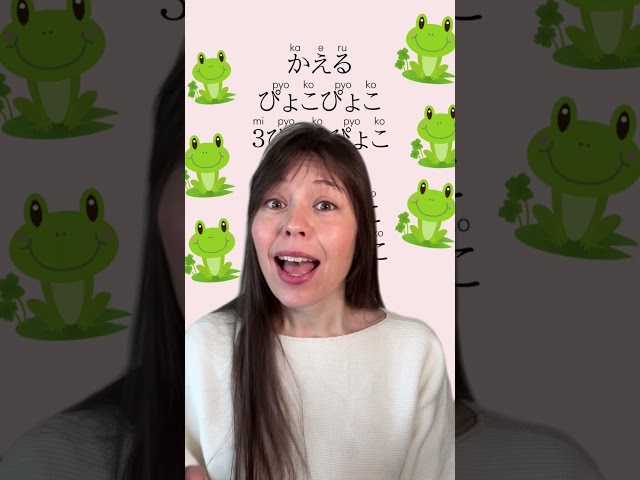
It’s a fun tongue twister that uses words to depict lively frogs hopping and leaping about.
It feels great when you can say it in rhythm, but try repeating it and your tongue might start to get all tangled up! Even if you mess up, laugh and enjoy it—and if you manage to say it, give each other a round of applause! It’s like a word game that helps you get better at rhythm and pronunciation while you play.
From kids to adults, try it with family and friends to see who can say it the best!

In the wide corridor of a Roman prison, a sixty-six-year-old man wanders nervously, holding a candle.

Just imagining this situation gives me the chills! On top of that, the heavy use of “ro” and the way the sentence keeps chaining words together with repeated “no” also feels a bit unsettling.
It’s a little scary, but one key to saying this tongue twister clearly is to visualize the scene.
For “ro,” you place your tongue against the back of your upper teeth before pronouncing it, but when it connects to other sounds, that can be tricky.
So at first, try breaking it into words or phrases and say them one by one while organizing the situation in your mind.

Symphony, songs, concerto
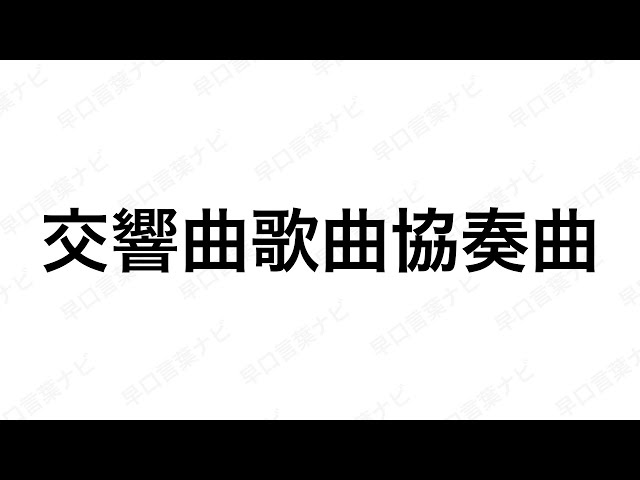
Here’s a slightly tricky but fun tongue twister using music-related words! A symphony is a large piece of music played by many instruments, a song focuses on singing, and a concerto is a piece where a solo instrument performs together with an orchestra.
There are only three words.
But because similar sounds follow one another, you can say it slowly, yet if you speed up… your tongue will get all tangled.
How about kids and adults alike giving it a try while learning a bit of music trivia? Enjoy this music-and-words game with lots of laughter!
Ultimate luxury aircraft at a deserted Kyushu airport

This passage contains many words starting with the K sound, so many people might stumble over the latter half with “kyūkyoku kōkyū kōkūki” (ultimate luxury aircraft).
The first half, “kūkyona Kyūshū kūkō” (empty Kyushu airport), is still easier to say, but the shift from kōkyū to kōkūki is particularly tricky.
If you try to rush through it, your mouth won’t keep up, so be mindful of your speed and deliberately shape each word with your lips and tongue.
There’s a “no” in the middle of the sentence, so it’s helpful to imagine taking a brief pause there.
Once you can do that, practice saying the whole thing in one breath.

Red seared short ribs, Blue seared short ribs, Yellow seared short ribs
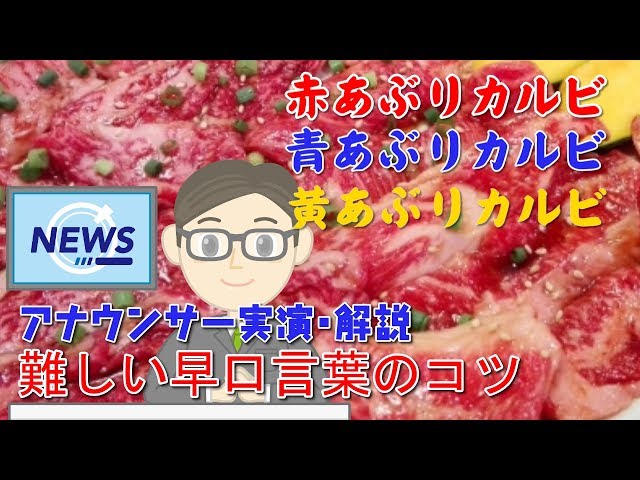
This adds the classic tongue-twister pattern of putting a color in front to “aburi karubi,” a phrase that’s already hard to say on its own, making it even more difficult.
Imagining red, blue, and yellow aburi karubi lined up somehow doesn’t seem appetizing, which adds to the humor.
The tricky part of aburi karubi is the sequence of the Japanese r-sounds and voiced consonants, so be mindful of your mouth shape as you practice.
With the addition of colors, vowels like “a” and “o,” as well as the K-row sounds, also come into play, making it even more important to pay attention to mouth positioning.

export car export hot water export vinegar
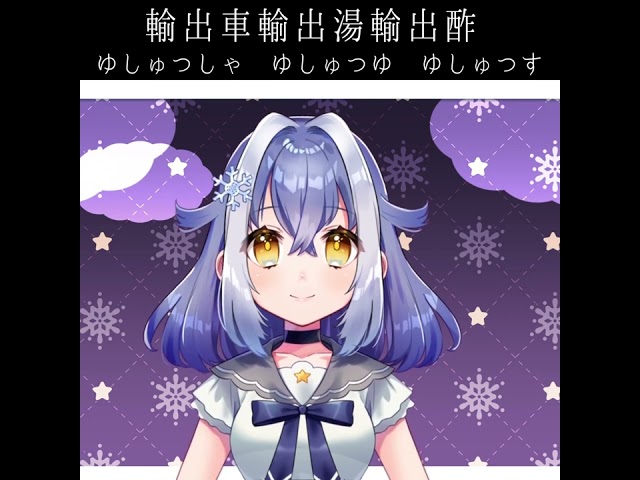
It’s a tongue twister that depicts various things being exported, and the fact that, aside from export cars, the other terms aren’t very familiar is part of what makes it amusing.
You might even find yourself wondering whether hot water or vinegar would ever actually be exported.
What matters first is pronouncing “yushutsu” (export) accurately—especially getting “shutsu” right—so you don’t get thrown off by what comes before and after it.
Start by pronouncing each word separately, then gradually increase your speed; that’s the recommended approach.
Challenge the world’s hardest tongue twisters! A roundup of super-tough prompts that will tie your tongue (21–30)
One hichiriki, lethal hichiriki, seven hichiriki, seven lethal hichiriki

This is a tongue-twister that uses the name of the Japanese instrument hichiriki.
Centered on the “hichiriki” sound, it combines words like “one,” “seven,” and “lethal,” making you trip over your tongue and laugh when you say it out loud.
If children know basic kanji readings, they can jump in with the rhythm and enjoy trying it.
Adults can enjoy it in recreational settings too.
As the interplay of numbers and word sounds becomes intricately entwined, the rhythm and timing change with each read, making it even more fun to tackle.
Even though it’s short, the addictive repetition of sounds lets you savor the joy of speaking out loud and the laughter that comes with it.