

Recommended for 3rd graders! A collection of easy self-study ideas you can try

For third-grade independent study, we recommend first identifying what your child is interested in.
When they learn about what they like, they can keep going and enjoy it.
Here, we introduce simple daily ideas that help with independent study while learning a little each day.
When children and adults learn together, they can be more curious and have more fun learning.
Learning opens up new worlds and helps build confidence.
Please use this as a reference, find something that sparks interest, and enjoy independent study!
- Recommended for 5th graders! A collection of easy self-study ideas you can enjoy while learning
- Recommended for 6th graders! A collection of easy self-study ideas you can enjoy while learning
- Recommended for 4th graders! A collection of easy self-study ideas to try
- Independent study that impresses your teacher! Science self-study ideas recommended for third graders
- Third graders will be hooked! A collection of science project ideas using everyday materials
- Recommended for elementary students! A collection of fun craft ideas for 3rd graders
- Self-directed study that impresses your teacher! Recommended independent science study ideas for 6th graders
- Self-study that impresses your teacher! Recommended science self-study ideas for 5th graders
- Recommended for elementary school students' independent research! Experiment and observation ideas using everyday materials
- Recommended for elementary school students! Science fair topics & craft ideas
- [For 2nd Graders] Make it with everyday materials! Irresistibly engaging ideas for independent research projects
- Recommended in March! A collection of surprising, little-known trivia that elementary school students will want to share
- Self-study that teachers will praise! Recommended independent science study ideas for 4th graders
Recommended for 3rd Graders! A Collection of Easy, Self-Study Ideas You Can Try (71–80)
Making insect repellent spray

When playing outside in the summer, insect repellent spray is just as important as sunscreen.
It’s an essential item to avoid discomfort later! Here, we’re introducing a DIY insect repellent spray you can make with just three ingredients.
It only takes about 10 minutes to make, so it’s an easy science project even for lower elementary grades.
The ingredients are peppermint oil, water, and rubbing alcohol (ethanol).
Put the peppermint oil and ethanol into a container and shake well to mix.
Then add the water and shake again in the same way, and you’re done! Please summarize the steps and key points, such as the order in which to add the ingredients, when you write it up.

Let’s make an ultra-rich juice

In summer, many people have probably experienced freezing a plastic bottle of sports drink and, when sipping the partially melted liquid, feeling that it tastes “stronger than usual!” Let’s make this phenomenon the theme of a science project: What mechanism causes it? The key is a phenomenon called freezing point depression.
Solutions containing substances like sugar freeze later and melt sooner than pure water.
Based on this, you can investigate and summarize how the perceived increase in flavor strength differs depending on the type of beverage you freeze.

Vegetable Stamp Art

Many people are likely looking for easy science projects or crafts for lower elementary school students.
For you, we recommend “vegetable stamps.” Cut various vegetables, apply ink to the cross-sections, and make stamps.
Since each vegetable has a different cross-section, you could even turn it into a quiz-style project.
Using the stamps to create pictures is also a great idea.

reverse-yolk egg

Have you heard of a “reverse-yolk egg”? It’s a quirky kind of hard-boiled egg where the outside is yellow and the inside is white! To make it, you put a raw egg in a stocking and spin it around, then boil it just like a regular hard-boiled egg.
Let’s look into the structure of an egg and consider why this method causes the yolk and white to switch places.
Also, this reverse-yolk egg surprisingly has a long history, so researching that and writing up a report could make for an interesting independent study project.
Ocean Bottle
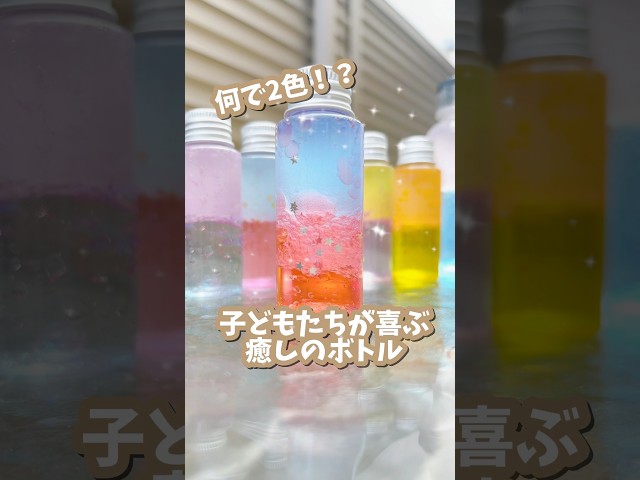
Here’s an ocean bottle idea that will look great as a room decoration.
First, prepare a plastic bottle.
Fill it about one-third of the way with water dyed blue.
Next, pour in baby oil until the bottle is about two-thirds full.
Finally, add shells or other objects of your choice, and it’s complete.
When you shake it, the water and oil recreate the look of waves breaking on the shore.
Making it can stand on its own as a science project, but you could also take it further by researching why water and oil don’t mix.

masking tape art

Drawing pictures is a classic choice for independent study projects and crafts.
Simply drawing is fine, but let’s add a little twist to make your artwork more eye-catching.
Masking tape is highly recommended for that.
There are many kinds of masking tape, so you can create a wide variety of pictures.
Start by making a rough sketch, then gather masking tapes that match your design.
Factory Tour Report

Wouldn’t it be great to visit somewhere you can’t usually go and have it help with your independent research? With that in mind, here’s an idea: a factory tour report.
First, look into factory tours that interest you.
Even among well-known candy and ice cream manufacturers, there are several factories you can tour.
You could observe and summarize the production process, dig deeper to explore the secrets behind the delicious taste, or even try recreating it yourself.
Many factories also have hands-on activity areas, so you can make use of those as well.