


For third-grade independent study, we recommend first identifying what your child is interested in.
When they learn about what they like, they can keep going and enjoy it.
Here, we introduce simple daily ideas that help with independent study while learning a little each day.
When children and adults learn together, they can be more curious and have more fun learning.
Learning opens up new worlds and helps build confidence.
Please use this as a reference, find something that sparks interest, and enjoy independent study!
- Recommended for 5th graders! A collection of easy self-study ideas you can enjoy while learning
- Recommended for 6th graders! A collection of easy self-study ideas you can enjoy while learning
- Recommended for 4th graders! A collection of easy self-study ideas to try
- Independent study that impresses your teacher! Science self-study ideas recommended for third graders
- Third graders will be hooked! A collection of science project ideas using everyday materials
- Recommended for elementary students! A collection of fun craft ideas for 3rd graders
- Self-directed study that impresses your teacher! Recommended independent science study ideas for 6th graders
- Self-study that impresses your teacher! Recommended science self-study ideas for 5th graders
- Recommended for elementary school students' independent research! Experiment and observation ideas using everyday materials
- Recommended for elementary school students! Science fair topics & craft ideas
- [For 2nd Graders] Make it with everyday materials! Irresistibly engaging ideas for independent research projects
- Recommended in March! A collection of surprising, little-known trivia that elementary school students will want to share
- Self-study that teachers will praise! Recommended independent science study ideas for 4th graders
Recommended for 3rd Graders! Easy Self-Study Ideas You Can Try (1–10)
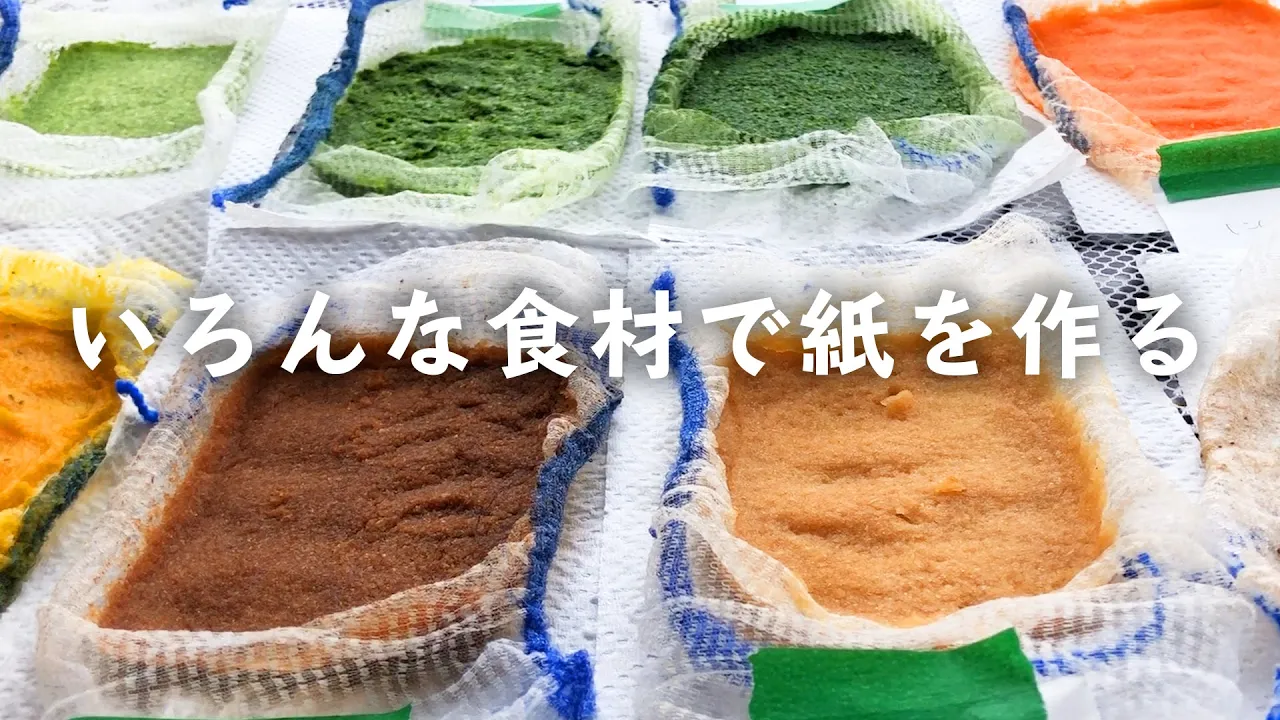
Let’s make paper from various ingredients

Paper is something we’re always surrounded by—whether it’s notebooks or toilet paper, there are many types of paper closely tied to our daily lives.
This is a free research project that shines a spotlight on paper: let’s try making paper from food and other materials! First, use a blender or similar tool to grind the food into a fine paste.
If it’s hard to blend, try adding a little water.
Use a tofu container and a mesh net like those for sink strainers to press out the moisture, then let it dry for at least a day in a memo-pad size sheet.
Put together your results with photos: which foods turned into something paper-like, and which ones didn’t?

Let’s make the flowers colorful!

Here’s a science project idea: let’s try dyeing flowers in colorful ways! First, prepare fresh white flowers—any kind you like is fine.
Cut the stems short, then use scissors to make four lengthwise slits, dividing the stem into quarters.
Place each of the four split stem ends into separate containers, each filled with a different color dye solution.
Then just wait—the flower will draw up the dye solution, and you’ll end up with a colorful flower.
It’s a good idea to observe how long it takes to dye, and how the dyeing differs depending on the type of flower.
Pressing the dyed flowers and submitting them as an art piece is also recommended.

Snow globe making

During long vacations, we’re swamped with homework, independent research projects, and playtime.
It’s easy to put things off and run out of time.
That’s when this snow globe is highly recommended! The glitter and “snow” that slowly fall and sparkle inside the glass are beautiful, aren’t they? You can get most of the materials at a 100-yen shop: purified water, liquid glue, a hot glue gun, a jar, a sponge, decorations you want to put inside, and glitter.
It also doesn’t take much time, so it’s truly a strong ally for independent research projects.
Solo Camping Experience

Here is an idea for an independent study project with the theme of solo camping, where children can have the valuable experience of spending time alone surrounded by nature.
By handling preparations, travel, and meals by themselves, children can enjoy an extraordinary experience and a sense of accomplishment.
In practice, they won’t actually stay completely alone—parents or guardians should watch from a distance or participate as the person filming the experience.
Travel to the campsite by bicycle or train, and upon arrival, set up a one-person tent.
Once you’ve lit a prepared fire pit using dry branches and charcoal, you can cook rice with solid fuel and heat up retort pouch foods.
At night, sleep in a sleeping bag and welcome the morning, completing a one-night, two-day overnight program.

The relationship between bread and sugar

A summer research project you can work on while enjoying delicious food sounds great, doesn’t it? Here’s an experiment that explores the relationship between bread and sugar.
In this experiment, you make several batches of dough that differ only in the amount of sugar, bake the bread, and then compare the results.
Breads with less sugar turn out firm like French bread, while those with more sugar are moist and soft.
Let’s investigate why the outcomes change.
Also, don’t forget to record from which stage in the process the differences begin to appear.

pinhole camera

Let’s try making a pinhole camera, a classic for independent research projects.
A pinhole camera is a camera that forms an image using a tiny pinhole instead of a camera lens.
There are methods using a milk carton or a paper cup, and it’s surprisingly easy to make.
If you choose a pinhole camera for your project, after building it you should observe how the image actually appears, think about why it appears that way, and compile your findings into a report.

Historical research of the area where you live

Some of you may be struggling to find a subject to research, even though you want to study something.
In that case, researching the history of the area where you live might be a good idea.
You might discover unexpected history behind the park you usually play in, or find that a building you never paid attention to is actually historically significant.
Searching online is convenient, but asking local residents or visiting the library can also be fun and give you a real sense of doing research.
As a variation, you could also look into the history of your school.